Smart Budgeting for Women Over 40: A Simple Plan to Take Control of Your Money

Turning 40 is a pivotal moment. For many women, it marks the first time that retirement stops feeling abstract and starts feeling urgent. Maybe you’ve been managing money your whole life — paying bills, funding your children’s activities, keeping the household running — but you’ve never actually sat down and created a real budget. Or maybe you had one, but life happened (divorce, career change, health issues), and your finances feel like they need a reset.
You’re not alone. According to a 2024 study by the National Endowment for Financial Education, over 60% of women say they feel behind on their financial goals by the time they hit 40. But here’s the good news: it’s absolutely not too late. In fact, your 40s can be one of the most powerful decades for building wealth — if you start with the right plan.
This guide breaks down exactly how to build a smart, realistic budgeting that works for your life right now — not some outdated template designed for someone else’s situation.
Why Budgeting After 40 Is Different (and Why That’s an Advantage)

Budgeting in your 20s is about surviving. In your 30s, it’s about building. But in your 40s? It’s about optimizing. You have real-world experience with money now. You know what expenses are essential, which ones are emotional, and what trade-offs you’re willing (or unwilling) to make.
Here’s why women over 40 actually have a budgeting advantage:
- Income stability. Most women over 40 have established careers or income sources that are more predictable than in earlier decades.
- Clarity of priorities. You know what matters to you — whether that’s travel, your kids’ education, or early retirement.
- Lower tolerance for waste. You’ve already spent years paying for things that didn’t serve you. Now you’re more intentional.
- Motivation. With retirement closer on the horizon, there’s a natural urgency that sharpens your focus.
The key is to stop following generic budgeting advice and create a plan tailored to where you actually are in life.
Step 1: Get a Clear Picture of Where Your Money Goes

Before you can fix your budget, you need to audit it. Not a vague, “I think I spend about $200 on groceries” audit — a real, line-by-line look at the last 90 days.
Here’s how:
- Pull your bank and credit card statements for the past three months.
- Categorize every single transaction. Use categories like: Housing, Utilities, Groceries, Dining Out, Subscriptions, Transportation, Insurance, Healthcare, Childcare, Personal Care, Entertainment, Debt Payments, Savings, Giving.
- Be brutally honest. That $6 coffee five times a week is $120/month. Those “small” Amazon purchases? Track them.
What Most Women Discover
Most women over 40 are shocked to find that:
- Subscriptions they forgot about are draining $50–$150/month.
- Dining out and convenience food costs 2–3x what they estimated.
- Emotional spending (retail therapy, online shopping during stress) is a bigger category than expected.
- Insurance premiums may be higher than necessary because they haven’t shopped around in years.
This audit isn’t about guilt — it’s about awareness. You can’t control what you don’t measure.
Step 2: Choose a Budgeting Framework That Fits Your Life

There’s no one-size-fits-all budget. Here are three proven frameworks, and the type of woman each one works best for:
The 50/30/20 Rule (Best for Simplicity)
- 50% of after-tax income → Needs (housing, utilities, insurance, minimum debt payments)
- 30% → Wants (dining, entertainment, shopping, travel)
- 20% → Savings & Extra Debt Payoff
Best for: Women who want a straightforward, low-maintenance budget without tracking every dollar.
Zero-Based Budgeting (Best for Control)
Every dollar gets assigned a job before the month starts. Income minus expenses should equal zero.
Best for: Women who are paying off debt, saving for a specific goal, or want maximum control over their money.
The 60% Solution (Best for High Earners)
- 60% → Committed expenses (all bills, obligations, essentials)
- 10% → Retirement savings
- 10% → Long-term savings (emergency fund, house down payment)
- 10% → Short-term savings (vacations, gifts, repairs)
- 10% → Fun money
Best for: Women with higher incomes who want structure but don’t want to micromanage.
My Recommendation for Women Over 40
If you’re just starting, begin with the 50/30/20 rule for one month. Then, once you see where your money is going, switch to zero-based budgeting for three months. This combination gives you simplicity first, then precision.
Step 3: Tackle the “Big Three” Expenses

For most women over 40, three categories eat up 60–70% of their income. Optimizing these is where you’ll see the biggest results.
Housing (Target: Under 30% of After-Tax Income)
- If you’re renting, have you compared current market rates? You might be overpaying — or underpaying (meaning your landlord might raise rent soon; plan ahead).
- If you own, when was the last time you refinanced? Even a 0.5% reduction on a $250,000 mortgage can save you $75+ per month.
- Consider house hacking: renting a room, an ADU, or using Airbnb for a guest room.
Transportation (Target: Under 15%)
- Are you paying for a car that’s more than you need? A reliable used car can save hundreds in monthly payments and insurance.
- If you have two cars and a partner, could you go down to one?
- Factor in the hidden costs: insurance, gas, maintenance, depreciation.
Food (Target: $400–$700/month for a Family of Four)
- Meal planning saves the average family $200–$300/month.
- Buy in bulk for staples (rice, oats, frozen vegetables, chicken).
- Reduce dining out to 1–2 times per week instead of 4–5.
- Use a grocery list and never shop hungry — these two rules alone cut impulse buys by 30%.
Step 4: Automate Your Savings (Pay Yourself First)

The single most important budgeting strategy for women over 40 is automation. Here’s why: willpower doesn’t work long-term. If you wait until the end of the month to save “whatever’s left,” there will never be anything left.
Instead:
- Set up automatic transfers on payday. Before you pay any bill, move money into savings.
- Start with 10% of your after-tax income. If that feels impossible, start with 5% and increase by 1% every month.
- Use separate accounts for different goals:
- Emergency fund (3–6 months of expenses)
- Retirement (IRA, 401(k) contributions)
- Short-term goals (vacation, home improvement)
- Sinking fund (annual expenses like insurance, car registration, holiday gifts)
The “Reverse Budget” Trick
Here’s a powerful approach: Instead of budgeting by expense categories, simply decide how much you want to save each month, automate that transfer, and then live on what’s left. This forces you to adjust your spending naturally without tracking every purchase.
Step 5: Address Debt Strategically
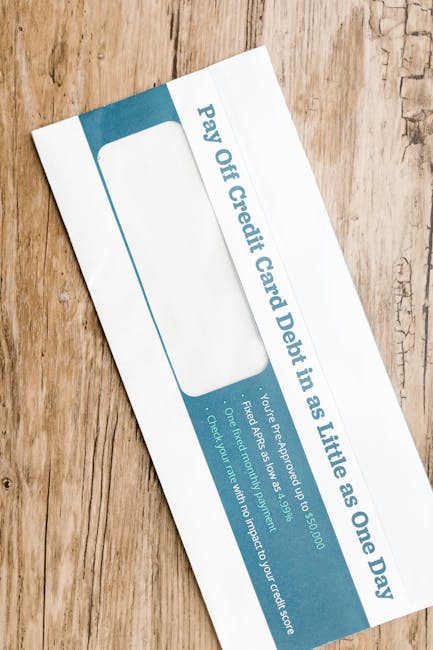
If you’re carrying debt into your 40s, you’re not alone. The average American woman over 40 carries approximately $25,000 in non-mortgage debt. But not all debt is equal, and not all debt needs to be eliminated the same way.
High-Priority Debt (Attack Aggressively)
- Credit card debt (15–25% interest) — This is financially toxic. Every dollar of credit card debt costs you roughly $0.20 per year in interest.
- Personal loans above 10% interest.
Medium-Priority Debt (Pay Strategically)
- Car loans (5–8%) — Pay on schedule, but don’t sacrifice retirement contributions to pay these off faster.
- Student loans — Federal loans may qualify for income-driven repayment or forgiveness programs.
Low-Priority Debt (Keep and Optimize)
- Mortgage (3–7%) — If your rate is low, your money grows faster in investments than it does paying this off early.
Pro tip: Use the avalanche method (pay off highest interest first) to save the most money, or the snowball method (pay off smallest balances first) if you need the psychological wins to stay motivated.
Step 6: Build Your Emergency Fund — No Excuses

An emergency fund isn’t optional. It’s the difference between a financial inconvenience and a financial disaster. Without one, a single unexpected expense — a car repair, a medical bill, a job loss — can spiral into debt.
Your target: 3–6 months of essential expenses (not income — expenses).
If a fully funded emergency fund feels overwhelming, start here:
- Micro-goal: Save $1,000 in the next 30 days. Cut subscriptions, sell unused items, take on one freelance project.
- Mini-goal: Save one month of expenses within 6 months.
- Full goal: Reach 3–6 months within 18–24 months.
Keep your emergency fund in a high-yield savings account (currently paying 4–5% APY as of early 2026). Do not keep it in your checking account where it’s easy to spend.
Step 7: Don’t Forget Retirement (It’s Closer Than You Think)

If you’re 40 and haven’t started saving for retirement, you need to start immediately. If you’ve been saving but inconsistently, it’s time to get serious. Here’s a sobering fact: a woman who starts saving $500/month at 40 will have roughly $300,000 by 65 (assuming 7% average return). Start at 25, and that same $500/month becomes over $800,000.
Key steps:
- Max out your employer match. If your employer matches 401(k) contributions, contribute at least enough to get the full match. It’s free money.
- Open a Roth IRA. In 2026, you can contribute up to $7,000 per year ($8,000 if you’re 50+). Roth IRAs grow tax-free.
- Catch-up contributions. Starting at 50, you can contribute an extra $1,000 to IRAs and $7,500 to 401(k) plans per year.
Step 8: Schedule Monthly Money Check-Ins

A budget isn’t a set-it-and-forget-it document. Schedule a 30-minute money date with yourself on the first of every month. During this check-in:
- Review last month’s spending vs. your budget.
- Identify any categories where you overspent and why.
- Adjust next month’s allocations based on upcoming events (birthdays, holidays, annual payments).
- Celebrate wins — even small ones.
If you have a partner, make this a joint activity. Financial alignment with a partner is one of the strongest predictors of relationship satisfaction and financial success.
Common Budgeting Mistakes Women Over 40 Make

- Not budgeting for irregular expenses. Annual insurance premiums, car registration, holiday gifts — these aren’t surprises. Create a sinking fund.
- Cutting fun to zero. A budget that eliminates all joy is a budget you’ll abandon. Always allocate money for things you enjoy.
- Ignoring lifestyle inflation. Just because you got a raise doesn’t mean your spending needs to increase proportionally. Bank at least 50% of every raise.
- Not involving their partner. If you share finances, both partners need to be part of the budget conversation.
- Waiting for the “perfect” time. There is no perfect time. Start with what you have, where you are, today.
Practical Tools to Make Budgeting Easier

You don’t need a complex spreadsheet. These tools make budgeting accessible:
- YNAB (You Need A Budget) — Best for zero-based budgeting. $14.99/month but many women say it pays for itself within the first month.
- Mint / Credit Karma — Free and great for tracking spending automatically.
- Google Sheets — Free, customizable, and you can access it anywhere.
- Envelope system (digital or physical) — Allocate cash to envelopes for each category. When the envelope is empty, you stop spending.
Frequently Asked Questions
How much should a woman over 40 save per month?
Aim for at least 20% of your after-tax income. If you’re behind on retirement, try to push that to 25–30% by cutting discretionary spending and increasing income.
Is it too late to start budgeting at 45 or 50?
Absolutely not. You have 15–20+ working years ahead of you. Women who start budgeting and investing at 45 can still build a significant nest egg, especially if they eliminate high-interest debt and maximize retirement contributions.
What’s the best budgeting app for women over 40?
YNAB is the most effective for behavior change. If you want something free and automatic, try Mint. If you prefer complete control, use a simple Google Sheets template.
How do I stick to a budget when I have irregular income?
Budget based on your lowest-earning month. In higher-income months, put the surplus directly into savings or debt payoff. This prevents lifestyle inflation during good months.
Should I pay off debt or save first?
Both, simultaneously. Build a $1,000 emergency buffer first. Then split extra money: 70% toward high-interest debt, 30% toward savings. Once your debt is gone, redirect 100% of those payments to savings.
Your Next Step

Don’t try to overhaul your entire financial life in one weekend. Instead, commit to this one action today: Pull your bank statements for the last three months and categorize every expense. That single exercise will give you more clarity about your money than anything else you’ve done.
You’ve spent decades taking care of everyone else’s needs. It’s time to take control of your own financial future — and it starts with a budget that actually works for you.
Disclaimer: This article is for educational purposes only and does not constitute financial advice. Consult a certified financial planner for personalized guidance based on your specific situation.