Description
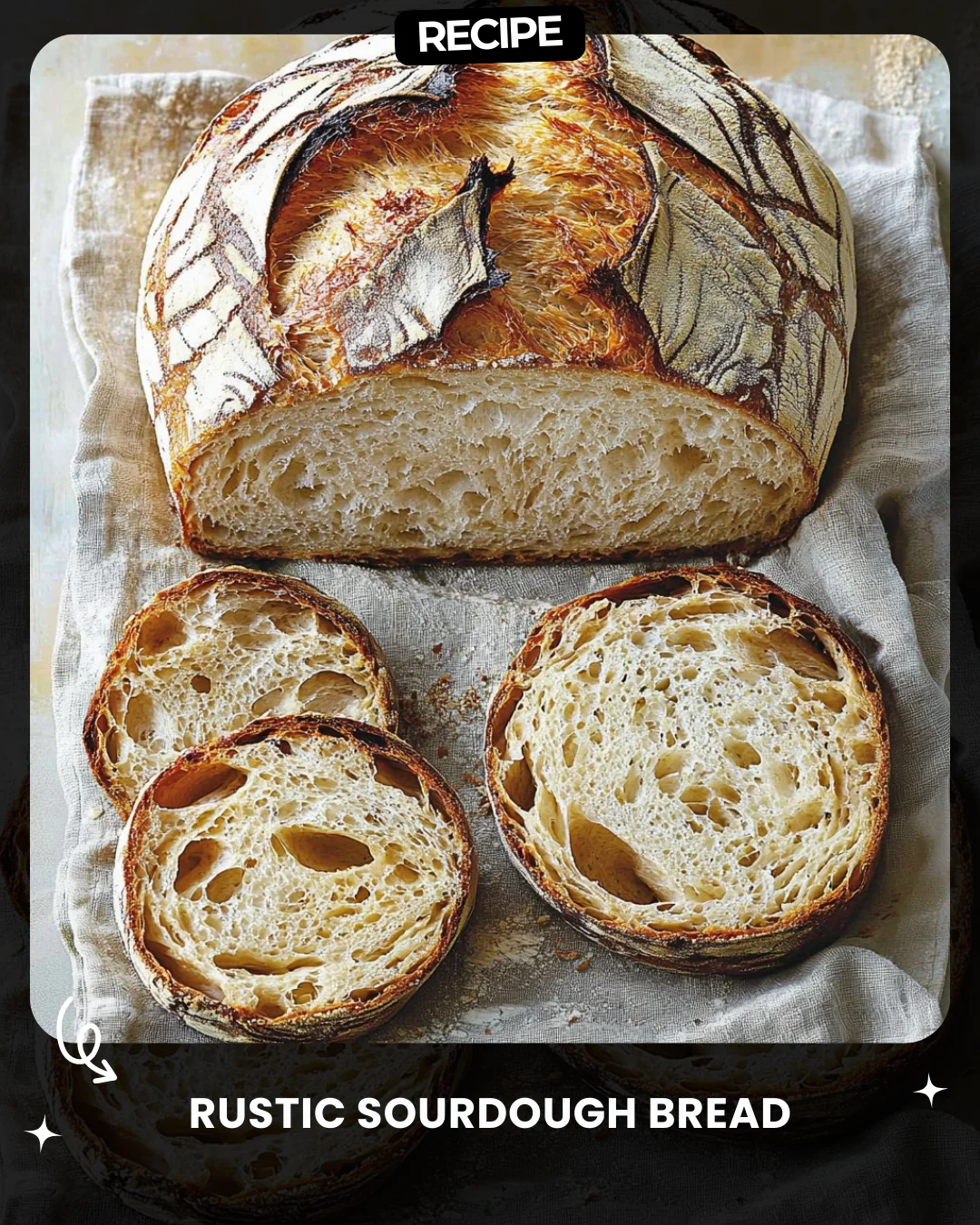
Rustic Sourdough Bread
Crispy crust, soft airy interior, and packed with flavor—this homemade sourdough bread is the perfect artisan loaf for any occasion!
Ingredients
3 1/2 cups bread flour
1 1/2 cups water (room temperature)
1/2 cup active sourdough starter
2 tsp salt
Directions
Mix the dough: Combine bread flour, water, and sourdough starter in a large bowl. Mix until it forms a shaggy dough. Cover and let it rest for 30 minutes.
Add salt: Sprinkle the salt over the dough and mix until incorporated.
Bulk fermentation: Cover the dough and let it rise at room temperature for 4–6 hours, folding the dough every 30 minutes (4–5 times).
Shape the dough: Lightly flour your surface and shape the dough into a round or oval loaf. Place it in a floured proofing basket or bowl.
Second rise: Cover and let the dough rest for 1–2 hours until slightly puffy.
Bake: Preheat your oven to 475°F (245°C). Place the dough in a Dutch oven lined with parchment paper. Cover and bake for 20 minutes. Remove the lid and bake for another 20–25 minutes until golden brown.
Cool: Let the bread cool completely before slicing.
Prep Time: 20 minutes
Cook Time: 45 minutes
Rest Time: 6–8 hours
Total Time: ~9 hours
Servings: 1 loaf
Calories: 150 kcal per slice
Perfect with butter, soups, or for your favorite sandwiches!
#SourdoughBread #HomemadeBread #ArtisanBread #BakingLove #ComfortFood #BreadLovers
Step-by-Step Guide
After mixing your shaggy dough and letting it autolyse for 30 minutes, incorporate the salt thoroughly. During the 4-6 hour bulk fermentation, perform a series of “stretch and folds.” Wet your hands, grab one side of the dough, stretch it upwards, and fold it over the center. Repeat from all four sides. This builds strength without kneading. After shaping, let the dough undergo its second rise in a floured banneton or bowl lined with a well-floured tea towel. Just before baking, score the top of the loaf about 1/2 inch deep with a sharp blade to control expansion.
Serving Suggestions
This rustic loaf is incredibly versatile. Serve thick slices toasted with high-quality butter and flaky sea salt. It’s perfect for dipping into hearty soups, stews, or olive oil. Use it to elevate sandwiches like a classic BLT or a gourmet grilled cheese. For a simple appetizer, top slices with avocado, ricotta, or a tomato bruschetta mix. Day-old bread makes exceptional croutons or bread pudding.
How-to Summary
In summary, create your sourdough by mixing flour, water, and starter, resting for 30 minutes, then adding salt. Ferment for 4-6 hours with periodic stretch-and-folds. Shape the dough, let it proof for 1-2 hours, then bake covered in a preheated Dutch oven at 475°F for 20 minutes. Finish baking uncovered for 20-25 minutes until deeply golden. Cool completely before slicing for the best texture.
Frequently Asked Questions
Can I use all-purpose flour instead of bread flour?
Yes, but the crust may be slightly less chewy. Bread flour’s higher protein content provides better structure and a more classic sourdough texture.
My dough didn’t rise much during bulk fermentation. What happened?
Your starter may not have been active enough. Ensure it is bubbly and passes a float test before using. The room temperature may also be too cool; a longer fermentation time may be needed.
Do I really need a Dutch oven?
It is highly recommended. The Dutch oven traps steam, which is crucial for achieving a crispy, blistered crust and good oven spring. Without it, you can create steam with a pan of water in the oven.
Why must I wait for the bread to cool before slicing?
Slicing too soon releases trapped steam, making the interior gummy. Cooling allows the crumb structure to set, resulting in a perfect, airy texture.
How do I store sourdough bread?
Store it cut-side down on a cutting board for 1-2 days. For longer storage, wrap it fully in a bag once cool. For best results, slice and freeze, toasting slices directly from frozen.
Common Mistakes to Avoid
- Using inactive starter: This is the most common cause of dense bread. Always ensure your starter is bubbly and active.
- Over-flouring the surface during shaping: This can dry out the dough and create a barrier, preventing a good seal when shaping.
- Not preheating the Dutch oven: The cold pot will not create immediate oven spring. Preheat it for a full 30-45 minutes.
- Skipping the folds during bulk fermentation: These folds are essential for developing the gluten network that supports the airy crumb.
- Scoring too shallowly: A deep, confident score (about 1/2 inch) allows the bread to expand properly in the oven.
Conclusion
Mastering this rustic sourdough bread is a rewarding journey that connects you to a timeless baking tradition. While the process requires patience and attention to detail, the result—a loaf with a crackling crust, tangy flavor, and airy interior—is unparalleled. Each bake teaches you more about the living nature of your starter and the subtle art of fermentation. Embrace the process, learn from any missteps, and enjoy the profound satisfaction of pulling a beautiful, homemade artisan loaf from your own oven.