
Pesto Risotto
Description
Pesto Risotto
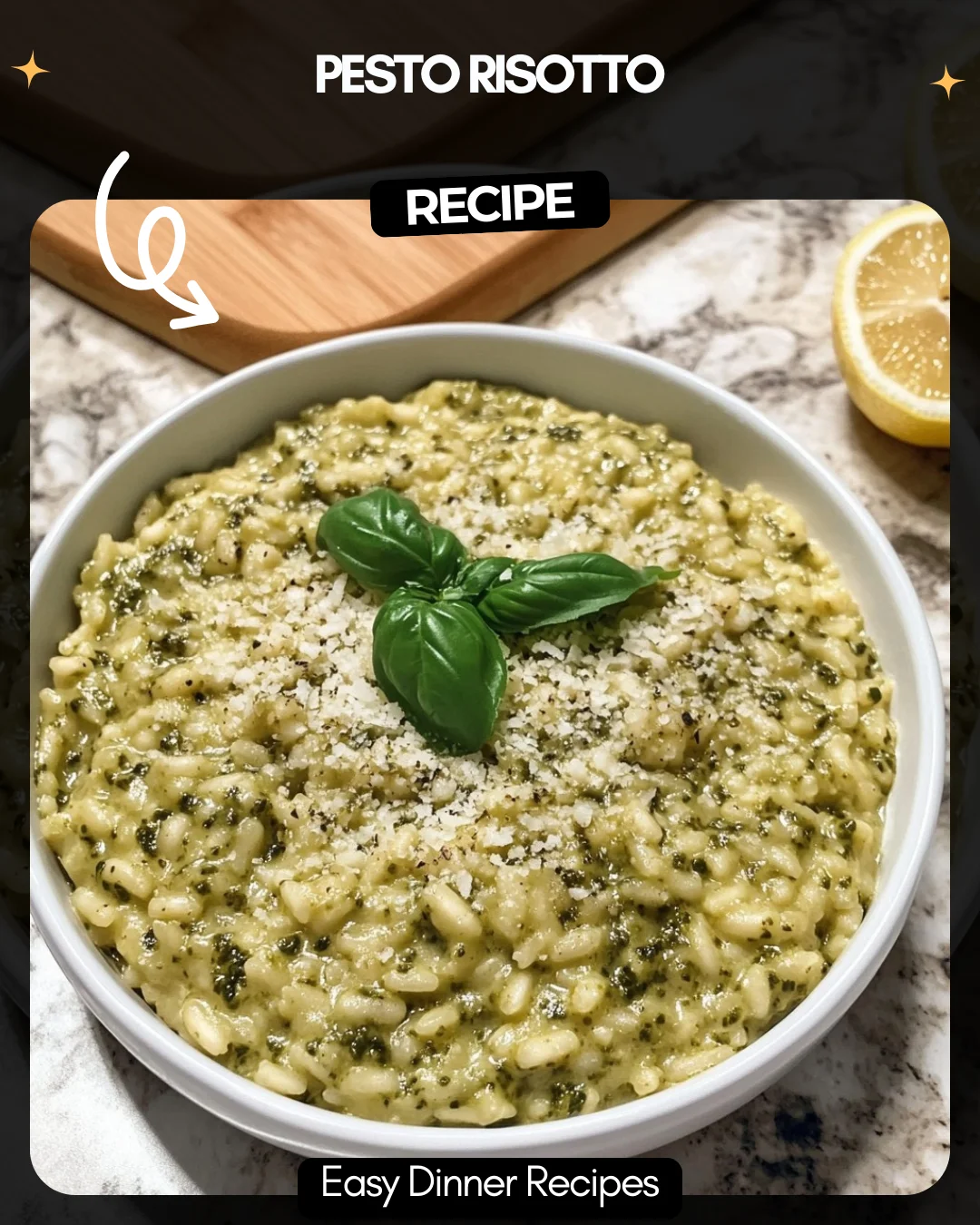
Indulge in this creamy, basil-flavored risotto that feels like a treat from your favorite restaurant! Arborio rice, slowly cooked with warm broth, becomes ultra-creamy, while fresh basil pesto, Parmesan, and a hint of lemon juice bring a refreshing burst of flavor. This risotto is proof that patience in cooking pays off—perfect for a cozy evening meal that’s rich in taste yet surprisingly simple to make!
4 cups chicken or vegetable broth
1 ¼ cups Arborio rice
1 Tbsp. olive oil or butter
1 small onion, finely diced
2 cloves garlic, minced
½ cup basil pesto
¼ cup Parmesan cheese
1 tsp. lemon juice
½ tsp. salt
¼ tsp. black pepper
Directions:
1. Warm broth in a pot and keep it hot.
2. Sauté onions and garlic in oil, then add rice.
3. Slowly stir in broth, cooking for about 25 minutes.
4. Mix in pesto, Parmesan, lemon juice, salt, and pepper.
5. Serve topped with extra Parmesan and basil.
Prep Time: 10 mins
Kcal: 285
Step-by-Step Guide
Follow these detailed instructions for a perfect, creamy pesto risotto every time.
- In a medium saucepan, bring the 4 cups of broth to a gentle simmer over medium heat. Reduce heat to low to keep it warm.
- In a large, heavy-bottomed pot or Dutch oven, heat the olive oil or butter over medium heat. Add the finely diced onion and cook until soft and translucent, about 5 minutes. Add the minced garlic and cook for 1 more minute until fragrant.
- Add the Arborio rice to the pot. Stir constantly for 2-3 minutes until the rice grains are well-coated in oil and become slightly translucent at the edges.
- Begin adding the warm broth, one ladleful (about 1/2 cup) at a time. Stir continuously and allow the liquid to be fully absorbed by the rice before adding the next ladleful. This process should take 20-25 minutes total.
- Once the rice is al dente and the mixture is creamy, remove the pot from the heat. Vigorously stir in the pesto, grated Parmesan cheese, lemon juice, salt, and black pepper. This final off-heat stirring, called “mantecatura,” is key for maximum creaminess.
- Let the risotto rest, covered, for 2 minutes before serving to allow the flavors to meld.
Serving Suggestions
This versatile risotto pairs beautifully with various dishes. For a light meal, serve it alongside a simple arugula salad with a lemon vinaigrette. To make it heartier, top with grilled shrimp, seared scallops, or a piece of pan-seared chicken or salmon. Garnish with extra grated Parmesan, a drizzle of high-quality olive oil, fresh basil leaves, or toasted pine nuts for added texture and flavor.
How-to Summary
To make pesto risotto, sauté onion and garlic, toast Arborio rice, then slowly add warm broth while stirring until creamy. Finish by stirring in pesto, Parmesan, lemon juice, and seasoning off the heat.
Frequently Asked Questions
Can I use a different type of rice?
Arborio rice is essential for its high starch content, which creates the classic creamy texture. Carnaroli or Vialone Nano are acceptable substitutes, but long-grain rice will not work.
How can I make this vegetarian or vegan?
Use vegetable broth. For a vegan version, also use a dairy-free pesto and substitute nutritional yeast or a vegan Parmesan for the cheese.
Why is my risotto gummy or sticky?
This is usually caused by adding broth too quickly or not stirring enough. The key is slow, incremental addition and constant stirring to release the starches properly.
Can I reheat leftover risotto?
Yes. Reheat it gently in a saucepan over low heat, adding a small splash of broth or water to loosen it up and restore creaminess. Microwave reheating tends to make it gluey.
What if I don’t have fresh pesto?
While fresh is best, a high-quality store-bought pesto will work in a pinch. Avoid shelf-stable jars in the dry goods aisle; opt for refrigerated versions for better flavor.
Common Mistakes to Avoid
- Using cold broth: Adding cold broth shocks the rice and stops the cooking process, leading to uneven texture. Always keep it warm.
- Rushing the broth additions: Dumping in all the broth at once will result in a soupy, starchy mess instead of a creamy risotto.
- Overcooking the rice: The rice should be al dente (tender with a slight bite). Overcooked rice becomes mushy.
- Adding the pesto while cooking: Stirring in the pesto at the end, off the heat, preserves its fresh, vibrant flavor and color.
Conclusion
Mastering this pesto risotto recipe is a rewarding culinary achievement that brings restaurant-quality elegance to your home kitchen. The technique of patient stirring is meditative and pays off with an incredibly creamy, flavorful dish. By following the detailed steps and avoiding common pitfalls, you can create a consistently perfect risotto that’s ideal for both weeknight dinners and special occasions. Enjoy the process and the delicious results!