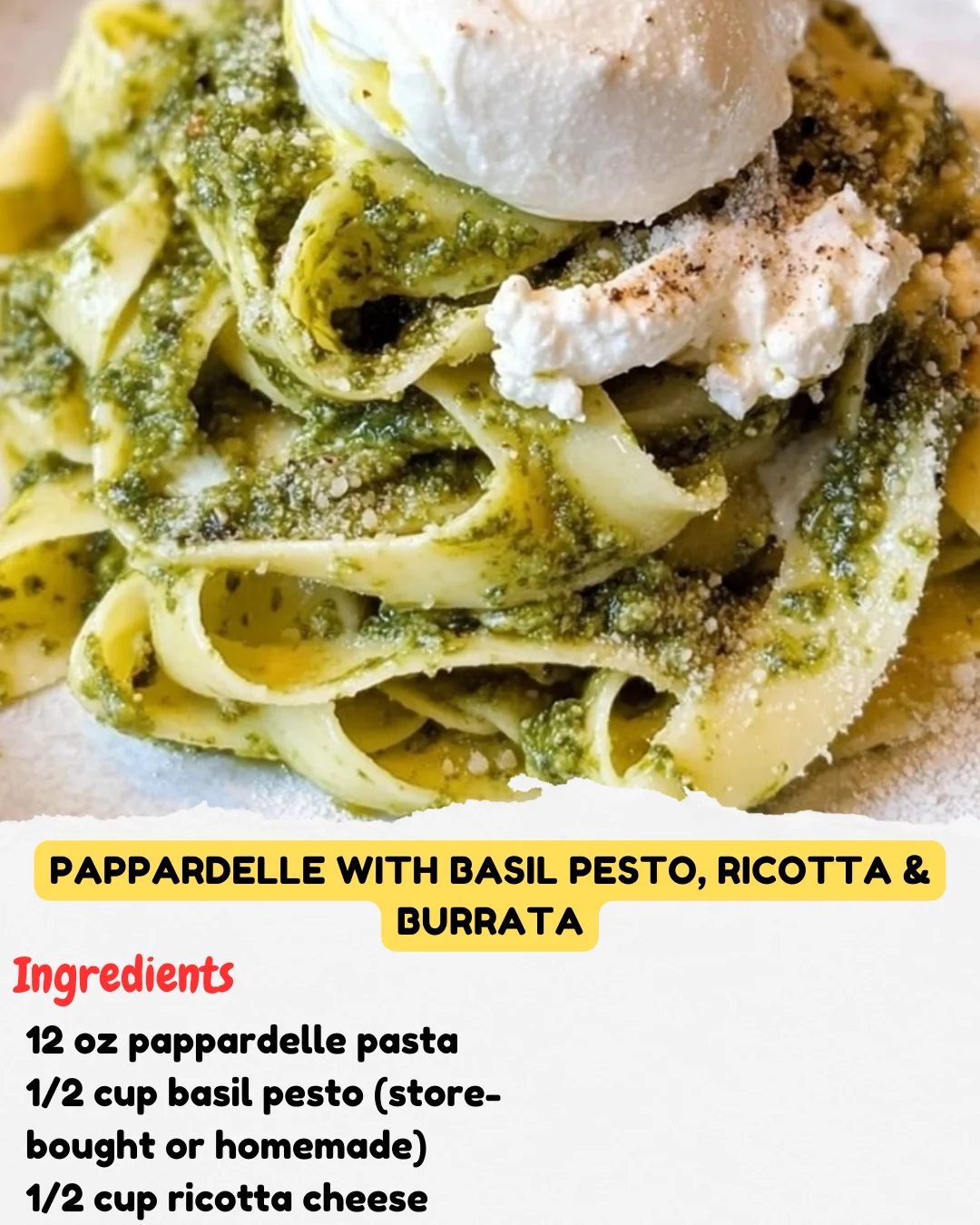
Pappardelle with Basil Pesto, Ricotta & Burrata
Pasta cremosa de burrata, tomasteis cherry y albahaca 😍🍝🫰✨ #recetasfaciles #pasta #burrat...
Description
12 oz pappardelle pasta
1/2 cup basil pesto (store-bought or homemade)
1/2 cup ricotta cheese
1 ball burrata cheese, torn into pieces
1/4 cup grated Parmesan cheese
1 tablespoon olive oil
Salt and pepper to taste
Fresh basil leaves for garnish
Directions:
Bring a large pot of salted water to a boil. Add the pappardelle pasta and cook according to the package instructions until al dente, about 8-10 minutes.
Drain, reserving 1/2 cup of pasta water.
In a large bowl, combine the cooked pasta with basil pesto, ricotta cheese, and reserved pasta water. Toss gently to coat the pasta evenly with the pesto
sauce, adding more pasta water if needed to reach your desired consistency.
Plate the pappardelle and top with torn burrata cheese and grated Parmesan.
Drizzle with olive oil and season with salt and pepper to taste. Garnish with fresh basil leaves before serving.
Prep Time: 5 minutes
Cooking Time: 10 minutes
Total Time: 15 minutes
Kcal: 450 kcal per serving
Servings: 4
Step-by-Step Guide
Follow these detailed instructions for a perfect plate of Pappardelle with Pesto and Burrata every time.
- Boil the Water: Fill a large pot with water, add a generous amount of salt (it should taste like the sea), and bring to a rolling boil.
- Cook the Pasta: Add the pappardelle to the boiling water. Stir immediately to prevent sticking. Cook for 8-10 minutes or until al dente, checking a minute before the package’s suggested time.
- Reserve Pasta Water: Before draining, carefully scoop out at least 1/2 cup of the starchy cooking water. This liquid gold is essential for creating a silky, emulsified sauce.
- Create the Sauce Base: In a large, warm bowl (not cold), combine the hot, drained pasta with the basil pesto and ricotta cheese. The residual heat will gently warm the sauces.
- Emulsify the Sauce: Begin tossing the pasta, gradually adding the reserved pasta water a few tablespoons at a time. The starch will help the pesto and ricotta cling to the pasta, creating a creamy, cohesive sauce. Add until you reach your desired consistency.
- Plate and Finish: Divide the sauced pasta among plates or a serving platter. Immediately top with torn pieces of burrata, grated Parmesan, a final drizzle of olive oil, a crack of black pepper, and fresh basil leaves.
Serving Suggestions
This rich pasta dish pairs beautifully with lighter, acidic sides. Serve it with a simple arugula salad dressed with lemon vinaigrette to cut through the creaminess. For a heartier meal, add grilled chicken or shrimp. A crisp, chilled white wine like Pinot Grigio or Sauvignon Blanc is the perfect beverage companion.
How-to Summary
Cook pappardelle al dente in salted water, reserving some starchy water. Toss the hot pasta in a bowl with pesto, ricotta, and the pasta water to create a creamy sauce. Finish by topping with torn burrata, Parmesan, olive oil, and fresh basil.
Frequently Asked Questions
Can I use a different pasta shape?
Yes. Tagliatelle or fettuccine are excellent substitutes. For short pasta, try rigatoni or fusilli, which will hold the sauce well.
How do I store and reheat leftovers?
Store in an airtight container for up to 2 days. Reheat gently in a skillet with a splash of water or milk to revive the sauce, as the pasta will absorb it when chilled.
Is there a substitute for burrata?
Fresh mozzarella (bufala if possible) is the closest substitute. For a stronger flavor, use a creamy goat cheese or simply extra ricotta and Parmesan.
Why is my sauce clumpy or oily?
This happens if the pesto and ricotta are too cold when mixed with the hot pasta. Ensure your bowl is warm and toss immediately and vigorously to emulsify the sauce with the pasta water.
Can I make this dish ahead of time?
You can prepare components ahead, but assemble just before serving. Cook the pasta and make the sauce base, but keep them separate. Reheat the pasta with a little water, then combine with the sauce and fresh cheeses.
Common Mistakes to Avoid
- Not salting the pasta water enough: This is your primary chance to season the pasta itself.
- Skipping the pasta water: The starchy water is non-negotiable for creating a restaurant-quality, silky sauce that coats the noodles.
- Overcooking the pasta: Pappardelle becomes mushy quickly. Always aim for al dente.
- Using cold ingredients: Adding cold pesto and ricotta directly from the fridge will shock the pasta and prevent a smooth sauce. Let them sit out briefly.
- Mixing in the burrata: Burrata should be gently torn and placed on top, not stirred into the hot pasta, to preserve its delicate, creamy center.
Conclusion
This Pappardelle with Pesto and Burrata is a testament to how a few quality ingredients can create a spectacular meal in under 20 minutes. The combination of vibrant pesto, creamy ricotta, and luxurious burrata delivers maximum flavor with minimal effort. By following the step-by-step guide and avoiding common pitfalls, you can master this impressive, restaurant-worthy dish for any weeknight dinner or special occasion. Enjoy the rich, comforting results of this simple yet elegant pasta creation.