Description
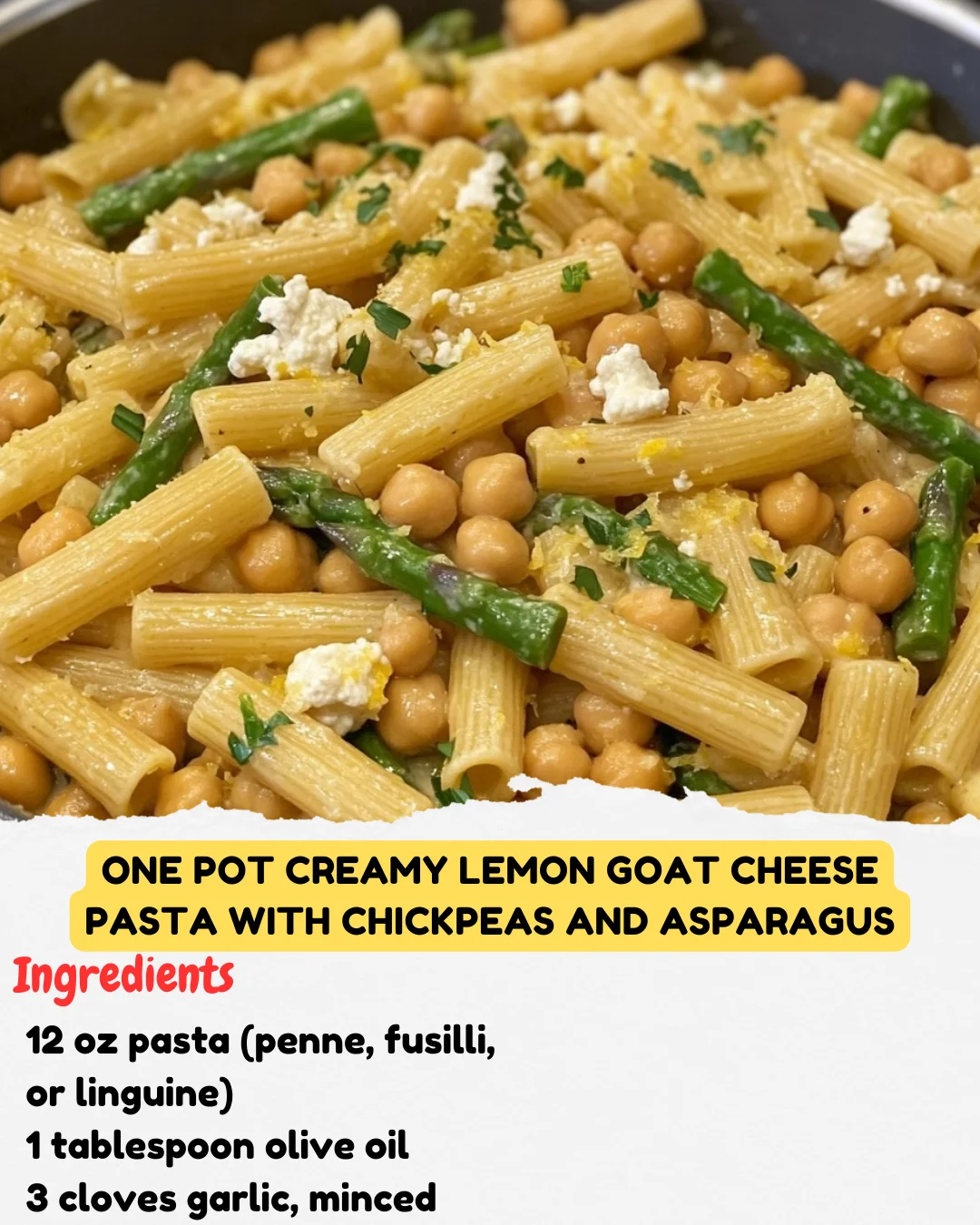
12 oz pasta (penne, fusilli, or linguine)
1 tablespoon olive oil
3 cloves garlic, minced
1/2 teaspoon red pepper flakes (optional)
1 bunch asparagus, trimmed and cut into 1-inch pieces
1 can (15 oz) chickpeas, drained and rinsed
2 cups vegetable broth
1 cup milk (or plant-based alternative)
4 oz goat cheese, crumbled
1 teaspoon lemon zest
2 tablespoons lemon juice
Salt and black pepper, to taste
1/4 cup fresh basil or parsley, chopped
1/4 cup grated Parmesan cheese (optional)
Directions
In a large pot or deep skillet, heat olive oil over medium heat. Add garlic and red pepper flakes, sautéing for 1 minute until fragrant.
Add asparagus and chickpeas, cooking for another 2 minutes.
Pour in vegetable broth and milk, then add the pasta. Stir to combine. Bring to a simmer and cook for 10–12 minutes, stirring occasionally, until pasta is al
dente and liquid is mostly absorbed.
Reduce heat to low and stir in goat cheese, lemon zest, and lemon juice until creamy. Season with salt and black pepper to taste.
Remove from heat and garnish with fresh basil or parsley and Parmesan cheese if using. Serve immediately.
Prep Time: 10 minutes, Cooking Time: 15 minutes, Total Time: 25 minutes, Kcal: 450 per serving, Servings: 4
Step-by-Step Guide
Follow these detailed instructions for perfect results. First, gather and prep all ingredients before heating your pot. This "mise en place" is crucial for a smooth process. Use a large, deep skillet or Dutch oven with a tight-fitting lid. When adding the pasta in step 3, ensure it is fully submerged in the broth-milk mixture; if not, add a splash more broth. Stir every 2-3 minutes to prevent sticking. The dish is done when the pasta is al dente and the sauce has thickened to a creamy consistency that coats the back of a spoon.
Serving Suggestions
This creamy pasta is a complete meal but can be elevated with simple sides. Serve with a crisp green salad dressed with a light vinaigrette to cut through the richness. For added texture, offer a side of garlic-rubbed crostini. A glass of chilled Sauvignon Blanc or Pinot Grigio complements the lemon and goat cheese flavors beautifully. For a heartier presentation, top with extra crumbled goat cheese, toasted pine nuts, or a drizzle of high-quality olive oil just before serving.
How-to Summary
This one-pot pasta dish is built in layers: sauté aromatics, briefly cook vegetables, add liquids and pasta to simmer together, then finish with creamy cheese and bright lemon. The starch from the pasta thickens the broth and milk into a luxurious sauce, while the goat cheese adds tangy creaminess without heavy cream.
Frequently Asked Questions
Can I use a different cheese? Yes. For a similar tangy profile, try feta or cream cheese. For a richer sauce, use mascarpone. For a dairy-free version, use vegan cream cheese and nutritional yeast.
How do I store and reheat leftovers? Store in an airtight container for up to 3 days. Reheat gently in a skillet with a splash of broth or milk to revive the creamy sauce, as the pasta will continue to absorb liquid.
Can I add protein? Absolutely. Sliced grilled chicken, sautéed shrimp, or flaked salmon are excellent additions. Add cooked protein when stirring in the goat cheese to just warm through.
My sauce is too thin. How can I thicken it? Continue simmering uncovered for a few more minutes to reduce. Alternatively, mix a teaspoon of cornstarch with a tablespoon of cold water and stir it into the simmering sauce.
Can I make this gluten-free? Yes. Use your favorite gluten-free pasta. Be aware that cooking times may vary, and some varieties release less starch, so the sauce might be slightly thinner.
Common Mistakes to Avoid
- Overcooking the Garlic: Sauté just until fragrant (about 1 minute) to avoid a bitter taste.
- Using Undersized Cookware: A pot that's too small will lead to uneven cooking and spills. Ensure it's large enough for all ingredients.
- Neglecting to Stir: Stir occasionally during simmering to prevent the pasta from sticking to the bottom and cooking unevenly.
- Adding Cheese on High Heat: Always reduce the heat to low before adding the goat cheese to prevent it from separating or becoming grainy.
- Overcooking the Asparagus: Cutting it into 1-inch pieces ensures it cooks quickly and remains tender-crisp, adding pleasant texture.
Conclusion
This One-Pot Creamy Lemon Asparagus Pasta with Chickpeas is a testament to how simple ingredients can create an elegant, satisfying meal. It masterfully combines bright citrus, creamy cheese, and hearty vegetables in a single pot, minimizing cleanup without sacrificing flavor. It’s a versatile recipe that welcomes customization while consistently delivering a restaurant-quality dish in under 30 minutes. Perfect for a busy weeknight yet impressive enough for guests, this pasta is sure to become a cherished staple in your cooking repertoire.