No-Knead Skillet Bread with Rosemary
Description
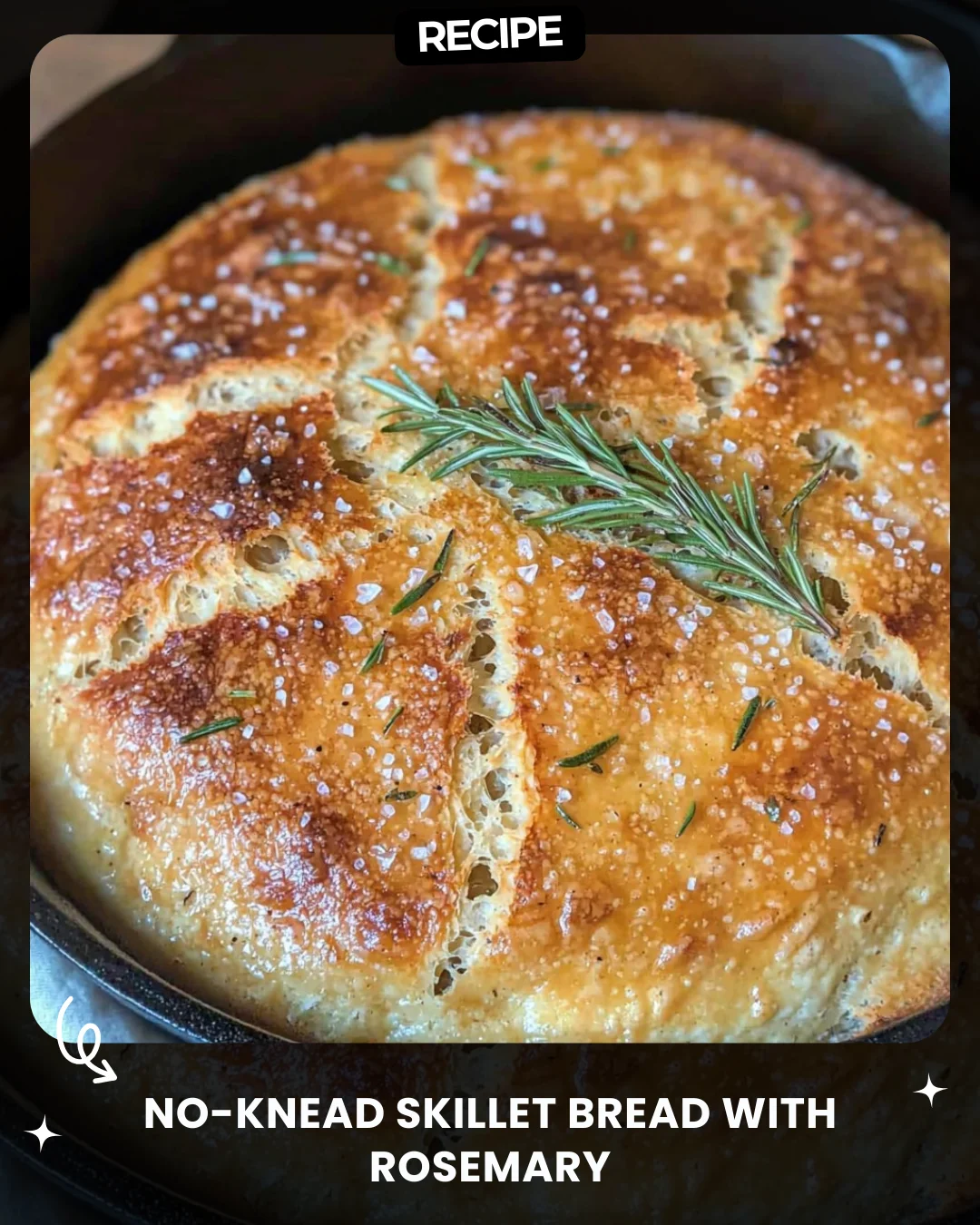
No-Knead Skillet Bread with Rosemary
Ingredients
3 cups all-purpose flour
1 teaspoon salt
1 teaspoon sugar
1 teaspoon instant yeast
1 ½ cups warm water
2 tablespoons olive oil (for greasing and brushing)
2 teaspoons fresh rosemary, chopped (plus extra for garnish)
Flaky sea salt (for sprinkling)
Instructions
Mix the Dough:
In a large mixing bowl, combine the flour, salt, sugar, and instant yeast.
Gradually add the warm water and mix with a wooden spoon until a sticky dough forms.
Cover the bowl with plastic wrap or a kitchen towel and let it rise at room temperature for 8-12 hours, or until doubled in size.
Prepare the Skillet:
Preheat your oven to 450°F (230°C).
Grease a cast-iron skillet (10-12 inches) with 1 tablespoon of olive oil.
Shape the Dough:
Lightly flour your hands and transfer the dough onto a floured surface.
Gently shape it into a round loaf and place it into the prepared skillet.
Second Rise:
Cover the skillet with a kitchen towel and let the dough rise for another 30 minutes.
Add Toppings:
Brush the top of the dough with the remaining olive oil.
Sprinkle with chopped rosemary and flaky sea salt.
Bake:
Bake the bread in the preheated oven for 30-35 minutes, or until golden brown and crusty on top.
Cool and Serve:
Allow the bread to cool slightly before slicing. Serve warm with butter, olive oil, or your favorite dip!
Prep Time: 10 minutes (active) + rising time
Cook Time: 30 minutes
Servings: 6-8
This no-knead bread is perfect for beginner bakers and pairs beautifully with soups, salads, or as a standalone snack!
Step-by-Step Guide
Follow these detailed instructions for perfect skillet bread every time. After mixing the dough, ensure your water is warm (about 105-110°F) to properly activate the yeast without killing it. For the long rise, a cool room temperature (around 70°F) is ideal for the full 8-12 hours; a warmer spot will speed it up. When shaping, avoid over-handling. Simply fold the edges of the dough toward the center 4-5 times to create surface tension, then flip it seam-side down into the oiled skillet. The preheated oven is non-negotiable for a good “oven spring” and crust.
Serving Suggestions
This rosemary bread is incredibly versatile. For an appetizer, serve it warm with a dish of high-quality olive oil and balsamic vinegar for dipping. It’s the perfect companion to hearty soups like tomato basil or a creamy potato leek. Crumble it over a fresh garden salad for homemade croutons, or use thick slices to make gourmet sandwiches, especially with roasted turkey and cranberry sauce. For a simple snack, top a slice with ripe avocado, a sprinkle of salt, and red pepper flakes.
How-to Summary
In short: Mix flour, salt, sugar, and yeast. Add warm water to form a sticky dough. Let rise for 8-12 hours. Shape into a round, place in an oiled skillet, and rest 30 minutes. Top with oil, rosemary, and salt. Bake at 450°F for 30-35 minutes until golden. Cool slightly and serve.
Frequently Asked Questions
Can I use active dry yeast instead of instant? Yes, but you should activate it first. Dissolve the sugar and yeast in the warm water and let it sit for 5-10 minutes until foamy before adding to the flour.
My dough didn’t rise much. What happened? The yeast may be old, the water was too hot and killed it, or your room was too cold. Ensure your yeast is fresh and the environment is warm enough.
Can I make this dough ahead? Absolutely. After the initial rise, you can cover the bowl tightly and refrigerate the dough for up to 3 days. Let it come to room temperature for an hour before shaping and baking.
What if I don’t have a cast-iron skillet? Any oven-safe baking dish or a standard loaf pan will work. Ensure it’s well-greased. The baking time may vary slightly.
How do I store leftovers? Store completely cooled bread in a paper bag for up to 2 days for a soft crust, or in a plastic bag for a chewier crust. Reheat slices in a toaster or a 350°F oven for 5 minutes.
Common Mistakes to Avoid
- Over-flouring the dough: The dough should be sticky and shaggy. Adding too much flour while mixing or shaping will result in a dense, dry loaf.
- Skimping on rise time: The long, slow fermentation is key to flavor and texture. Don’t rush it.
- Using a cold skillet: While you don’t preheat the skillet here, ensure it’s at room temperature. Putting dough into a cold skillet from the fridge can hinder the final rise.
- Slicing immediately: Cutting into the bread while it’s piping hot traps steam and makes the interior gummy. Let it cool for at least 15-20 minutes.
Conclusion
This no-knead skillet bread with rosemary is a testament to how simple ingredients and patience can yield spectacular results. Its crispy, herb-flecked crust and soft, airy interior are sure to impress, with minimal hands-on effort required. It demystifies bread baking, making it an accessible and rewarding project for any cook. Master this foundational recipe, and you’ll have the confidence to explore countless variations with different herbs, cheeses, or seeds.