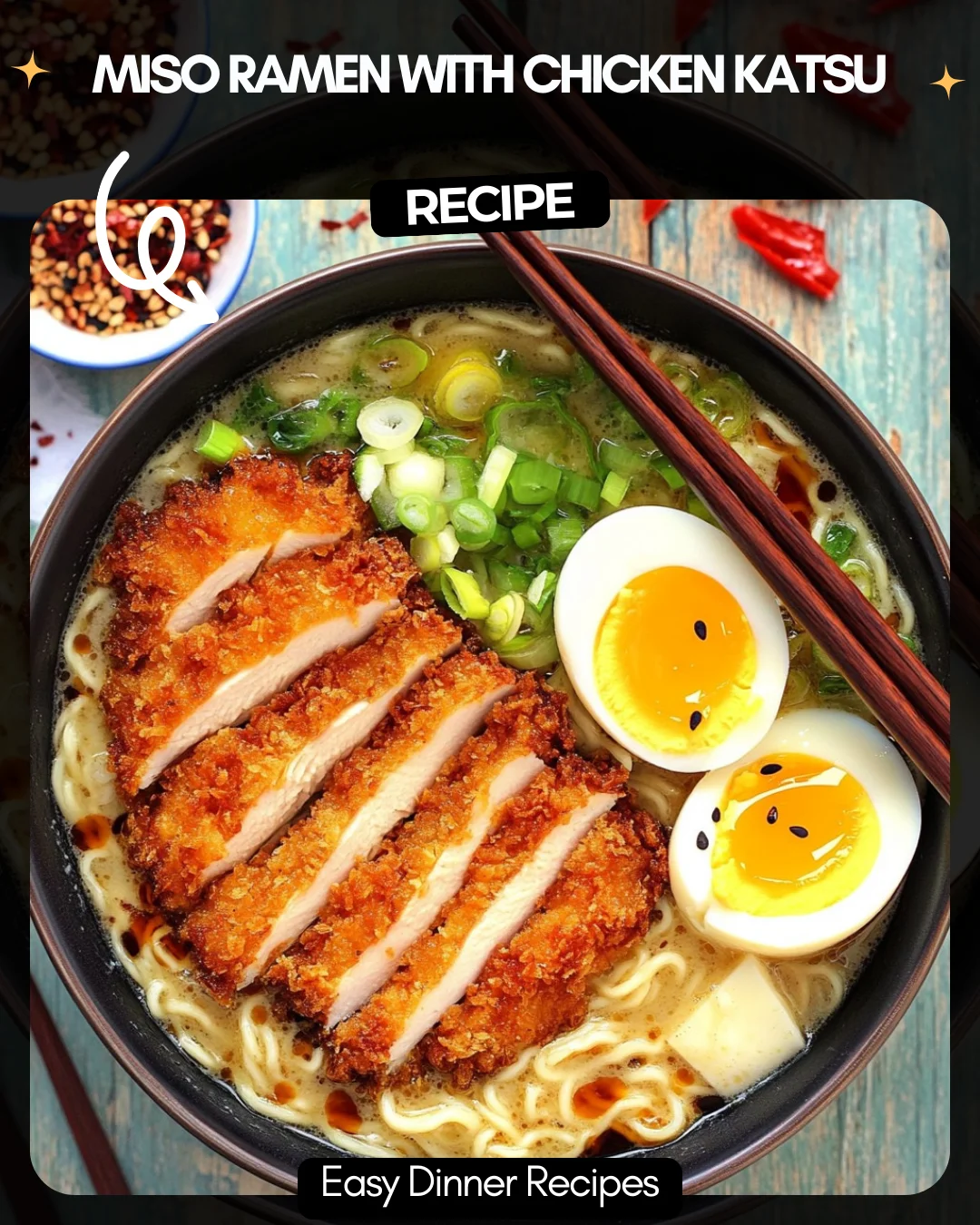
Miso Ramen with Chicken Katsu
Description
Miso Ramen with Chicken Katsu
A comforting bowl of Miso Ramen brings together the rich umami of miso paste and the creamy touch of coconut milk. Originating from Hokkaido, Japan, this dish is a winter favorite, featuring ramen noodles, vegetables, and flavorful broth. My version adds a delightful twist with crispy Chicken Katsu, offering a perfect balance of textures and flavors. It’s a soul-warming experience perfect for chilly nights!
1½ Tbsp oil
1 large shallot, sliced
3-4 garlic cloves, finely chopped
1 Tbsp ginger, finely chopped
½ tsp red chili flakes
1 cup carrot, julienned
1 cup shiitake mushrooms, sliced
6 cups chicken broth
1 can (14oz) coconut milk
3 Tbsp soy sauce
¼ cup miso paste
3 ramen noodle packets
4-5 baby bok choy, halved
1 tsp sesame oil
Chicken Katsu:
2 chicken breasts, pounded thin
½ cup flour
2 eggs, whisked
2 cups panko
Directions:
1. Sauté shallot, garlic, ginger, and chili flakes in oil. Add carrot and mushrooms, cook for 3 minutes.
2. Add broth, coconut milk, soy sauce, and miso paste. Simmer for 15 minutes.
3. Cook ramen noodles in the broth, then stir in sesame oil and bok choy.
4. For katsu, dredge chicken in flour, egg, and panko. Fry until golden.
5. Assemble bowls with noodles, broth, katsu, and toppings like scallions, chili oil, and eggs.
Prep Time: 15 minutes
Kcal: ~550 per serving
Step-by-Step Guide
1. Prepare the Aromatics: Heat 1½ Tbsp oil in a large pot over medium heat. Add the sliced shallot, chopped garlic, ginger, and chili flakes. Sauté for 2-3 minutes until fragrant.
2. Cook the Vegetables: Add the julienned carrot and sliced shiitake mushrooms to the pot. Cook, stirring occasionally, for about 3 minutes to soften slightly.
3. Build the Broth: Pour in 6 cups of chicken broth and one 14oz can of coconut milk. Add 3 Tbsp soy sauce. Whisk in ¼ cup miso paste until fully dissolved. Bring to a gentle simmer and cook for 15 minutes to allow flavors to meld.
4. Cook Noodles & Greens: Add the ramen noodles directly to the simmering broth and cook according to package instructions (usually 3-4 minutes). In the last minute, stir in the halved baby bok choy and 1 tsp sesame oil.
5. Make the Chicken Katsu: While the broth simmers, prepare the chicken. Pound two chicken breasts to an even ½-inch thickness. Dredge each piece in flour, then dip in whisked egg, and finally coat thoroughly with panko breadcrumbs. Fry in ½ inch of hot oil (350°F/175°C) for 4-5 minutes per side until golden brown and cooked through. Let rest on a wire rack before slicing.
6. Assemble: Divide the noodles and broth among bowls. Top with sliced chicken katsu and your chosen garnishes.
Serving Suggestions
Serve this ramen immediately while the broth is piping hot and the katsu is crispy. Traditional and recommended toppings include:
- Soft-boiled or jammy eggs
- Sliced green onions (scallions)
- A drizzle of chili oil or rayu
- Nori (seaweed) sheets
- Additional sesame seeds or a squeeze of fresh lime
How-to Summary
Sauté aromatics and vegetables. Simmer broth with coconut milk and miso. Cook noodles and bok choy in the broth. Dredge and fry pounded chicken in panko for katsu. Slice katsu and assemble bowls with broth, noodles, and toppings.
Frequently Asked Questions
1. Can I use a different protein for the katsu? Absolutely. Pork cutlet (tonkatsu) is a classic alternative. For a vegetarian version, use firm tofu, sliced and pressed, or thick portobello mushroom caps, following the same breading process.
2. What type of miso paste is best? Red (aka) miso provides the deepest, most robust umami flavor ideal for this rich ramen. White (shiro) miso is milder and sweeter. Yellow miso is a good middle-ground option.
3. How can I make this dish gluten-free? Use tamari instead of soy sauce, ensure your miso paste is gluten-free (many are), and use gluten-free ramen noodles and panko breadcrumbs.
4. Can I prepare components ahead of time? Yes. The broth can be made 1-2 days in advance and reheated. The chicken katsu can be breaded and kept refrigerated for a few hours before frying. Fry just before serving for optimal crispiness.
5. Is the coconut milk essential? It adds a signature creamy richness, but you can substitute with an additional cup of broth and a splash of heavy cream or a dairy-free alternative for a lighter version.
Common Mistakes to Avoid
- Boiling the Miso: Never add miso paste to a rolling boil, as high heat destroys its delicate probiotics and flavor. Always whisk it into a simmering broth and avoid bringing it back to a full boil.
- Soggy Katsu: Let the fried chicken rest on a wire rack, not on paper towels. This allows steam to escape and keeps the coating crispy.
- Overcooking Noodles: Cooking the noodles directly in the broth can lead to overcooked, mushy noodles and a starchy broth. If preparing multiple servings, consider cooking noodles separately and adding them to bowls just before serving.
- Not Tasting the Broth: Miso and soy sauce vary in saltiness. Always taste the broth after combining and adjust seasoning with a little more soy sauce or a pinch of salt if needed.
Conclusion
This Miso Ramen with Chicken Katsu combines the soul-warming comfort of a classic Japanese noodle soup with the satisfying crunch of a fried cutlet. By following the detailed steps and avoiding common pitfalls, you can create a restaurant-quality dish at home that balances deep umami, creamy texture, and exciting contrast. It’s a fulfilling culinary project perfect for impressing guests or treating yourself to a truly special meal.