Homemade Gluten Free Pasta Recipe (Meal Prep Friendly)
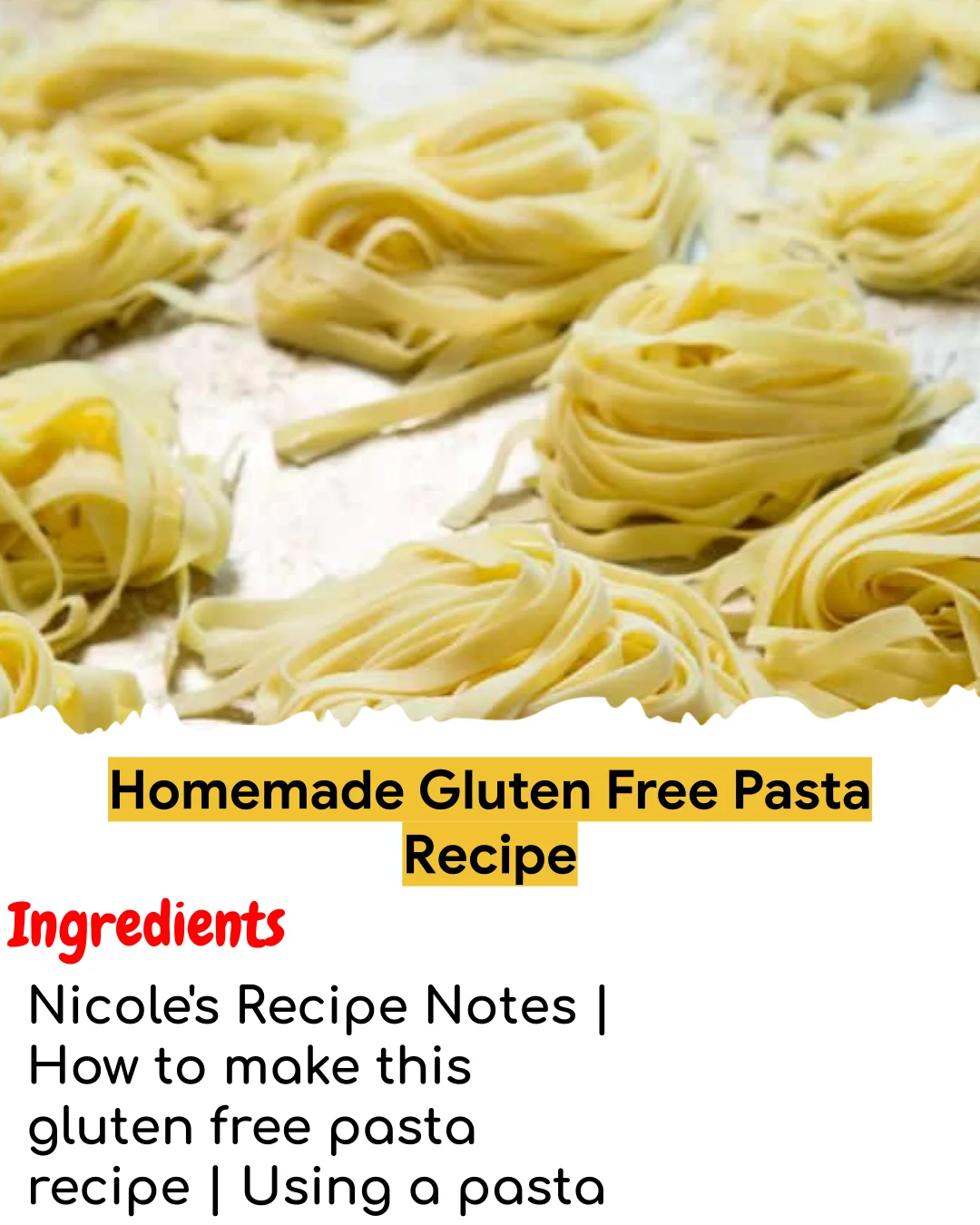





























Cooking and Serving: 50 minutes | 1.5 pounds fresh pasta
Ingredients
Nicole’s Recipe Notes | How to make this gluten free pasta recipe | Using a pasta machine
Description
Prep Time: 45 minutes | Cook Time: 5 minutes | Total Time: 50 minutes | Servings: 1.5 pounds fresh pasta
Ingredients
Nicole’s Recipe Notes
How to make this gluten free pasta recipe
Using a pasta machine
Expert tips
Instructions
Homemade Gluten Free Pasta Recipe.
Notes
* How to make this gluten free pasta recipe
* Using a pasta machine
* Storage instructions
* Homemade Gluten Free Pasta Recipe
“Used the food processor method. The pasta made up as easily as my (long ago)
semolina pasta! I am so happy to have an easy, direct method for making pasta –
commercial GF pasta is great, if the size and type is available. In this case I
needed Pappardelle for a recipe. Came out of the pot perfectly! The recipe was
Fresh pasta is really, really special, and sometimes it’s worth making. This
recipe makes gluten free pasta that’s tender, rich, less floury than dried
pasta, and has a perfect chewy texture.
There are a couple varieties of fresh gluten free pasta that you can buy, even
now at Trader Joe’s, but they’re very expensive and only come in a few shapes.
If you’d like to make fresh noodles to make gluten free lasagna
, you’ll need to make
them yourself—and it’s easy to make rectangular shapes. If you’re missing
tortellini, it’s best to make your own.
Once you’ve tried this recipe, be sure to bookmark it or . You’ll be
coming back when it’s time to make something really special.
Raw unshaped gluten free pasta dough rolled up
unshaped gluten free pasta dough rolled up
HOW TO MAKE THIS GLUTEN FREE PASTA RECIPE
It’s best to use a food processor to make this fresh pasta dough. If you only
have a small food processor, just make it in batches. Just divide the recipe
roughly in half, or in quarters if necessary, and be sure to use at least 1 egg
or 1 egg yolk in each batch.
IF YOU’RE USING A FOOD PROCESSOR TO MAKE THE DOUGH.
1. Place the dry ingredients first (the gluten free flour blend, including
xanthan gum, plus Expandex or tapioca starch, along with salt) in the food
processor, followed processor a few times, just until the mixture is combined. It won’t be
2. With the food processor on and the hopper removed, drizzle in 1/3 cup of
water. The dough will be wet, but not smooth.
3. Add more water slowly, with the machine still on, and the pasta dough will
clump and come together. Process until it’s smooth.
IF YOU’RE MAKING THE DOUGH
1. Place all of the dry ingredients in a large mixing bowl, just as you did in
the food processor. Whisk them together.
2. Use your mixing spoon to create a well in the center of the dry ingredients,
and add the oil, eggs, and egg yolks. Mix to combine.
3. Add 1/3 cup of water and mix until the dough is moistened, then add more
water be stiff, but it also shouldn’t be very sticky on your fingers.
TO SHAPE THE PASTA DOUGH.
1. Whether you’re using a pasta machine, whether it’s automatic or hand crank,
you’ll need to roll the dough into a rectangle.
2. Sprinkle the dough on a flat surface lightly with flour to keep it from
sticking to the rolling pin or the rolling surface. Keep the dough moving to
help prevent sticking.
3. If you’re using a pasta machine, you’ll feed the dough through the machine
twice at the largest setting, with the rollers farthest apart from one
another. Then, turn the setting up, so the rollers are closer together, and
roll it twice. The dough you feel through the machine should be more narrow
than the full width of the rollers or it will get caught in the sides.
4. I like to stop at level “5” on a pasta roller, and not try to roll the pasta
any thinner or it starts to tear.
5. If you’re rolling the pasta entirely close as possible to 1/8-inch thick.
6. Cut the pasta into shapes however you like, using a pasta machine or by
hand. I like to cut mine into flat, long noodles like fettuccini, but you
can cut spaghetti if you like using a pasta machine. You can also roll the
noodles into rectangles and cut them about 6- to 8-inches long and about 2-
to 3-inches wide and use them to make fresh noodles for our family favorite
7. If you’ve made long pasta of any kind, twist it gently into nests and allow
it to dry briefly before boiling it.
8. You can also use a pasta drying rack, where you drape the long noodles over
wooden or plastic dowels.
COOKING AND SERVING THE PASTA.
1. Once a large pot of water has come to a boil, you’re ready to place the
fresh pasta in it and cook until it’s just al dente.
2. It takes no more than 2 to 3 minutes to cook fully. Don’t overcook, or it
will begin to fall apart.
3. Toss with olive oil or sauce, and serve immediately. You can even use it to
make a very special gluten free pasta salad
USING A PASTA MACHINE
You don’t need a pasta machine to make this gluten free pasta recipe, although I
do have one. Sometimes, I use it, and sometimes I don’t.
You don’t need any sort of fancy pasta machine to make it. You can run it
through a hand crank machine, like we do in our recipe for gluten free egg
It’s super easy, if you have the machine, but please don’t run out and get one
just because you think you must have it to make fresh pasta.
Oh, in case you’ve ever wondered how to take that pasta and shape it into fresh
gluten free tortellini
free ravioli , we can
Hand below pasta roller catching cut fresh angel hair pasta noodles
below pasta roller catching cut fresh angel hair pasta noodles
made in a pasta maker.
Gluten free pasta recipes don’t have to be daunting or difficult. You can whip
up a batch of gluten free pasta dough in no time. It’s not difficult. But I do
have few tips for you that’ll help make your own pasta better than regular pasta
If you’ve followed the recipe closely, the pasta dough shouldn’t be too wet. But
if it is, you need to work in a little more gluten free flour, just a sprinkle
at a time, until the dough is firm enough to work.
CAN YOU MAKE GLUTEN FREE PASTA VEGAN?
To get the real, authentic gluten free pasta taste and texture, I really do
think you need eggs. Having said that, I’ve seen folks have success with a flax
egg or a chia egg, but the pasta won’t look quite so pretty, and I think the
texture may change a little, too. Other egg substitutes for vegan gluten free
fresh pasta include aquafaba and non-dairy yogurt.
You do need some sort of binder like xanthan gum in your dough. Xanthan gum
helps with binding and texture. It mimics gluten without causing sensitivity in
most people. However, if you need to avoid it, you can try using an equal amount
of konjac powder instead, like I did in this recipe for gluten free biscuits
A close up of thinner piles of pasta on metal surface
close up of thinner piles of pasta on metal surface
Wrap the precut dough tightly, and it will last 3 to 5 days in the refrigerator.
If it feels stiff, drizzle it very lightly with some lukewarm water and knead it
into the dough until it’s pliable again (but not so much that it’s super
sticky). For longer storage, you can freeze it for up to three months, then
defrost in the refrigerator or at room temperature.
It’s also possible to dry the raw pasta or rolling and cutting it into fairly thin noodles, forming it into loose
“nests”, and setting it in your dehydrator on a low temperature for 12 to 24
hours. Then store the dried nests in an airtight container.
Can you add flavor to the raw pasta?
Yes, absolutely! This recipe already has a little salt in the dough, and you can
add other flavorings if you want, but the easiest and best way to create
flavorful pasta is to make beautiful, colorful pasta dishes.
Why did my pasta break?
When you’re making pasta, and the dough forms but breaks, you may not have
conditioned your dough enough. Pasta dough needs to be kneaded, rolled, and
folded multiple times before it’s ready to be rolled thin and cut. It can also
happen if the dough isn’t hydrated enough. Perhaps the eggs you used were a
little smaller than normal, for example (hence I recommend weighing the eggs out
What happens if you overcook gluten free pasta?
Cooking time is crucial for gluten free pasta. If you overcook it, even minute or two, it’ll go gummy, sticky, or mushy. You cook this pasta for only a
couple of minutes, until it’s al dente. If you’ve overcooked it, quickly pour
the pasta over ice water and hope for the best.
Do I have to use Expandex to make this pasta?
No! Although Expandex is modified tapioca starch and it is not the same as
“regular” tapioca starch, in this particular recipe, they can be used
interchangeably. You will likely need more additional water in your homemade
pasta, beyond the original 1/3 cup water, if you are using Expandex, and less if
you are using tapioca starch, to achieve the same consistency of dough.
My all purpose gluten free flour blend already contains tapioca starch. Do I
have to add more or can I leave that ingredient out?
You must add the additional tapioca starch (or Expandex) called for in the
recipe. All good quality, well balanced all purpose gluten free flour blends
contain tapioca starch as an ingredient. This recipe requires more than the
usual amount of tapioca starch in your well-balanced blend.
Do I need a food processor?
No, no can make the pasta dough using a bowl and spoon, and your clean hands to
knead the pasta. The way to make the smoothest dough most quickly is to use a
food processor, and if you only have a mini food processor, you can make the
dough in batches using that, as long as you divide the ingredients in half so
you don’t end up adding too much water.
Go Ad-Free
HOMEMADE GLUTEN FREE PASTA RECIPE
Prep Time: 45 minutes mins
Cook Time: 5 minutes mins
Yield: 1.5 pounds fresh pasta
Making fresh gluten free pasta at home is a labor of love, but it’s a simple
process with the right guidance. Find out how!
* Food processor, fitted with the steel blade
* 2 cups (280 g) all purpose gluten free flour blend
(I like Better Batter here; click through for details on appropriate blends)
plus more for dusting
* 1 ¼ teaspoons xanthan gum, omit if your blend already contains it
* 5 tablespoons (45 g) Expandex modified tapioca starch, (or replace with an
* ½ teaspoon kosher salt
* 2 (100 g (weighed out of shell)) eggs, at room temperature, beaten
* 2 (50 g) egg yolks, at room temperature, beaten
* 1 tablespoon (14 g) extra virgin olive oil
* ⅓ cup (2.67 fluid ounces) warm water, plus more, as necessary
MAKING THE DOUGH WITH A FOOD PROCESSOR.
* In the bowl of a food processor fitted with the steel blade, place the flour,
xanthan gum, Expandex (or tapioca starch), salt, olive oil, eggs and egg
yolks, and pulse until combined.
* Add 1/3 cup water to the mixture in the food processor, and process until the
* Turn on the food processor on low speed, remove the hopper and add more water
very slowly until the dough clumps to one side of the food processor.
MAKING THE DOUGH WITHOUT A FOOD PROCESSOR.
* In a large mixing bowl, place the flour, xanthan gum, Expandex (or tapioca
starch), and salt. Whisk to combine well.
* Create a well in the center of the dry ingredients, and add the oil, eggs and
egg yolks. Mix to combine.
* Add 1/3 cup water to the mixture, and mix until fully moistened.
* Add water about 1 teaspoonful at a time, mixing constantly until the dough
holds together well. If the dough feels stiff, add more water until pliable
but stop before the dough becomes very sticky.
* Transfer the dough to a lightly floured surface and divide it into 4 parts.
Work with one part at a time and cover the others with plastic wrap to
prevent the remaining pieces from losing moisture.
* With clean hands, knead the dough until smooth and roll into a rectangle.
Divide the dough in half, and roll each half into a rectangle about 1/4-inch
* Trim the edges or the rectangle with a pastry wheel or sharp knife.
* Dust the rolled-out dough lightly with flour, and feed each piece through a
pasta machine, if using. I don’t like to roll the dough any thinner than the
“5” setting on my machine, or it begins to tear.
* If you’re not using a pasta machine, simply roll each piece as close to
1/8-inch thick as possible, as evenly as possible. Dust the pasta lightly
with more flour as necessary to keep it from sticking to the surface and to
* Cut into shapes using the pasta machine or a sharp knife.
* Allow the fresh pasta to sit out to dry, briefly, while you boil water to
cook it. If you’ve cut your pasta into long noodles, twist it gently into
nests to dry so that the noodles are less fragile during cooking.
* Bring a large pot of salted water to a rolling boil.
* Place the fresh pasta in the water and cook, stirring to prevent the dough
from clumping, for about 2 minutes or until it reaches an al-dente texture.
* Toss with sauce and serve immediately.
About Expandex modified tapioca starch.
For information on where to find Expandex, please see the Resources page
For information on how to replace Expandex with Ultratex 3, readily available in
most countries outside the United States, in the gluten free bread recipes in
GFOAS Bakes Bread, scroll to #6 in Resources.
I have not yet tested Ultratex 3 in this recipe, but I would recommend trying 15
grams Ultratex 3 in place of Expandex, and adding another 30 grams of Better
Batter to the recipe. Ultratex 3 is at least 3 times as strong as Expandex.
Although Expandex is a modified tapioca starch and is not equivalent to regular
tapioca starch, in this recipe they can be used interchangeably. You will likely
need more additional water in your homemade pasta if you are using Expandex, and
less if you are using tapioca starch.
Nutrition information.
Nutrition information is per pound assuming 1.5 pounds in the whole recipe, and
assumes that tapioca starch, not Expandex modified tapioca starch, is used in
the recipe. It is an estimate provided as a courtesy and should not be relied
| Cholesterol: 477mg | Sodium: 1045mg | Potassium: 121mg | Fiber: 9g | Sugar:
0.4g | Vitamin A: 663IU | Calcium: 66mg | Iron: 2mg
Nutrition information is automatically calculated, so should only be used as an
Overhead view of piles of pasta on metal surface
view of piles of pasta on metal surface