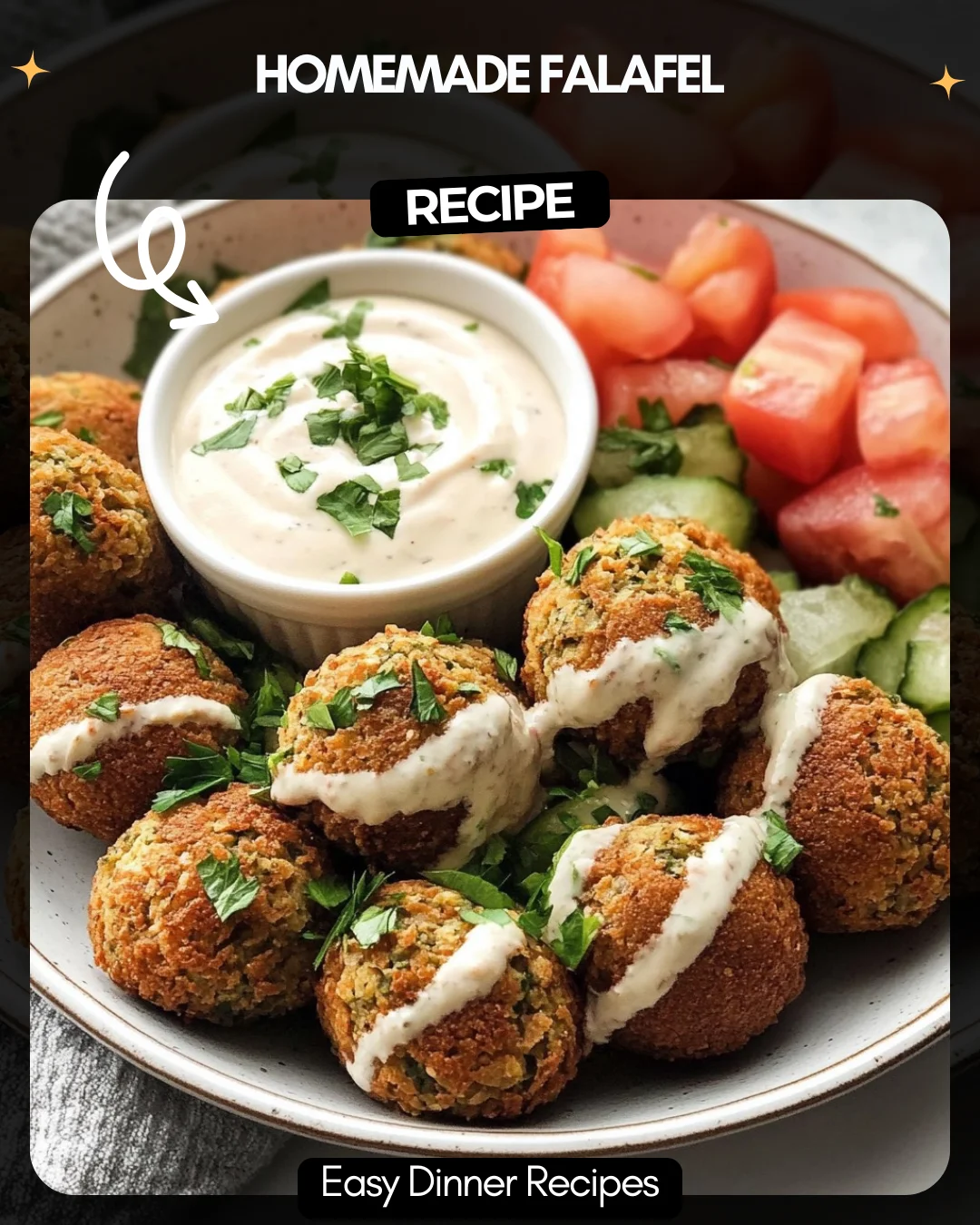
Description
Homemade Falafel
Ingredients :
1 cup dried chickpeas
½ large onion, roughly chopped (about 1 cup)
½ cup fresh parsley, finely chopped
¼ cup fresh cilantro, finely chopped
1 tsp salt
4 cloves garlic
2 tsp cumin
1 tsp ground coriander
1 tsp baking powder
4 tbsp chickpea flour (or all-purpose flour)
Directions:
Soak dried chickpeas in a large bowl of water, ensuring they’re covered by at least 2 inches. Soak for 24 hours, then drain.
In a food processor, combine soaked chickpeas, chopped onion, parsley, cilantro, salt, garlic, cumin, and ground coriander. Process until well-blended but not pureed.
Transfer the mixture to a bowl and sprinkle with chickpea flour and baking powder. Mix with a spatula until evenly combined.
Form the mixture into small balls, about 1 heaping tablespoon each, and flatten slightly. Place on a parchment-lined tray and refrigerate for 1 hour to set.
Heat a couple of inches of oil in a large skillet over medium heat. Gently place falafel balls in the hot oil, leaving space between them.
Cook each side for 30-60 seconds until golden, then transfer to a paper towel-lined tray to drain excess oil.
Prep Time: 15 mins (plus soaking)
Kcal: 90 per falafel | Servings: 20
Step-by-Step Guide
Follow these detailed steps for perfect falafel every time. First, ensure you use DRIED chickpeas, not canned; canned chickpeas contain too much moisture and will create a mushy mixture. Soak them for a full 24 hours. After draining, combine them in your food processor with the onion, herbs, garlic, and spices. Pulse in short bursts until the mixture resembles coarse sand—it should hold together when pressed but still have texture. This is crucial for the right consistency. After mixing in the chickpea flour and baking powder, chill the mixture. This resting time allows the flour to hydrate and bind everything, preventing the falafel from falling apart in the oil.
Serving Suggestions
Serve your hot, crispy falafel immediately. The classic presentation is in a warm pita pocket with hummus, diced tomatoes, cucumber, red onion, and a generous drizzle of tahini sauce. For a lighter option, create a falafel salad bowl over a bed of greens with similar toppings. They also make an excellent appetizer with a side of tzatziki or a spicy harissa yogurt dip for dipping.
How-to Summary
To summarize: Soak dried chickpeas for 24 hours. Blend with aromatics to a coarse meal. Mix in chickpea flour and baking powder. Form into patties and chill for 1 hour. Deep or pan-fry in hot oil until golden brown on all sides. Drain on paper towels and serve hot.
Frequently Asked Questions
Can I bake the falafel instead of frying? Yes. For a baked version, brush formed patties with oil and bake at 400°F (200°C) for 20-25 minutes, flipping halfway, until golden and crisp.
Can I make the mixture ahead of time? Absolutely. The uncooked mixture can be covered and refrigerated for up to 24 hours before forming and cooking, which can actually improve the flavor.
Why did my falafel fall apart in the oil? This is usually due to insufficient binding. Ensure you are using chickpea flour, the mixture is coarse (not pureed), and it has chilled thoroughly before frying. The oil must also be hot enough (around 350°F/175°C).
Can I freeze falafel? Yes, both uncooked and cooked falafel freeze well. Freeze uncooked patties on a tray before transferring to a bag. Fry directly from frozen, adding a couple extra minutes. Reheat cooked falafel in an oven or air fryer.
What’s the best oil for frying? Use a neutral oil with a high smoke point, such as avocado, sunflower, or canola oil, for the best results and clean flavor.
Common Mistakes to Avoid
- Using canned chickpeas, which leads to a wet, dense, and crumbly result.
- Over-processing the mixture into a smooth paste instead of a coarse texture.
- Skipping the chilling step, which is essential for the patties to hold their shape.
- Crowding the pan while frying, which lowers the oil temperature and causes soggy, oily falafel.
- Not having the oil hot enough before adding the falafel, leading to oil absorption and a greasy finish.
Conclusion
Mastering homemade falafel is about respecting the process: the long soak, the coarse grind, and the essential chill. This recipe delivers the authentic, crispy-on-the-outside, fluffy-on-the-inside texture and herbaceous flavor that defines great falafel. With the detailed guide and tips provided, you can confidently avoid common pitfalls and create a delicious, versatile meal that’s far superior to most store-bought versions. Enjoy the rewarding process and the incredible results.