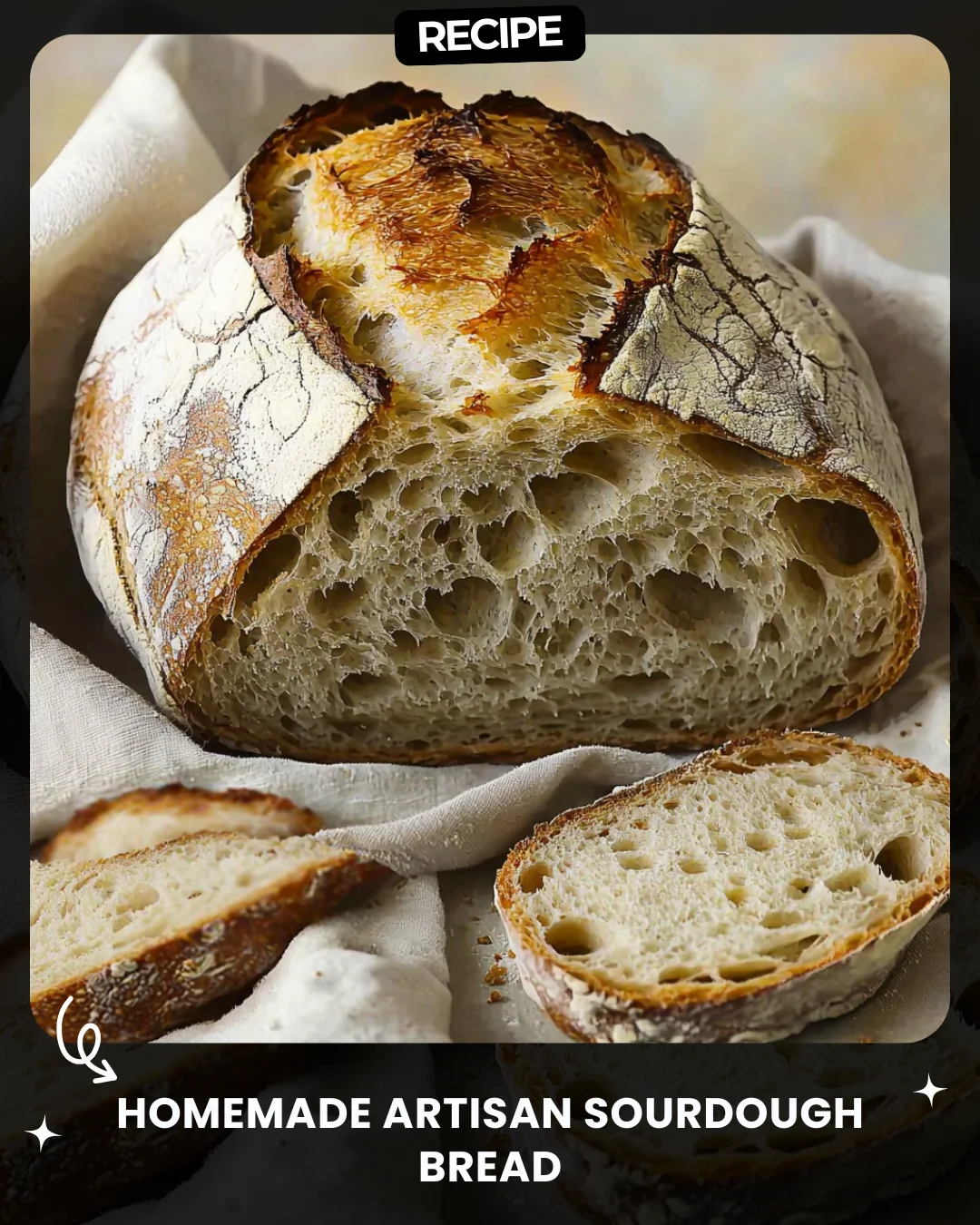
Description
Homemade Artisan Sourdough Bread
Ingredients
500g bread flour
350g water (room temperature)
100g active sourdough starter
10g sea salt
Directions
Mix the dough: In a large mixing bowl, combine the flour and water. Let it rest for 30 minutes (autolyse).
Add starter and salt: Add the sourdough starter and salt. Mix until combined, forming a shaggy dough.
Stretch and fold: Over the next 3-4 hours, perform 4-5 sets of stretches and folds every 30 minutes to build gluten.
Bulk ferment: Let the dough rest in a covered bowl until it doubles in size (6-8 hours at room temperature or overnight in the fridge).
Shape the dough: Gently shape the dough into a boule or batard. Place it in a floured proofing basket.
Final proof: Let the dough proof for 1-2 hours at room temperature or in the fridge overnight.
Bake: Preheat your oven to 475°F (245°C) with a Dutch oven inside. Score the dough, place it into the Dutch oven, and bake covered for 20 minutes. Remove the lid and bake for another 20-25 minutes until golden brown.
Cool: Let the bread cool completely before slicing.
Prep Time: 30 minutes (active), 12-18 hours (resting)
Cook Time: 45 minutes
Total Time: About 14-19 hours
Servings: 12 slices
Calories: 120 kcal per slice
#SourdoughLove #BakingAtHome #ArtisanBread #HomemadeGoodness #CrustyLoaf #BreadMaking
Step-by-Step Guide
Begin by mixing the flour and water in a large bowl until no dry bits remain. Cover and let this mixture rest for 30 minutes (autolyse). This hydrates the flour and begins gluten development. After resting, add the active starter and salt. Use wet hands to mix and pinch the ingredients until fully incorporated into a shaggy, sticky dough. Cover the bowl.
Over the next 3-4 hours, perform 4-5 sets of stretch and folds. Every 30 minutes, wet your hand, grab one side of the dough, stretch it up, and fold it over the center. Rotate the bowl and repeat on all four sides. This builds strength without kneading. After the final fold, let the dough bulk ferment until roughly doubled.
Turn the risen dough onto a lightly floured surface. Gently shape it into a tight round (boule) or oval (batard). Place it seam-side up into a well-floured proofing basket or bowl lined with a floured cloth. For the final proof, cover and let it rest at room temperature for 1-2 hours, or refrigerate overnight for deeper flavor.
Preheat your oven to 475°F (245°C) with a Dutch oven inside for at least 45 minutes. Carefully turn the proofed dough onto parchment paper. Score the top with a sharp blade. Using the parchment as a sling, lower the dough into the hot Dutch oven, cover, and bake. After 20 minutes, remove the lid to allow the crust to color and crisp.
Serving Suggestions
Fresh sourdough is incredibly versatile. Serve thick slices toasted with high-quality butter, smashed avocado, or your favorite jam. It makes exceptional sandwiches, especially paninis or grilled cheese. For appetizers, slice into crostini and top with bruschetta, cheese, or pâté. Stale bread is perfect for bread pudding, croutons, or French toast.
How-to Summary
- Autolyse flour and water for 30 mins.
- Mix in starter and salt.
- Perform 4-5 stretch and folds over 3-4 hours.
- Bulk ferment until doubled (6-8 hrs).
- Shape and place in proofing basket.
- Final proof for 1-2 hrs at room temp.
- Bake in preheated Dutch oven: 20 mins covered, 20-25 mins uncovered.
- Cool completely before slicing.
Frequently Asked Questions
How do I know my starter is active enough? It should double in size 4-8 hours after feeding, have a bubbly surface, and pass the float test (a spoonful floats in water).
Can I use all-purpose flour instead of bread flour? Yes, but the crumb may be slightly less chewy. For best results, use a high-protein bread flour.
My dough didn’t rise much. What happened? The starter may have been weak, the room too cold, or the bulk fermentation time was insufficient. Ensure your starter is peak-active and your kitchen is around 70-75°F (21-24°C).
Why is my bread gummy inside? Slicing while still warm is the most common cause. The crumb continues to set as it cools. Always wait until completely cool.
Do I really need a Dutch oven? It’s highly recommended as it traps steam, creating the ideal environment for a crisp, professional crust. A baking stone with a steam pan is an alternative.
Common Mistakes to Avoid
- Using inactive starter: This is the #1 reason for dense bread. Always use a starter at its peak rise.
- Skipping the autolyse: This short rest makes the dough easier to handle and improves texture.
- Over-flouring during shaping: Too much flour can create dry streaks and prevent proper surface tension.
- Not scoring deeply enough: A shallow score won’t allow the bread to expand properly in the oven. Use a sharp blade and cut about 1/2 inch deep.
- Slicing too soon: Cutting into a hot loaf releases steam and results in a gummy texture. Patience is key.
Conclusion
Mastering artisan sourdough is a rewarding journey that connects you to a timeless baking tradition. While the process requires patience and attention to detail, the result—a loaf with a crackling crust, open crumb, and complex flavor—is unmatched. Use this guide as your foundation, don’t be discouraged by early imperfections, and enjoy the delicious, wholesome goodness of homemade bread. Happy baking!