

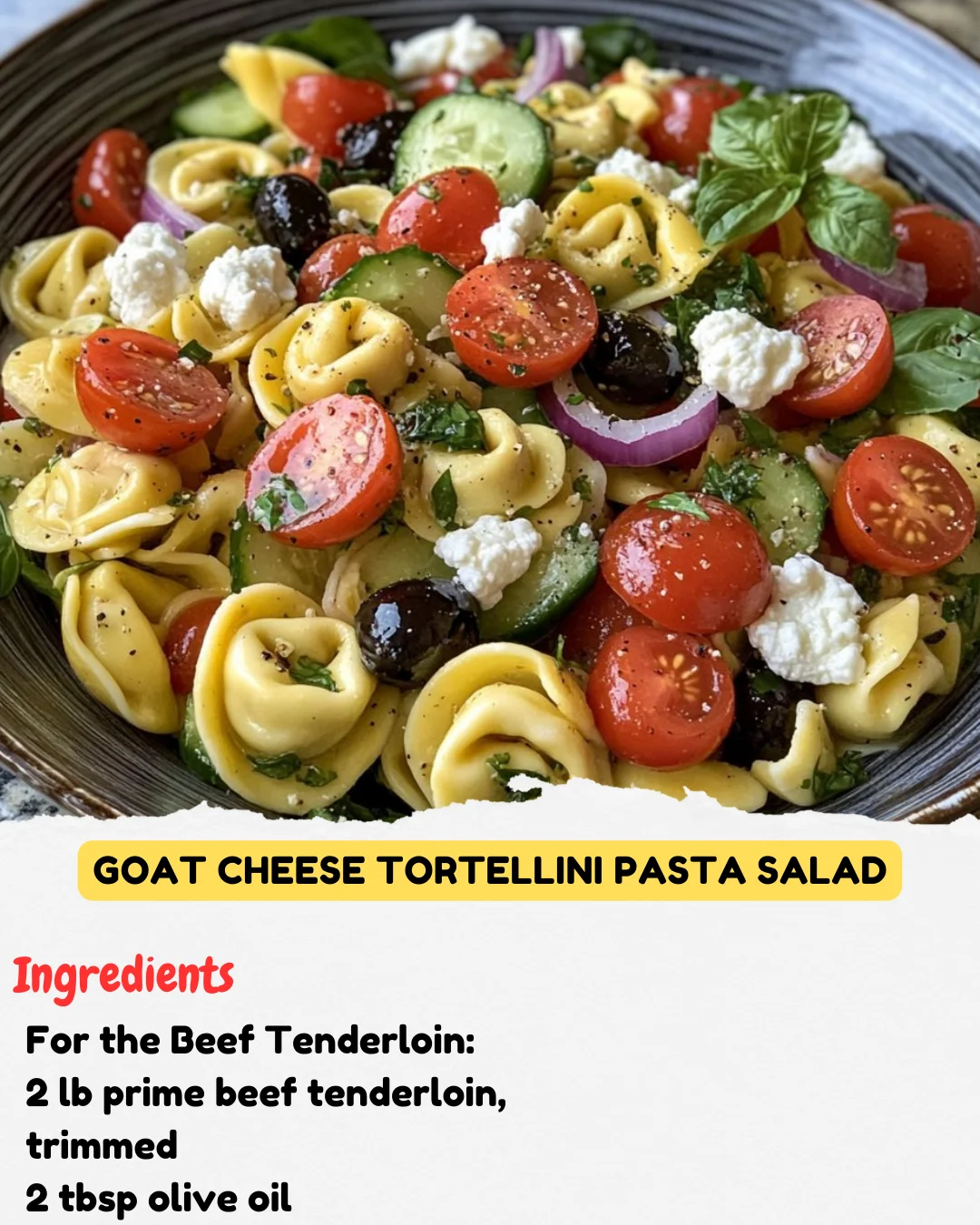
Goat Cheese Tortellini Pasta Salad
Beetroot Salad with Goats Cheese Tortellini in the Capital Region, USA
Description
For the Beef Tenderloin:
2 lb prime beef tenderloin, trimmed
2 tbsp olive oil
2 tsp salt
1 tsp black pepper
1 tbsp Dijon mustard
2 tbsp fresh rosemary, finely chopped
2 tbsp fresh thyme, finely chopped
4 cloves garlic, minced
For the Garlic Butter:
½ cup unsalted butter, softened
2 cloves garlic, minced
1 tbsp fresh parsley, chopped
½ tsp salt
¼ tsp black pepper
Directions:
Preheat oven to 425°F (220°C) and line a baking sheet with parchment paper.
Pat the beef tenderloin dry with paper towels. Rub it evenly with olive oil, salt, and black pepper.
Brush the surface with Dijon mustard, then press the chopped rosemary, thyme, and minced garlic evenly over the tenderloin.
Heat a cast-iron skillet over medium-high heat. Sear the beef on all sides for 2-3 minutes per side until browned.
Transfer the beef to the prepared baking sheet and roast in the oven for 20-25 minutes, or until the internal temperature reaches 125°F (52°C) for medium-rare
or 135°F (57°C) for medium.
While the beef roasts, mix the softened butter, minced garlic, parsley, salt, and black pepper in a small bowl.
Remove the tenderloin from the oven and tent it with foil. Let it rest for 10-15 minutes before slicing.
Serve with a generous spread of garlic butter over each slice. Enjoy!
Prep Time: 15 minutes Cooking Time: 25 minutes Total Time: 40 minutes Kcal: 420 per serving Servings: 6 servings
Step-by-Step Guide
Follow these detailed instructions for perfect results. First, ensure your tenderloin is fully trimmed of silver skin and excess fat. Pat it completely dry—this is crucial for a good sear. In a small bowl, combine the rosemary, thyme, and minced garlic. Rub the entire tenderloin with olive oil, salt, and pepper, then brush with a thin, even layer of Dijon mustard. Press the herb-garlic mixture firmly onto the meat to create a crust. Preheat your cast-iron skillet over medium-high heat for several minutes before adding the beef. Sear without moving for 2-3 minutes per side, including the ends, to develop a deep brown crust. Use tongs to handle the meat. Immediately transfer the seared roast to your parchment-lined baking sheet and place it in the preheated oven on a center rack.
Serving Suggestions
Slice the rested tenderloin into ½-inch to 1-inch thick medallions. Serve each slice with a dollop of the prepared garlic butter melting on top. This rich main dish pairs beautifully with lighter sides. Consider creamy mashed potatoes, roasted asparagus, or a fresh arugula salad with a lemon vinaigrette to cut through the richness. For a special occasion, a side of red wine reduction or horseradish cream complements the beef wonderfully.
How-to Summary
Trim and dry the beef. Season with oil, salt, and pepper, then coat with mustard and an herb-garlic crust. Sear in a hot skillet until browned on all sides. Roast in a 425°F oven until the internal temperature is 125°F for medium-rare. Rest under foil for 10-15 minutes. Slice and serve with a homemade garlic butter.
Frequently Asked Questions
Can I prepare the tenderloin ahead of time? Yes, you can apply the herb crust up to 4 hours in advance. Wrap the seasoned tenderloin tightly in plastic wrap and refrigerate. Let it sit at room temperature for 30 minutes before searing.
What if I don’t have a cast-iron skillet? Any heavy-bottomed, oven-safe skillet will work. If your skillet isn’t oven-safe, sear on the stovetop and then carefully transfer the meat to the baking sheet for roasting.
How do I know my meat thermometer is accurate? Test it by placing the probe in a pot of boiling water. It should read 212°F (100°C) at sea level. Adjust your cooking temperature accordingly if it’s off.
Can I use dried herbs instead of fresh? It’s not recommended for the crust, as dried herbs can burn and taste bitter. If you must substitute, use only one-third the amount of dried herbs.
Why is resting the meat so important? Resting allows the juices, which have been driven to the center by heat, to redistribute throughout the meat. Slicing immediately will cause those flavorful juices to end up on your cutting board instead of in the beef.
Common Mistakes to Avoid
Avoid these pitfalls: Not patting the beef dry, which prevents a proper sear. Moving the beef too soon in the skillet—let it release naturally. Overcrowding the skillet; ensure the meat has space. Skipping the rest period, leading to dry meat. Slicing with a dull knife, which will tear the beautiful crust and delicate meat.
Conclusion
This herb-crusted beef tenderloin with garlic butter is a stunning yet approachable centerpiece for any dinner party or holiday meal. The key to success lies in the simple techniques: a thorough sear, accurate temperature monitoring, and a patient rest. By following this guide and avoiding common errors, you’ll achieve a restaurant-quality roast that is tender, flavorful, and guaranteed to impress your guests.