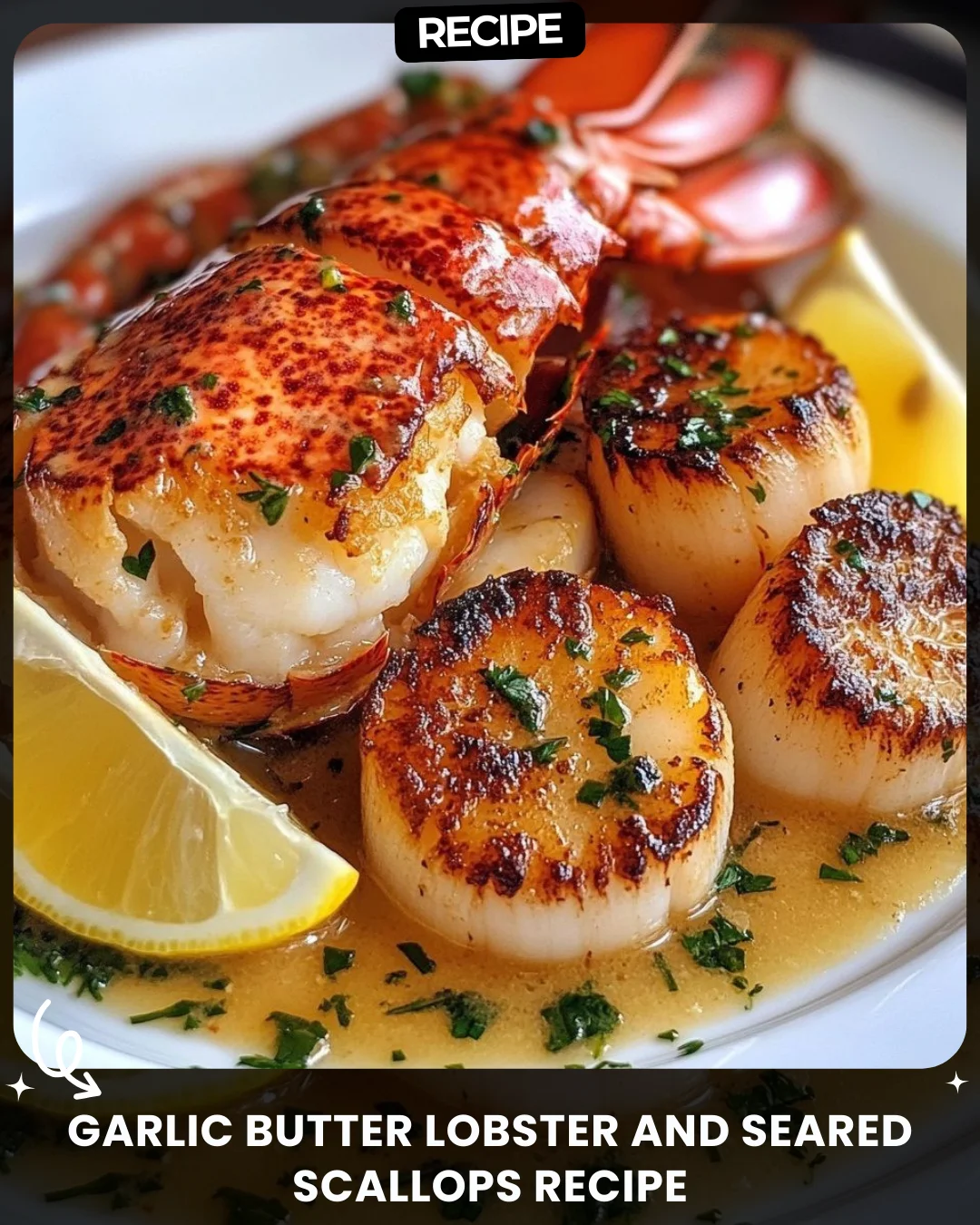
Garlic Butter Lobster and Seared Scallops Recipe
Description
Garlic Butter Lobster and Seared Scallops Recipe
Ingredients:
1 lobster tail (cut in half, shell-on)
6 large sea scallops
3 tbsp unsalted butter
2 garlic cloves (minced)
1/2 cup chicken broth
1/4 cup dry white wine (optional)
1 tbsp fresh lemon juice
2 tbsp olive oil
Salt and pepper (to taste)
Fresh parsley (chopped, for garnish)
Lemon wedges (for serving)
Instructions:
1. Prepare the Lobster:
Split the lobster tail in half lengthwise and season with a pinch of salt and pepper.
2. Sear the Scallops:
Pat the scallops dry and season with salt and pepper.
Heat 1 tbsp olive oil in a skillet over medium-high heat.
Sear scallops for 2-3 minutes on each side until golden brown. Remove and set aside.
3. Cook the Lobster:
In the same skillet, heat 1 tbsp olive oil.
Place the lobster tails shell-side down and cook for 4-5 minutes. Flip and cook the flesh side for another 3-4 minutes until the meat is opaque. Remove and set aside.
4. Prepare the Garlic Butter Sauce:
In the same skillet, reduce the heat to medium and melt the butter.
Add minced garlic and sauté for 1 minute until fragrant.
Deglaze the pan with white wine (if using) and chicken broth.
Simmer for 2-3 minutes, then stir in lemon juice. Adjust seasoning with salt and pepper.
5. Combine:
Return the scallops and lobster to the skillet to coat with the sauce.
Spoon the sauce over the seafood and let them warm up for 1-2 minutes.
6. Serve:
Arrange the lobster and scallops on a plate. Drizzle with remaining sauce.
Garnish with fresh parsley and serve with lemon wedges.
Step-by-Step Guide
For perfect execution, follow these detailed steps. First, ensure all ingredients are prepped (mise en place). Pat the scallops extremely dry with paper towels; this is crucial for a good sear. When heating your skillet for scallops, wait until the oil shimmers. Place scallops, ensuring they are not touching, and do not move them for a full 2-3 minutes to develop a golden crust. For the lobster, cooking shell-side down first helps cook the meat gently through the shell. When making the sauce, scrape up all the browned bits (fond) from the pan after adding the wine and broth, as this adds immense flavor.
Serving Suggestions
This rich and elegant dish pairs beautifully with sides that complement its luxurious sauce. Serve over a bed of creamy parmesan risotto, buttered angel hair pasta, or silky mashed potatoes to soak up the garlic butter sauce. For a lighter option, accompany it with simple steamed asparagus, roasted broccolini, or a crisp arugula salad with a lemon vinaigrette. A chilled glass of the same dry white wine used in the sauce makes the perfect beverage pairing.
How-to Summary
In summary: Dry and sear scallops until golden. Remove. Cook lobster halves shell-side down, then flesh-side down. Remove. In the same pan, make a sauce by sautéing garlic in butter, then deglazing with wine and broth. Simmer, add lemon juice, then return seafood to the pan to warm and coat in the sauce. Garnish and serve immediately.
Frequently Asked Questions
Can I use frozen lobster tails and scallops?
Yes, but they must be fully thawed in the refrigerator overnight. Pat frozen-thawed scallops exceptionally dry to remove excess moisture.
What can I substitute for white wine?
Use an equal amount of additional chicken broth with a small splash of white wine vinegar or lemon juice for acidity.
How do I know when the lobster is cooked?
The meat will turn from translucent to opaque white and firm to the touch. The internal temperature should reach 145°F (63°C).
Why are my scallops steaming and not searing?
This is usually due to excess moisture. Ensure scallops are thoroughly dried, the pan is very hot before adding them, and you are not overcrowding the skillet.
Can I prepare any part of this dish ahead of time?
You can prep the ingredients (mince garlic, chop parsley) ahead, but cook the seafood just before serving for the best texture and flavor.
Common Mistakes to Avoid
- Not Drying Scallops: This is the #1 reason for poor searing. Moisture creates steam.
- Overcrowding the Pan: Crowding lowers the pan’s temperature, causing seafood to steam instead of sear. Cook in batches if necessary.
- Moving Scallops Too Soon: Allow them to develop a full crust before flipping. Be patient.
- Overcooking the Seafood: Both lobster and scallops become tough and rubbery when overcooked. Follow timing closely.
- Burning the Garlic: Sauté garlic only until fragrant (about 1 minute) on medium heat to prevent it from turning bitter.
Conclusion
This Garlic Butter Lobster and Seared Scallops recipe delivers a restaurant-quality seafood experience at home. By mastering the techniques of proper searing and building a simple, flavorful pan sauce, you create a dish that is both impressive and surprisingly straightforward. The key lies in the details: perfectly dry scallops, a hot pan, and careful timing. With this guide, you’re equipped to avoid common pitfalls and execute a stunning, delicious meal that is sure to impress any guest.