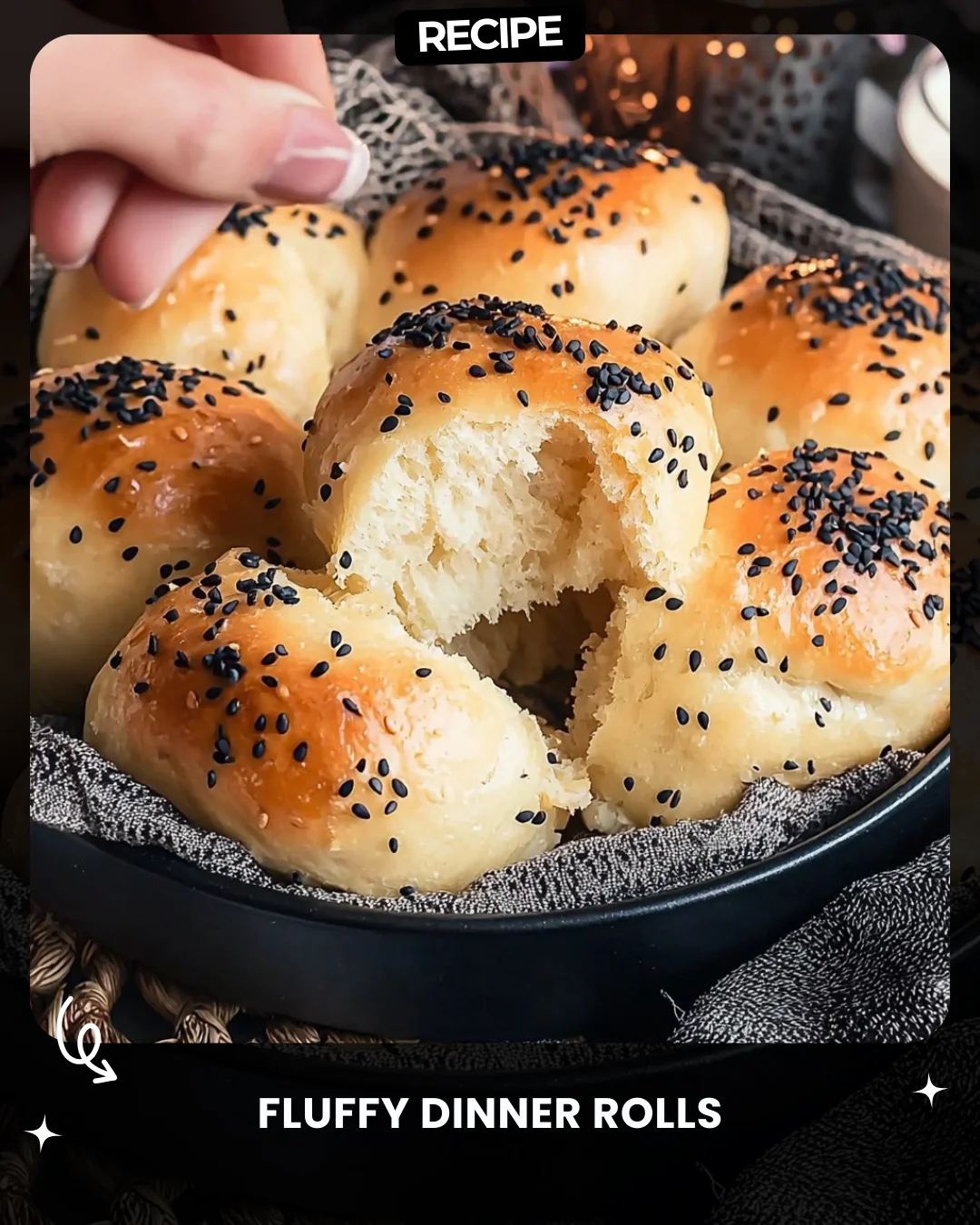
Fluffy Dinner Rolls
Description
Fluffy Dinner Rolls
Ingredients
3 1/4 cups all-purpose flour
1/4 cup granulated sugar
1 tsp salt
2 1/4 tsp instant yeast (1 packet)
1/2 cup warm milk (110°F/45°C)
1/4 cup warm water
1/4 cup unsalted butter, melted
1 large egg
2 tbsp butter (for brushing)
Black sesame seeds (optional, for topping)
Directions
Activate Yeast:
In a small bowl, combine warm milk, water, and yeast. Let sit for 5 minutes until foamy.
Mix Dough:
In a large bowl, mix flour, sugar, and salt. Add the yeast mixture, melted butter, and egg. Stir until a dough forms.
Knead:
Knead the dough on a floured surface for 8–10 minutes until smooth and elastic. Alternatively, use a stand mixer with a dough hook for 5–6 minutes.
Rise:
Place the dough in a greased bowl, cover with a damp cloth, and let rise for 1 hour or until doubled in size.
Shape:
Divide the dough into 12 equal portions. Shape each piece into a smooth ball and arrange in a greased baking dish.
Second Rise:
Cover the rolls and let rise again for 30 minutes. Preheat the oven to 375°F (190°C).
Bake:
Brush the rolls with melted butter and sprinkle with sesame seeds if desired. Bake for 15–18 minutes or until golden brown.
Serve:
Let the rolls cool slightly, then serve warm and enjoy!
Prep Time: 20 minutes
Rise Time: 1.5 hours
Bake Time: 18 minutes
Total Time: ~2 hours
Servings: 12 rolls
Calories: ~150 kcal per roll
#DinnerRolls #HomemadeBread #BakingJoy #SoftAndFluffy #ComfortFood
Step-by-Step Guide
Follow these detailed instructions for perfect rolls every time. First, ensure your milk and water are warm, not hot, to properly activate the yeast without killing it. After mixing the dough, the kneading stage is critical; the dough is ready when it passes the “windowpane test”—stretch a small piece thinly enough to see light through it without tearing. During the first rise, a warm, draft-free spot is essential. When shaping, cup your hand over a dough portion and roll it in tight circles on an unfloured surface to create surface tension for a smooth top. For the second rise, the rolls should look puffy and fill the pan. Bake until the internal temperature reaches 190°F (88°C) for guaranteed doneness.
Serving Suggestions
These versatile rolls are perfect for so much more than just the dinner table. Serve them warm with softened, salted butter or flavored honey butter. Use them as slider buns for pulled pork or mini burgers. For a decadent treat, split them and make bread pudding or use day-old rolls for exceptional croutons or garlic bread. They also make a wonderful gift when presented in a cloth-lined basket.
How-to Summary
In short, making fluffy dinner rolls involves activating yeast in warm liquid, combining with dry ingredients and fats to form a dough, kneading until elastic, letting it double in size, shaping into balls, allowing a second rise, and finally baking until golden brown. The keys are proper yeast activation, thorough kneading, and patient rising.
Frequently Asked Questions
Can I use active dry yeast instead of instant yeast? Yes, but you must activate it first. Mix it with the warm milk and water and a pinch of sugar, then wait 5-10 minutes for foaming before adding to the flour.
My dough didn’t rise. What went wrong? The liquid was likely too hot and killed the yeast, or the yeast was expired. Always check expiration dates and use a thermometer to ensure liquid is between 105-110°F.
Can I make these rolls ahead of time? Absolutely. After shaping, cover the pan tightly and refrigerate overnight. The next day, let them sit at room temperature for 30-60 minutes before baking as directed.
How do I store leftover rolls? Store completely cooled rolls in an airtight bag at room temperature for 2-3 days. For longer storage, freeze them in a freezer bag for up to 3 months.
Can I use bread flour instead of all-purpose? Yes, bread flour will yield a slightly chewier roll with more structure due to its higher protein content, but all-purpose flour gives a wonderfully tender crumb.
Common Mistakes to Avoid
- Using hot liquid that kills the yeast, preventing the dough from rising.
- Adding salt directly to the yeast mixture, which can hinder activation.
- Under-kneading the dough, resulting in dense rolls without proper air pockets.
- Rushing the rising times; patience is key for light, fluffy texture.
- Over-baking, which dries out the rolls. Remove them as soon as they turn golden brown.
Conclusion
Mastering these fluffy dinner rolls is a rewarding baking achievement that elevates any meal. By understanding the science of yeast, the importance of proper kneading, and allowing adequate time for the dough to rise, you can consistently produce soft, pillowy rolls that are sure to impress. Use this guide, heed the common pitfalls, and don’t be afraid to make the recipe your own with different toppings or shapes. The smell of freshly baked bread and the joy of sharing it are well worth the effort. Happy baking!