



























Cooking and Serving: 30 minutes | 8 tortillas
Ingredients
How to make almond flour tortillas | Ingredient substitutions
Description
Prep Time: 20 minutes | Cook Time: 10 minutes | Total Time: 30 minutes | Servings: 8 tortillas
Ingredients
How to make almond flour tortillas
Expert tips
Ingredient substitutions
Instructions
WHY THIS RECIPE MAKES THE MOST FLEXIBLE TORTILLAS
Unlike other recipes you'll find, these almond flour tortillas are rolled paper.
thin for a tortilla that can be used in any way our regular gluten free tortilla.
don't have to roll them as thick as flatbread, or have them break as you try to.
wrap them around fillings.
We add enough coconut flour and a touch of xanthan gum to finely ground almond.
flour, plus one egg, to create true structure and resilience in both the raw.
dough and the finished tortillas.
You can make the dough in a mini chop food processor or with just a bowl and.
spoon, and store it in the refrigerator for up to a week. And the finished.
tortillas will stay fresh at room temperature for days. Truly an amazing.
INGREDIENTS EXPLAINED
Labeled ingredients for almond flour tortillas arranged on a white marble.
ingredients for almond flour tortillas arranged on a white marble surface.
There aren't many ingredients in this recipe, and each contributes something to.
the tortillas. Here's a bit about the importance and background of each:.
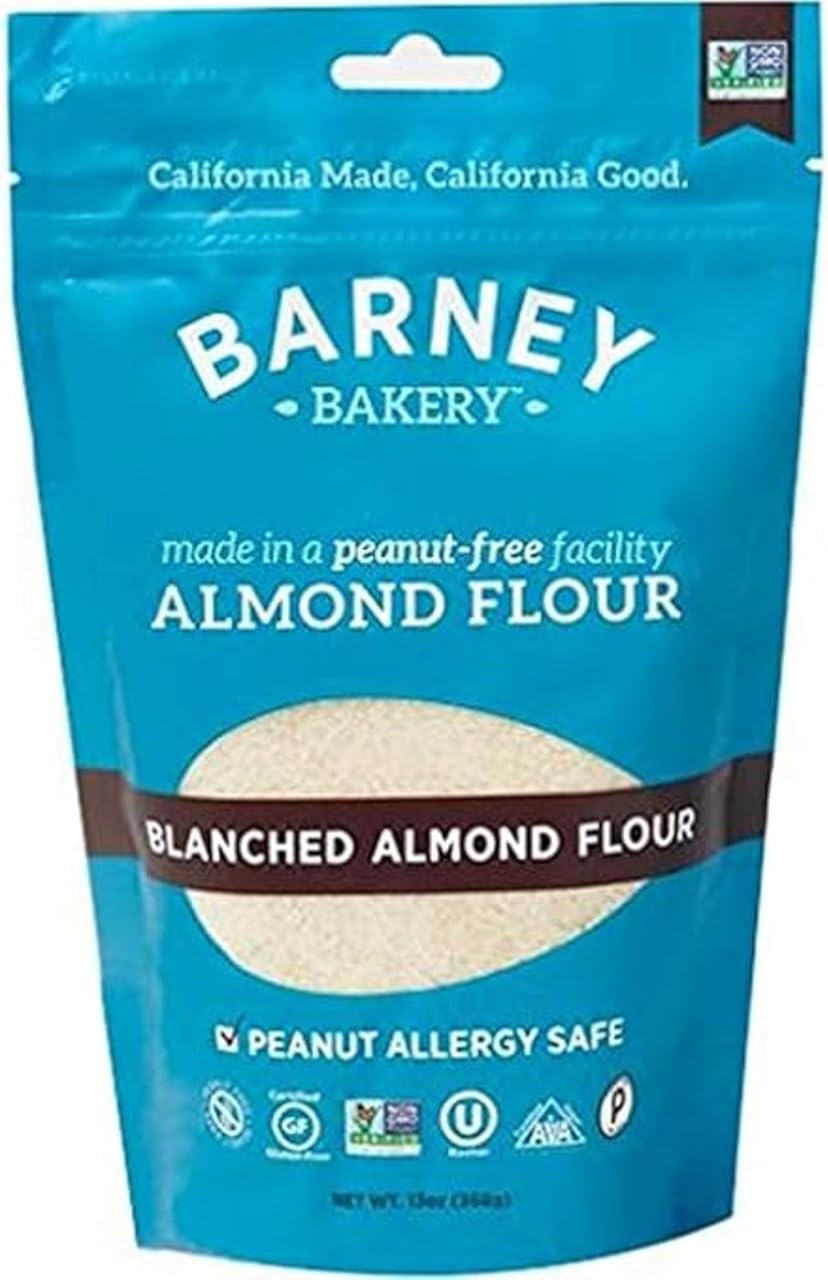
Almond flour: Adds bulk, some structure, and flavor. Because it has so much.
fat, it's soft, though. Be sure to use finely ground and sifted blanched.
almond flour like Wellbee's, Blue Diamond, nuts dot com, or Costco's Kirkland.
brand. Almond meal, which is coarsely ground and the almonds have intact.
skins, won't bind the dough together properly for a smooth, integrated.
Coconut flour: Has a lot of fiber which helps add structure and helps absorb.
some of the fat from the almond flour, making these two flours into a magic.
combination of flavor, structure, and low carbohydrates.
Xanthan gum: Keeps the dough from crumbling so you can roll it out. Without.
it or a substitute, the raw dough is too soft to hold together long enough to.
transfer it to the griddle. Xanthan gum is better here than psyllium husk,.
which can add unwanted flavor and potentially color if not sourced properly.
Baking powder: Adds rise and gives the tortillas some dimension.
Salt: Adds taste and brightens the other flavors.
Egg: Helps to hold the tortillas together, provide structure and some rise,.
and moisture for water-absorbent coconut flour.
Water: Just enough to finish bringing the dough together.
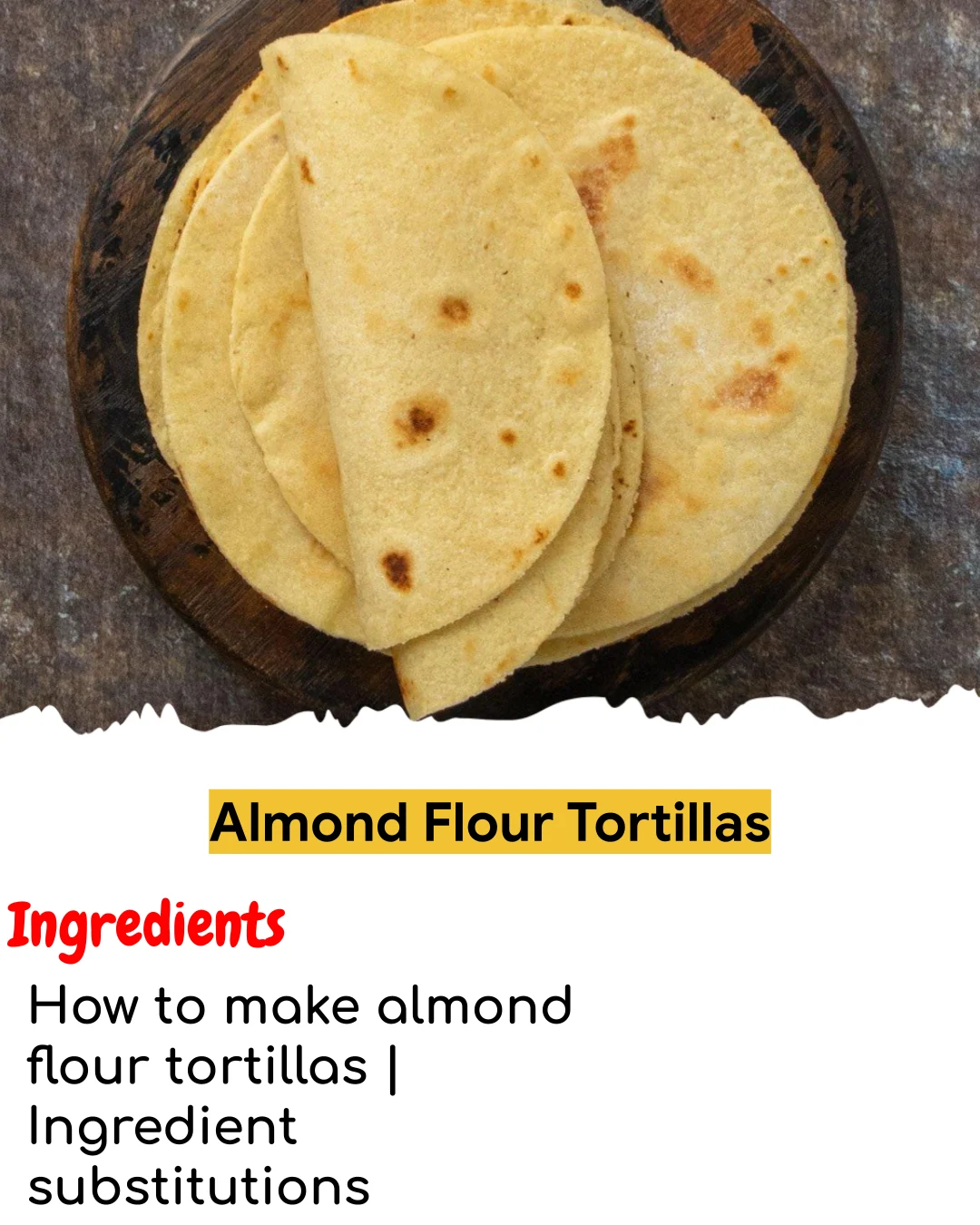
Top-down view of golden tortillas arranged neatly on a dark background.
view of golden tortillas arranged neatly on a dark background.
HOW TO MAKE ALMOND FLOUR TORTILLAS
Whisk together the almond flour, coconut flour, salt, xanthan gum, and baking.
powder, then add the beaten egg and 2 tablespoons of water to form a relatively.
soft dough that feels like extra soft play-doh.
Wrap it tightly in plastic wrap and refrigerate for at least 10 minutes, if not.
longer. This will make the dough much easier to handle flour to absorb the moisture from the egg and water and the fat of the almond.
flour. It's also less sticky when it's cold.
Bowl of almond flour with a whisk resting inside, egg and water nearby.
of almond flour with a whisk resting inside, egg and water nearby.
Wet ingredients just added to dry ingredients in a metal mixing bowl.
ingredients just added to dry ingredients in a metal mixing bowl.
Mixed dough for tortillas in a metal bowl with a spoon.
dough for tortillas in a metal bowl with a spoon.
Round dough ball wrapped in plastic wrap, resting on a clean counter.
dough ball wrapped in plastic wrap, resting on a clean counter.
SMOOTH AND DIVIDE THE DOUGH.
Unwrap the chilled dough and sprinkle it lightly with tapioca starch. Roll it.
into a rough rectangle and fold it into a packet at least once to smooth out the.
dough and make it easier to work with. Use a bench scraper or sharp knife to.
divide the dough into 8 equal pieces.
A small ball of dough dusted with gluten free flour, resting on a white marble.
small ball of dough dusted with gluten free flour, resting on a white marble.
Dough rolled into a rough rectangle next to a wooden rolling pin.
rolled into a rough rectangle next to a wooden rolling pin.
Dough folded into thirds over itself, showing a lamination step.
folded into thirds over itself, showing a lamination step.
Dough divided into 8 wedges with a bench scraper beside it.
divided into 8 wedges with a bench scraper beside it.
SHAPE THE DOUGH INTO ROUNDS.
Roll all 8 pieces of dough into smooth rounds between your palms. Transfer some.
excess dough to the first piece of dough, then use a rolling pin to roll the.
dough into a rough round about 7-inches in diameter so there's excess to trim.
Sprinkle the dough lightly with tapioca starch to absorb some of the moisture so.
the dough is less sticky.
A pro tip for perfectly round tortillas is to cut off excess with a a 6-inch.
metal cake cutter or metal lid of a pot. Remove the excess, and add it to the.
next portion. You can skip this step and just have messier edges, or use a knife.
to trim the rough parts.
The tortillas should be thin enough to be transparent enough that you can see.
your hand through them when you pick one up. That's how you know they're rolled.
Round balls of raw dough waiting to be shaped with one ball reapportioned to.
balls of raw dough waiting to be shaped with one ball reapportioned to make.
Round metal cutter placed over thinly rolled dough sheet.
metal cutter placed over thinly rolled dough sheet.
Round piece of dough cut from sheet with trimmings left behind.
piece of dough cut from sheet with trimmings left behind.
Uncooked tortilla held in hand, showing its flexibility and thinness.
tortilla held in hand, showing its flexibility and thinness.
COOK THE TORTILLAS.
I shape all of the rounds first, sprinkling them with tapioca starch to prevent.
them from sticking to each other. This way, I can cook them all at once when the.
skillet is hot and not worry one will burn while I'm shaping the next. You can.
shape and cook each raw round as it's ready, though.
Heat a griddle to 375°F or a cast iron skillet for at least 5 minutes or.
medium-high heat. Try adding a small piece of trimmed dough to the skillet and.
press it down with a spatula. It should start to cook very quickly when it's hot.
Place the first shaped tortilla on the hot skillet and press down firmly with a.
large spatula to force the whole round to make contact with the hot surface.
Cook until bubbles form, then flip back and forth a couple times until the.
tortilla is opaque and has some browning on both sides. Stack the tortillas on.
top of one another covered in a tea towel and serve.
Tortilla placed in a hot cast iron skillet for cooking.
placed in a hot cast iron skillet for cooking.
Lightly golden tortilla just after being flipped in skillet.
golden tortilla just after being flipped in skillet.
A single tortilla cooking in a black cast iron skillet on a marble surface.
single tortilla cooking in a black cast iron skillet on a marble surface.
A stack of cooked tortillas nestled in a brown container, viewed from above.
stack of cooked tortillas nestled in a brown container, viewed from above.
EXPERT TIPS
These tortillas have a few things in common with all my other gluten free.
tortilla recipes , but.
also call for some special handling. Here are some tips for success:.
FIRM UP A TOO-SOFT DOUGH.
If you find that the dough is just too wet to roll out properly, knead more.
coconut flour into the dough some tapioca starch to absorb some of the fat from the almond flour, and keep.
sprinkling tapioca starch to keep the dough from cracking and sticking as you.
ADD EXTRA DOUGH TO THE FIRST PIECE
After you divide the dough into 8 equal pieces, remove about 1/4 of the dough.
from one piece and add it to another. The extra dough makes rolling out the.
dough thin enough so much easier, and the excess dough gets trimmed and added to.
YOU CAN START WITH A TORTILLA PRESS
It won't press the dough thin enough, but it's a good way to start. Line it with.
parchment paper or plastic to keep the dough from sticking to it, then then use.
a rolling pin to roll it thin enough.
USE A CAKE CUTTER OR POT LID FOR CLEAN EDGES
I used a 6-inch cake cutter to get neat edges on the.
tortillas. It's a very useful little trinket to have in the kitchen, but it's.
totally not necessary at all. The lid of a pot works great for the same purpose,.
or rough edges left intact are of course perfectly fine.
A stack of tortillas on brown parchment paper with a few edges folded upward.
stack of tortillas on brown parchment paper with a few edges folded upward.
INGREDIENT SUBSTITUTIONS
These tortillas are already dairy free, but here are some ideas for replacing.
other potential allergens:.
You should be able to use finely ground cashew flour or hazelnut flour in place.
Try sunflower seed flour, but the tortillas may turn green. The chlorophyll in.
the sunflower seeds reacts with baking powder, leading to a harmless green.
I tested this recipe with 6 tablespoons (48 g) of tapioca starch/flour in place.
of the coconut flour, and it worked. The dough isn't quite as easy to handle,.
and the tortillas tend not to bend as well right away. They were more flexible.
the next day when stored in a sealed plastic zip-top bag with a moistened paper.
towel. Keep in mind that the tortillas will be higher in carbohydrates if made.
with tapioca in place of coconut flour.
EGG FREE
I recommend trying 1 “chia egg” (1 tablespoon ground chia seeds + 1 tablespoon.
lukewarm water, mixed and allowed to gel) or a “flax egg” in place of the egg.
Bob's Red Mill egg replacer may also work.
Guar gum should work instead. You can also try using 8 grams of finely ground.
blonde psyllium husk to the dry ingredients in place of 4 grams of xanthan gum.
before adding the warm water.
TAPIOCA STARCH
Instead of using tapioca starch to sprinkle during shaping, you can use finely.
ground rice flour, arrowroot, cornstarch, or potato starch. You can skip the.
starch and roll between sheets of parchment paper or plastic wrap, but your.
tortillas will have crinkle lines in them.
ALMOND FLOUR TORTILLAS RECIPE
Prep Time: 20 minutes mins.
Cook Time: 10 minutes mins.
Resting time: 10 minutes mins.
Overhead view of freshly cooked almond flour tortillas stacked on a round wooden.
view of freshly cooked almond flour tortillas stacked on a round wooden plate.
These buttery almond flour tortillas are easy to shape, bend without breaking,.
and stay fresh for days. Low carb with less than 2 net carbs each!
EQUIPMENT
Food processor fitted with steel blade (mini chop works really well) optional.
6-inch metal cake cutter (or metal lid of a pot of similar size) optional.
Cast iron skillet or nonstick griddle (or nonstick skillet).
Notes
* 1 teaspoon baking powder
* ½ teaspoon kosher salt
* 1 (50 g (weighed out of shell)) egg, at room temperature, lightly beaten
* 2 tablespoons (1 fluid ounce) lukewarm water, plus more as necessary
* tapioca starch/flour
during shaping (optional)
* In a bowl or the bowl of a food processor fitted with the steel blade, place
the almond flour, coconut flour, xanthan gum, baking powder, and salt. Whisk
* Add the beaten egg and 2 tablespoons of water. Pulse or mix to combine.
* If the dough holds together well and feels moist but not wet, mix or process
until it forms a cohesive dough. If using a food processor, process just
until it forms a ball and mostly clears the dough from the bottom of the
* If the dough feels at all dry, knead or process in more water teaspoonful until it reaches the proper consistency.
* Transfer the dough from the bowl or food processor to a piece of plastic
wrap, wrap tightly and store in the refrigerator until you’re ready to make
the tortillas (up to 7 days). It’s best to allow the dough to chill for at
* Unwrap the chilled dough, knead in some of the optional tapioca starch to
smooth out the dough, and roll it out into a rough rectangle. Fold it in
thirds like a business letter, then fold in the sides to form a packet.
* Using a bench scraper or sharp knife, divide the packet it into 8 pieces of
equal size. Roll each between your palms into a smooth ball. Remove about 1/4
of one ball and add it to another, and begin working with the larger piece of
* Press the first piece of dough into a disk and place in on a large, clean
surface. Use a rolling pin to roll the dough into a round about 7-inches in
diameter, dusting lightly with the optional tapioca starch to prevent
sticking as you work.
* In place of tapioca starch to prevent sticking, you can roll each piece of
dough into a round between two sheets of parchment paper or plastic wrap.
* Use the cake cutter or pot lid to cut out a 6-inch round. Remove the excess
dough trimmings and add them to the next piece of dough, the one from which
* Repeat the process with the next piece of dough, transferring excess to the
one after it. Sprinkle the raw tortillas lightly with tapioca starch to
prevent them from sticking to each other.
* When you’re ready to make the tortillas, heat a nonstick or cast iron griddle
over medium-high heat for at least 5 minutes. If using an electric griddle
with a temperature gauge, heat it to 375°F.
* Place the shaped, raw tortilla on the skillet or hot griddle and press down
with a wide, flat spatula. Allow to cook until bubbles start to form (about
20 seconds), then flip and press down until the tortilla looks opaque on both
sides and is browned in spots. Flip again to brown more on the first side.
* Repeat with the remaining dough, stacking the warm tortillas on top of one
* Serve immediately, or place a stack of cooked tortillas in a zip-top plastic
bag or tortilla warmer with a lid. Place a moistened paper towel into the bag
before sealing it tightly. This will help keep them moist and pliable.
* They can be refreshed in a hot, dry skillet before serving if desired.
Be sure you're using finely ground and sifted blanched almond flour with its
skins removed, not almond meal, which has its skins intact and is more coarsely
In place of coconut flour, you can use 6 tablespoons (48 g) of tapioca
starch/flour. The tortilla dough is a bit more fragile and the tortillas a bit
less flexible, but the recipe still works.
You can use an equal amount of guar gum or konjac powder, or 8 grams finely
ground blonde psyllium husk powder, in its place for a similar, although not
Adapted from Farm To Jar .
Trans Fat: 0.003g | Cholesterol: 20mg | Sodium: 225mg | Potassium: 9mg | Fiber:
3g | Sugar: 1g | Vitamin A: 30IU | Calcium: 57mg | Iron: 1mg
Nutrition information is automatically calculated, so should only be used as an
You can wrap and store in the refrigerator the unshaped, raw dough (or shaped
into rounds) wrapped tightly in plastic wrap for up to 1 week.
If you're not serving the tortillas immediately, place them in a stack in a
plastic zip-top bag or tortilla warmer lined with a slightly wet paper towel to
retain moisture. They will stay fresh that way for up to 3 days at room
temperature, and up to a week the refrigerator in the plastic bag. If the towel
dries out, moisten it again. You can always refresh the tortillas in a hot dry
For longer storage, wrap the stack of tortillas tightly in plastic wrap, then
place in a freezer-safe zip-top bag, and squeeze out all the air you can. Freeze
for up to 3 months. Defrost in the refrigerator or at room temperature, and
refresh in a hot, dry skillet.
Are these tortillas like Mission low carb tortillas?
No, Mission brand Carb Balance wraps are not gluten free! Some of the marketing
for those low carb wraps refers to them as “keto friendly,” but the second and
third ingredients are wheat starch and wheat flour, and the package states that
it contains wheat. Wheat is a gluten-containing grain and must be avoided on a
Are these almond flour tortillas Paleo?
They don't contain any grains, dairy, or refined sugars, so they should be
considered Paleo, yes.
Are these tortillas soft or crispy?
They're soft and flexible. They are only crispy if they're overcooked, which can
happen in a too-hot skillet that burns the almond flour or for too long.
Do I need a tortilla press?
No! I don't usually use a tortilla press and it's not ever going to roll the
dough thin enough. But some people like to use one to get started.
Can you make these in the oven?
No, you have to cook them on a skillet or griddle to get the right texture. They
would probably burn on one side before you got a chance to flip them to cook the
These low carb tortillas are made with a blend of almond flour and coconut
flour, and the dough is amazingly easy to handle. With less than 2 net carbs per
tortilla, they are going to be your new favorite gluten free tortilla!
low carb tortillas are made with a blend of almond flour and coconut flour, and
the dough is amazingly easy to handle. With less than 2 net carbs per tortilla,
they are going to be your new favorite gluten free tortilla!