Description
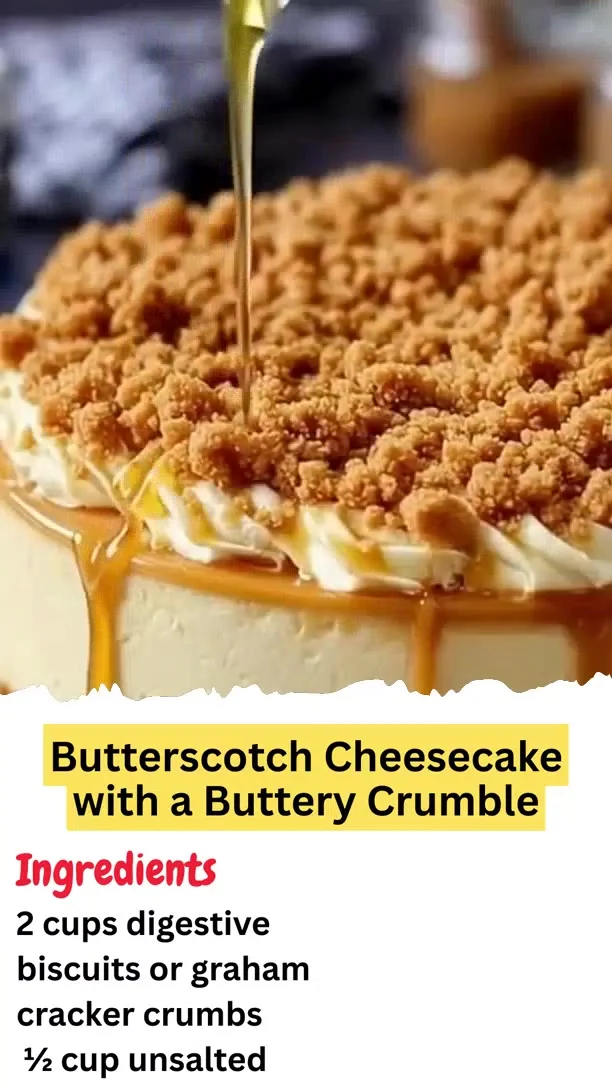
Smooth, decadent cheesecake swirled with rich butterscotch and topped with a golden, buttery crumble — the perfect dessert for special occasions or cozy nights in.
Ingredients:
2 cups digestive biscuits or graham cracker crumbs
½ cup unsalted butter, melted
3 (8 oz) packages cream cheese, softened
1 cup granulated sugar
½ cup brown sugar
3 large eggs
½ cup sour cream
1 tsp vanilla extract
¾ cup butterscotch sauce (plus extra for drizzling)
¾ cup all-purpose flour
½ cup rolled oats
½ cup light brown sugar (for crumble)
½ cup cold unsalted butter, cubed
Instructions:
Preheat oven to 325°F (165°C). Line the bottom of a 9-inch springform pan with parchment paper and lightly grease the sides. (5 min)
Mix biscuit crumbs with melted butter, then press firmly into the base of the pan. Chill while preparing the filling. (10 min)
In a large bowl, beat cream cheese, granulated sugar, and brown sugar until creamy and smooth. (5 min)
Add eggs one at a time, mixing just until combined. Stir in sour cream, vanilla, and butterscotch sauce until silky. (5 min)
Pour the filling over the chilled crust, smoothing the top. (2 min)
For the crumble, combine flour, oats, brown sugar, and cubed butter. Rub with fingers until coarse crumbs form. (7 min)
Sprinkle crumble evenly over the cheesecake batter. (2 min)
Bake for 55–60 minutes, until the edges are set and the center has a slight jiggle. (60 min)
Turn off the oven and leave the cheesecake inside with the door slightly open for 1 hour to cool gradually. (1 hr)
Chill in the refrigerator for at least 4 hours or overnight before serving. (4 hrs)
Drizzle extra butterscotch over slices just before serving for a glossy finish. (2 min)
Prep Time: 30 minutes | Cooking Time: 1 hour | Cooling & Chilling Time: 5 hours | Total Time: 6 hours 30 minutes
Kcal: ~420 kcal per serving | Servings: 12
#ButterscotchCheesecake #SweetIndulgence #CrumbleTopping #DecadentDessert
Step-by-Step Guide
Follow these detailed steps for a perfect cheesecake. First, ensure all refrigerated ingredients, especially the cream cheese and eggs, are at room temperature for a smooth, lump-free filling. When pressing the crumb crust, use the bottom of a flat glass or measuring cup to create a firm, even base. For the filling, avoid over-beating after adding the eggs, as this incorporates too much air and can cause cracking. When adding the crumble topping, sprinkle it gently from a height to distribute it evenly without sinking. The crucial step is the gradual cool-down in the oven; prop the door open with a wooden spoon to prevent sudden temperature changes that lead to sinking.
Serving Suggestions
Serve each chilled slice with a generous extra drizzle of warm butterscotch sauce. For added texture and flavor, garnish with a dollop of freshly whipped cream and a sprinkle of sea salt or toasted pecans. This cheesecake pairs wonderfully with a strong cup of coffee, a glass of dessert wine, or a cold glass of milk. For a festive presentation, decorate the plate with a few fresh berries or a mint sprig.
How-to Summary
To make Butterscotch Crumble Cheesecake: prepare a buttery biscuit crust and chill it. Beat softened cream cheese with sugars, then incorporate eggs, sour cream, vanilla, and butterscotch sauce for the filling. Pour filling over the crust. Make a crumble topping by rubbing flour, oats, brown sugar, and cold butter together, then sprinkle it over the batter. Bake until just set, cool slowly in the turned-off oven, then chill thoroughly before serving with extra butterscotch sauce.
Frequently Asked Questions
Can I use homemade butterscotch sauce? Absolutely. Using a high-quality homemade sauce will intensify the flavor. Ensure it is completely cooled before adding it to the filling.
How do I prevent the crumble topping from sinking? Make sure your crumble is made with cold butter for a sturdy texture, and sprinkle it on just before baking. Do not mix it into the batter.
Can I make this cheesecake ahead of time? Yes, it’s ideal for making ahead. Bake and chill it completely, then cover tightly. It will keep beautifully in the refrigerator for up to 3 days.
Why is a water bath not used in this recipe? The lower baking temperature and the protective crumble layer help cook the cheesecake gently without the need for a water bath, minimizing the risk of a soggy crust.
My cheesecake cracked. What went wrong? Cracking is often caused by over-mixing the eggs (which adds too much air), a sudden temperature change, or over-baking. The gradual cooling step inside the oven is critical to prevent this.
Common Mistakes to Avoid
- Using cold cream cheese: This leads to a lumpy filling. Always soften it to room temperature.
- Over-beating the batter after adding eggs: This incorporates excess air, causing the cheesecake to rise and fall dramatically, leading to cracks.
- Skipping the gradual cool-down: Moving the hot cheesecake directly to a cold fridge will cause it to contract and crack.
- Pressing the crumb crust too thinly or unevenly: An uneven base can make slicing difficult and affect the texture balance.
- Cutting the cheesecake before it’s fully chilled: This results in messy slices. For clean cuts, use a hot, clean knife wiped between each slice.
Conclusion
This Butterscotch Crumble Cheesecake is a show-stopping dessert that masterfully combines creamy, tangy, and crunchy textures with deep caramel notes. While it requires patience for chilling and cooling, the process is straightforward and the result is immensely rewarding. By following the detailed steps and avoiding common pitfalls, you’ll create a decadent, professional-quality dessert perfect for sharing. The final drizzle of butterscotch sauce makes each slice a truly special indulgence.