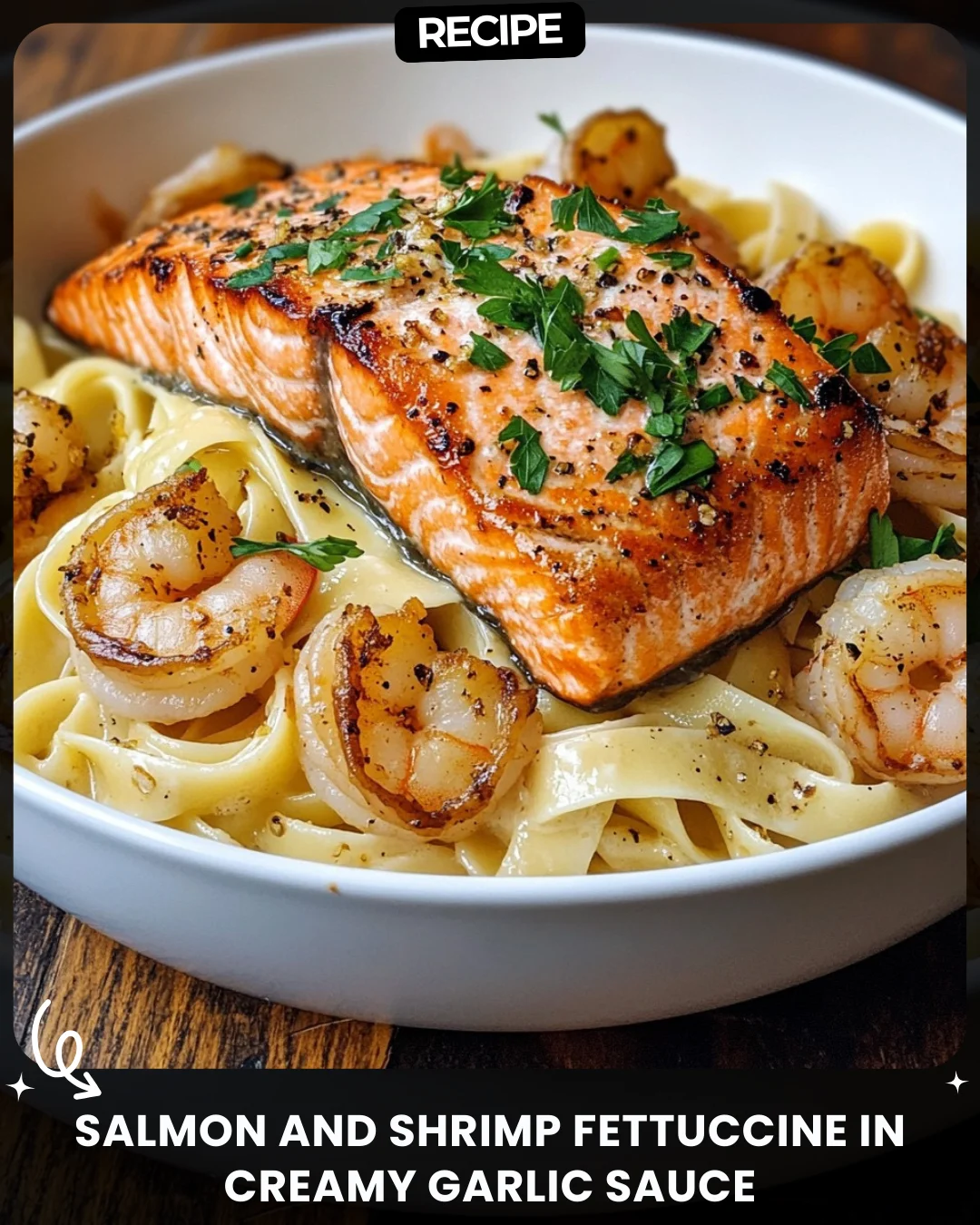
Description
Salmon and Shrimp Fettuccine in Creamy Garlic Sauce
Ingredients:
8 oz (225 g) fettuccine pasta
2 salmon fillets (skin-on or skinless)
12 large shrimp, peeled and deveined
2 tbsp olive oil
3 tbsp unsalted butter
3 garlic cloves, minced
1 cup heavy cream
1/2 cup Parmesan cheese, grated
1 tsp lemon zest
2 tbsp lemon juice
Salt and black pepper to taste
2 tbsp fresh parsley, chopped
Instructions:
Cook the Pasta:
Boil a large pot of salted water and cook fettuccine until al dente. Drain and set aside.
Cook the Salmon:
Heat 1 tbsp olive oil in a large skillet over medium heat.
Season the salmon with salt and pepper. Place in the skillet, skin-side down, and cook for 4–5 minutes per side until golden and cooked through. Remove and set aside.
Sauté the Shrimp:
In the same skillet, add another tablespoon of olive oil.
Season shrimp with salt and pepper, then sauté for 2–3 minutes until pink and opaque. Remove and set aside.
Prepare the Garlic Cream Sauce:
Lower the heat and melt butter in the skillet.
Add minced garlic and sauté for 1 minute until fragrant.
Stir in heavy cream, lemon zest, and Parmesan cheese. Simmer on low heat for 3–4 minutes, stirring frequently. Adjust seasoning with salt, pepper, and lemon juice.
Combine Pasta and Sauce:
Toss the cooked fettuccine in the creamy sauce until well-coated.
Assemble the Dish:
Place the creamy fettuccine in a serving dish, top with cooked salmon and shrimp.
Garnish with fresh parsley and an extra sprinkle of Parmesan cheese.
Chef’s Tip: For an added kick, sprinkle a pinch of red pepper flakes into the sauce. Pair this indulgent dish with a crisp glass of white wine.
Step-by-Step Guide
Follow these detailed steps for a foolproof result. First, prep all ingredients before heating any pans. While the pasta water comes to a boil, pat the salmon and shrimp dry and season. After removing the cooked salmon, ensure the skillet is still hot before adding the shrimp for a proper sear. When making the sauce, keep the heat low after adding the cream to prevent it from breaking or scalding. Slowly sprinkle in the Parmesan while stirring constantly to ensure a smooth, lump-free sauce. Finally, toss the drained pasta directly in the skillet with the sauce, allowing it to absorb the flavors for a minute before assembling.
Serving Suggestions
Plate this rich pasta in wide, shallow bowls to showcase the salmon and shrimp. A simple side salad with a light vinaigrette cuts through the creaminess beautifully. For wine, a crisp Sauvignon Blanc or Chardonnay complements the garlic and seafood. Garnish with not only parsley but also extra lemon zest and a crack of black pepper for visual appeal and fresh flavor.
How-to Summary
This dish is built sequentially in one skillet. Cook the pasta, then the salmon, followed by the shrimp. Use the same pan to build a creamy garlic-Parmesan sauce, flavor it with lemon, then toss everything together. The key is managing your timing so the pasta, salmon, and shrimp are ready to combine just as the sauce finishes.
Frequently Asked Questions
Can I use frozen shrimp? Yes, but thaw completely in the refrigerator and pat them very dry to ensure proper searing and to avoid watering down the sauce.
How do I know when the salmon is done? The salmon is cooked through when it flakes easily with a fork and reaches an internal temperature of 145°F (63°C).
What can I substitute for heavy cream? For a slightly lighter version, half-and-half can work, but avoid boiling it to prevent separation. For a dairy-free alternative, full-fat canned coconut cream is a good option.
Can I make this ahead of time? The components are best served fresh. The sauce can thicken upon standing; if reheating, add a splash of pasta water or cream to loosen it.
Is it necessary to use the shrimp and salmon? No, you can use just one protein. Adjust cooking times accordingly and consider increasing the amount of the single protein you choose.
Common Mistakes to Avoid
- Overcooking the shrimp: They cook quickly and become rubbery if left too long. Remove them as soon as they turn pink and opaque.
- Adding cheese to high heat: Adding Parmesan to a boiling sauce can cause it to clump. Always simmer on low.
- Underseasoning the pasta water: The water should taste like the sea, as this is the pasta’s primary seasoning.
- Not resting the salmon: Let it rest for a few minutes after cooking so the juices redistribute, preventing a dry result.
Conclusion
This Salmon and Shrimp Fettuccine is a restaurant-quality meal achievable in your own kitchen. By mastering the sequence of cooking and paying attention to sauce consistency, you create a harmonious, luxurious dish. The creamy garlic sauce, bright lemon, and tender seafood make it a perfect meal for both weeknight indulgence and special occasions. Remember the tips provided, avoid the common pitfalls, and enjoy the impressive results.