Description
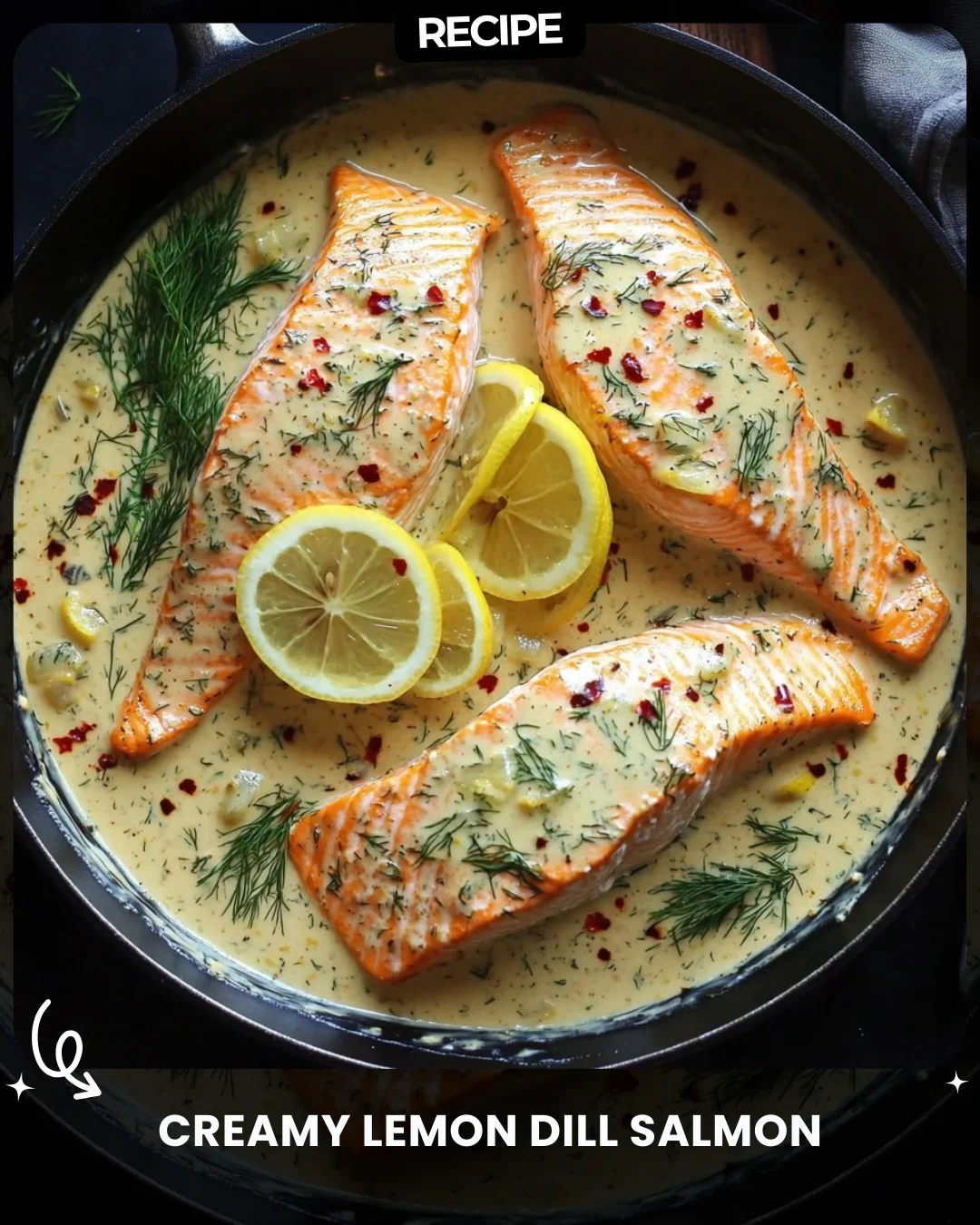
Creamy Lemon Dill Salmon
Ingredients:
4 salmon fillets
2 tablespoons olive oil
Salt and pepper, to taste
1/2 teaspoon garlic powder
1/2 cup heavy cream
1/4 cup chicken broth (or white wine)
2 tablespoons lemon juice
1 tablespoon Dijon mustard
Zest of 1 lemon
1 tablespoon fresh dill, chopped
Lemon slices for garnish
Red pepper flakes (optional for a spicy kick)
Instructions:
Cook the Salmon:
Heat olive oil in a large skillet over medium heat. Season the salmon fillets with salt, pepper, and garlic powder on both sides.
Place the salmon in the skillet, skin side down if applicable, and cook for 4-5 minutes on each side, depending on thickness, until the salmon is cooked through and easily flakes with a fork. Remove the salmon from the skillet and set aside.
Make the Creamy Sauce:
In the same skillet, add the chicken broth (or white wine) and scrape the bottom of the pan to deglaze, incorporating any browned bits from the salmon.
Add the heavy cream, Dijon mustard, lemon juice, and lemon zest. Stir to combine and bring to a simmer. Let the sauce cook for 2-3 minutes until it thickens slightly.
Add Dill and Season:
Stir in the chopped fresh dill, adjusting the seasoning with salt, pepper, and red pepper flakes to taste.
Combine and Serve:
Return the salmon to the skillet, spooning some sauce over the fillets. Let everything simmer together for 2 more minutes to allow the flavors to meld.
Garnish with fresh lemon slices and a sprinkle of extra dill.
Enjoy your Creamy Lemon Dill Salmon served with a side of roasted vegetables, rice, or pasta! This dish is perfect for a light yet indulgent dinner.
Step-by-Step Guide
For perfect results, follow this detailed guide. First, ensure your salmon fillets are at room temperature for even cooking. Pat them completely dry with paper towels—this is crucial for a good sear. When heating the olive oil in your skillet, wait until it shimmers. Carefully place the salmon in, listening for a gentle sizzle. Do not move the fillets for the first 4-5 minutes to develop a golden crust. After flipping, cook until the internal temperature reaches 145°F. For the sauce, deglazing the pan is non-negotiable; those browned bits are packed with flavor. Simmer the cream mixture until it coats the back of a spoon. Finally, gently reheat the salmon in the sauce, basting it to infuse every bite.
Serving Suggestions
This versatile salmon pairs beautifully with a variety of sides. For a light meal, serve it over a bed of steamed asparagus or crisp green beans. To make it more substantial, consider creamy mashed potatoes, buttered orzo, or jasmine rice to soak up the luxurious sauce. A simple arugula salad with a lemon vinaigrette complements the dish’s brightness. For an elegant presentation, plate the salmon and sauce individually, garnishing with a sprig of fresh dill and a thin lemon twist.
How-to Summary
Quickly sear seasoned salmon fillets in a hot skillet until cooked through and set aside. In the same pan, deglaze with broth, then add cream, lemon juice, mustard, and zest, simmering until thickened. Finish the sauce with fresh dill and seasoning. Return the salmon to the skillet, spoon the sauce over top, and warm through for two minutes before serving.
Frequently Asked Questions
Can I use dried dill instead of fresh? Yes, but use only one-third the amount (about 1 teaspoon), as dried herbs are more potent. The flavor will be slightly different, but still delicious.
What can I substitute for heavy cream? Full-fat coconut milk is an excellent dairy-free alternative that maintains creaminess. For a lighter version, half-and-half works, but the sauce will be thinner.
How do I know when the salmon is done? The salmon is perfectly cooked when it flakes easily with a fork and has an internal temperature of 145°F at its thickest part. The flesh will be opaque throughout.
Can I make this sauce ahead of time? You can prepare the sauce base (through simmering) 1-2 days ahead. Store it separately in the fridge. Reheat gently and stir in the fresh dill just before serving to preserve its vibrant flavor.
Is chicken broth or white wine better? White wine adds a lovely acidity and depth that complements the lemon, while chicken broth offers a richer, savory note. Both are excellent—choose based on your preference.
Common Mistakes to Avoid
- Overcooking the Salmon: This is the most common error. Salmon continues to cook after being removed from heat. Take it off the skillet just before it reaches your desired doneness.
- Not Deglazing the Pan: Skipping the step of scraping up the fond (browned bits) leaves immense flavor behind. The liquid is essential for lifting those bits into your sauce.
- Adding Dill Too Early: Adding fresh dill during the high-heat simmer will cause it to wilt and lose its bright, aromatic flavor. Always stir it in at the very end.
- Using a Cold Skillet: Ensure your skillet is properly preheated before adding the salmon to prevent sticking and to achieve a good sear.
Conclusion
This Creamy Lemon Dill Salmon recipe is a restaurant-quality dish that is surprisingly simple to master at home. By balancing rich cream with bright lemon and aromatic dill, it creates a sophisticated sauce that elevates the tender salmon. Following the detailed steps and avoiding common pitfalls will ensure a flawless result every time. It’s a reliable, impressive meal perfect for both weeknight dinners and special occasions, guaranteed to become a cherished part of your culinary repertoire.