Description
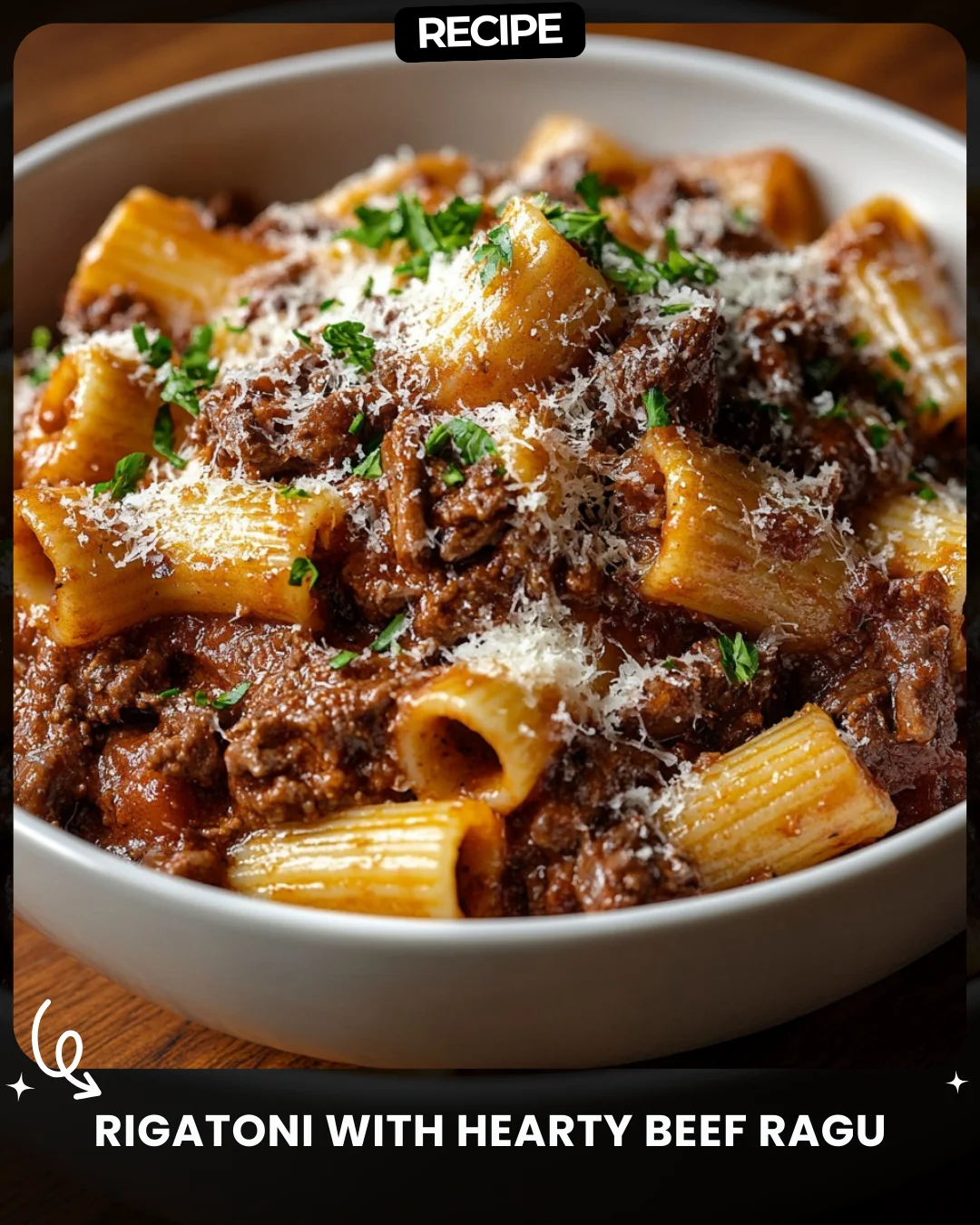
Rigatoni with Hearty Beef Ragu
Ingredients:
12 oz rigatoni pasta
1 lb ground beef or Italian sausage
1 small onion, finely chopped
2 garlic cloves, minced
1 cup red wine (optional)
2 cups marinara or crushed tomatoes
1 tbsp tomato paste
1/2 tsp red pepper flakes (optional)
1 tsp Italian seasoning
1/4 cup grated Parmesan cheese
Salt and pepper to taste
2 tbsp olive oil
1 tbsp fresh parsley, chopped
Instructions:
Cook the pasta:
Bring a large pot of salted water to a boil. Cook the rigatoni according to package instructions until al dente. Reserve 1/2 cup of pasta water, drain, and set aside.
Prepare the ragu sauce:
Heat olive oil in a large skillet over medium heat. Add the chopped onion and sauté until softened. Add minced garlic and cook for 1 minute.
Cook the meat:
Add ground beef or sausage to the skillet and cook until browned. Season with salt, pepper, and Italian seasoning.
Build the sauce:
Stir in tomato paste and cook for 1 minute. Deglaze the skillet with red wine (if using) and let it simmer until reduced by half. Add marinara or crushed tomatoes and red pepper flakes. Reduce heat and let the sauce simmer for 20-25 minutes, stirring occasionally.
Combine pasta and sauce:
Add the cooked rigatoni to the skillet and toss to coat in the rich ragu. If the sauce is too thick, stir in a bit of the reserved pasta water.
Serve and garnish:
Plate the rigatoni, sprinkle generously with Parmesan cheese, and garnish with fresh parsley. Serve hot!
This rigatoni with beef ragu is a warm, hearty dish perfect for cozy nights. Its rich flavors and tender pasta make it a family favorite. Enjoy!
Step-by-Step Guide
1. Pasta Prep: Salt your boiling water generously—it should taste like the sea. This is your only chance to season the pasta itself. Cook the rigatoni until just al dente, then reserve that starchy pasta water before draining.
2. Flavor Foundation: In your skillet, cook the onions slowly until translucent and sweet, not just softened. Add the garlic last to prevent burning.
3. Meat Matters: Use a mix of beef and sausage for depth. Don’t stir the meat constantly; let it develop a flavorful brown crust on one side before breaking it up.
4. Sauce Development: After adding the tomato paste, let it cook for a full minute to caramelize slightly. If using wine, let it reduce completely until the skillet is almost dry. This concentrates flavor.
5. The Simmer: Once tomatoes are added, a low, slow simmer is non-negotiable. This melds the flavors and tenderizes the meat.
6. Final Union: Always toss the pasta in the sauce over low heat for 1-2 minutes. The pasta will finish absorbing the sauce’s flavor.
Serving Suggestions
Serve this hearty ragu in deep bowls. A crisp green salad with a sharp vinaigrette cuts through the richness perfectly. For a true Italian trattoria experience, offer extra grated Parmesan and a small dish of red pepper flakes on the side. Crusty garlic bread is essential for scooping up every last bit of sauce.
How-to Summary
Cook pasta al dente, reserving water. Sauté onion and garlic. Brown seasoned meat. Enrich with tomato paste, deglaze with wine (optional), then add tomatoes and simmer. Toss cooked pasta with the ragu, using pasta water to adjust consistency. Garnish with Parmesan and parsley.
Frequently Asked Questions
Can I make this ragu ahead of time? Yes, the sauce actually tastes better the next day. Make the ragu fully, cool it, and refrigerate for up to 3 days. Reheat gently and combine with freshly cooked pasta.
What’s a good substitute for red wine? Use an equal amount of beef or vegetable broth with a teaspoon of balsamic or red wine vinegar added for acidity.
Can I use a different pasta shape? Absolutely. Choose short, sturdy shapes with ridges or holes like pappardelle, penne, or shells that can hold the chunky sauce.
How can I make this dish vegetarian? Substitute the ground beef with 2 cups of cooked lentils or a plant-based ground “meat.” Use vegetable broth instead of wine for deglazing.
Why is my sauce tasting acidic? A pinch of sugar or a grated carrot added with the onions can balance acidity. Always ensure your sauce simmers long enough to mellow the tomatoes.
Common Mistakes to Avoid
- Overcooking the Pasta: Cooking pasta until soft before adding it to the sauce leads to a mushy final dish. It should be al dente.
- Skipping the Pasta Water: The starchy reserved water is crucial for helping the sauce cling to the pasta. Don’t forget it.
- Rushing the Simmer: Not allowing the sauce to simmer for the full time prevents flavors from developing depth and richness.
- Using Lean Meat Only: Very lean ground beef can result in a dry ragu. A 80/20 blend or using Italian sausage adds necessary fat and flavor.
Conclusion
Mastering this Rigatoni with Hearty Beef Rgu is about embracing the process—the slow simmer, the layering of flavors, and the final toss that brings it all together. It’s a foundational recipe that rewards patience with deep, comforting flavor. Once perfected, it becomes a reliable centerpiece for any gathering or a simple weeknight triumph. The rich, meaty sauce clinging to perfectly cooked rigatoni is a timeless combination that never fails to satisfy.