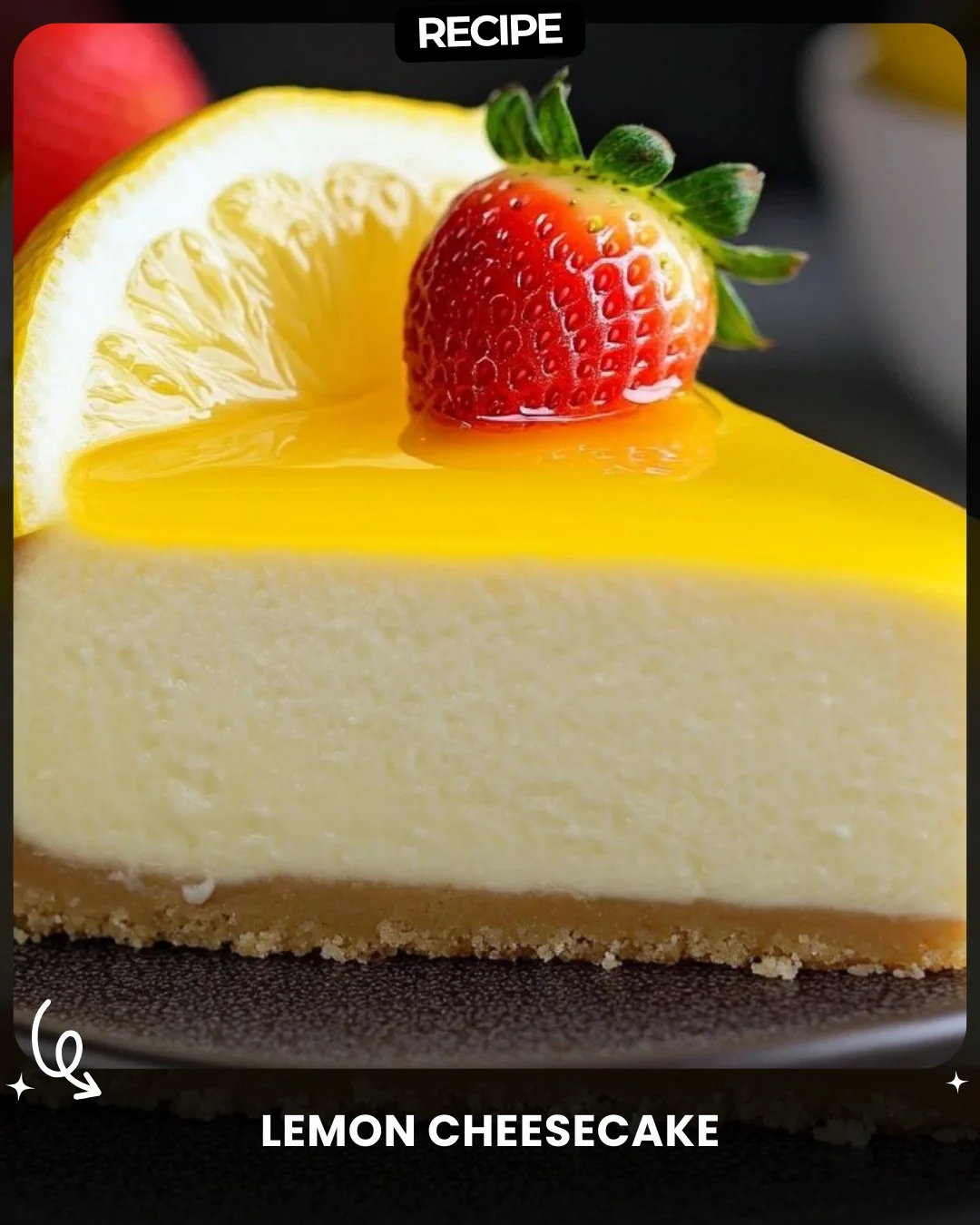
Description
Lemon Cheesecake
Ingredients:
For the Crust:
1 ½ cups (180g) crushed graham crackers
¼ cup (50g) melted butter
2 tablespoons sugar
For the Cheesecake Filling:
16 oz (450g) cream cheese, softened
¾ cup (150g) granulated sugar
2 large eggs
1 teaspoon vanilla extract
½ cup (120ml) lemon juice
1 tablespoon lemon zest
For the Lemon Glaze:
½ cup (120ml) lemon juice
¼ cup (50g) sugar
1 teaspoon cornstarch
Instructions:
Preheat oven to 325°F (160°C) and grease a springform pan. Mix graham cracker crumbs, melted butter, and sugar, then press into the pan. Bake for 8 minutes, then let cool. In a bowl, beat cream cheese and sugar until smooth. Add eggs one at a time, then mix in vanilla, lemon juice, and zest. Pour over the crust and bake for 40 minutes until set. For the glaze, heat lemon juice, sugar, and cornstarch over low heat, stirring until thick. Let cool slightly, then pour over the cheesecake. Refrigerate for 4 hours before serving. Garnish with lemon slices and strawberries. Enjoy!
#LemonCheesecake #CitrusDessert
Step-by-Step Guide
Follow this detailed process for a perfect cheesecake. First, ensure your cream cheese is fully softened at room temperature for at least an hour; this prevents lumps. When making the crust, press the crumb mixture firmly and evenly up the sides of the pan to create a stable base. After pre-baking the crust, let it cool completely before adding the filling. When preparing the filling, scrape down the bowl sides often to ensure a homogeneous mix. Bake the cheesecake in the center of the oven until the edges are set but the center still has a slight jiggle. The crucial step is the slow, gradual cool-down: let it cool in the oven with the door slightly ajar for an hour, then on the counter, before finally refrigerating.
Serving Suggestions
While delicious on its own, this lemon cheesecake pairs wonderfully with fresh berries like raspberries, blueberries, or blackberries. A dollop of lightly sweetened whipped cream or a scoop of vanilla bean ice cream balances the citrus tang beautifully. For an elegant presentation, garnish with candied lemon peel, a dusting of powdered sugar, or a sprig of fresh mint. Serve chilled on its own or with a drizzle of raspberry coulis for a stunning color contrast.
How-to Summary
To summarize: mix crust ingredients and bake briefly. Beat softened cream cheese and sugar until smooth, then incorporate eggs, vanilla, lemon juice, and zest. Pour filling onto the cooled crust and bake until just set. Prepare a simple stovetop glaze with lemon juice, sugar, and cornstarch, then cool and spread over the cheesecake. The final, essential step is a minimum 4-hour chill in the refrigerator to set the texture perfectly.
Frequently Asked Questions
Can I use bottled lemon juice?
Freshly squeezed lemon juice is highly recommended for the brightest flavor. Bottled juice often contains preservatives and lacks the fresh, vibrant taste of real lemons.
Why did my cheesecake crack?
Cracking is usually caused by overmixing (which incorporates too much air) or a sudden temperature change. Avoid over-beating after adding eggs and follow the gradual cooling method outlined in the step-by-step guide.
How long will it keep in the fridge?
Properly covered, the cheesecake will stay fresh for up to 5 days. For best texture, let it sit at room temperature for 15-20 minutes before serving.
Can I make this without a springform pan?
A springform pan is ideal for easy removal. If you must substitute, use a deep cake pan lined with parchment paper slings, but serving will be less clean.
Is there a way to make it firmer faster?
You can place the cheesecake in the freezer for 1-1.5 hours to set it more quickly, but the traditional slow chill in the fridge yields the best creamy texture.
Common Mistakes to Avoid
Avoid using cold cream cheese, as it will never become perfectly smooth. Do not overbeat the filling once the eggs are added, as this incorporates excess air and leads to cracking. Never skip the step of cooling the crust before adding filling, as a warm crust can begin to cook the bottom of the filling. Resist the urge to overbake; the center should still wobble slightly when you gently shake the pan. Finally, do not add the warm glaze to a hot cheesecake, as it can make the surface gummy—ensure both are slightly cooled.
Conclusion
This lemon cheesecake recipe masterfully balances rich, creamy texture with a bright, tangy citrus flavor. By following the detailed steps, avoiding common pitfalls, and allowing ample time for chilling, you will create an impressive and delicious dessert that is sure to become a favorite. Its perfect blend of sweet and tart makes it an ideal finale for any meal, from a casual family dinner to a special occasion celebration.