Description
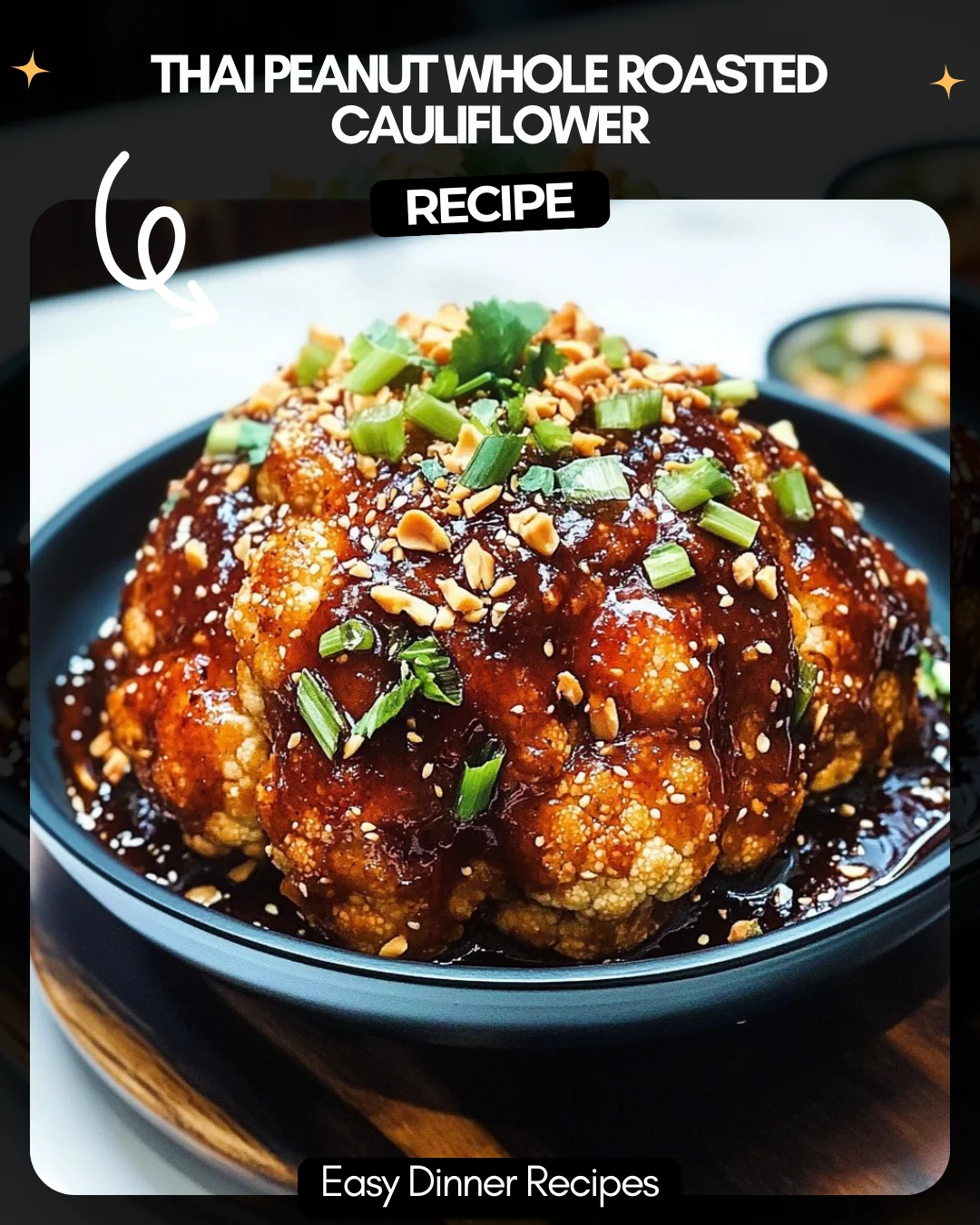
Thai Peanut Whole Roasted Cauliflower
This viral recipe is a flavorful masterpiece that has taken the internet by storm. Roasting a whole cauliflower in a luscious peanut sauce brings a smoky, spicy, and rich taste that’s irresistible. Whether you make it as a main dish or a side, it’s guaranteed to be a hit. Plus, the extra sauce can double as a dressing for salads or a glaze for grilled chicken. Customizable for different diets—vegan, paleo, keto, and more—this dish is versatile, simple, and packed with flavor.
1/2 Cup Creamy Peanut Butter
1/4 Cup Liquid Aminos/Gluten-Free Soy Sauce
1/4 Cup Honey or Agave
6 Tbsp Mild Oil (e.g., avocado, olive)
4 Tbsp Toasted Sesame Oil
2 Tbsp Grated Ginger
2-4 Tsp Sriracha
1 Head of Cauliflower
Garnish: Chopped Green Onions, Salted Peanuts, Sriracha
Directions:
1. Preheat oven to 400°F. Mix sauce ingredients.
2. Prep cauliflower, coat in sauce, bake covered for 40-50 mins.
3. Broil to crisp, add garnish.
Prep Time: 15 mins
Kcal: 220
Step-by-Step Guide
1. Preheat your oven to 400°F (200°C). Line a baking dish with parchment paper or foil for easy cleanup. 2. Prepare the cauliflower by removing the outer leaves and trimming the stem so it sits flat. Do not remove the core. 3. In a medium bowl, whisk together the peanut butter, liquid aminos, honey, mild oil, sesame oil, grated ginger, and Sriracha until a smooth, pourable sauce forms. 4. Place the cauliflower head in the baking dish. Pour about 2/3 of the sauce over it, using a brush or spoon to ensure it’s completely coated, including the underside. Reserve the remaining sauce. 5. Cover the dish tightly with foil and roast for 40 minutes. 6. Remove the foil, brush with more reserved sauce, and roast uncovered for another 10-15 minutes until tender. 7. For a caramelized finish, broil on high for 3-5 minutes, watching closely to prevent burning. 8. Let rest for 5 minutes before slicing.
Serving Suggestions
Serve this stunning centerpiece sliced into thick “steaks” or broken into florets. For a complete meal, plate it over a bed of fluffy jasmine rice or quinoa to soak up the extra sauce. A side of quick-pickled vegetables (carrots, cucumbers) adds a bright, crunchy contrast. It also pairs beautifully with simple greens like a shredded cabbage slaw. The reserved sauce can be thinned with a little lime juice or water and drizzled over everything.
How-to Summary
Trim cauliflower base. Whisk peanut butter, aminos, honey, oils, ginger, and Sriracha into a sauce. Generously coat the whole cauliflower with most of the sauce. Roast covered at 400°F for 40 mins, then uncovered for 10-15 mins until tender. Broil briefly for color. Garnish with green onions, peanuts, and extra Sriracha.
Frequently Asked Questions
Can I make this recipe nut-free? Yes, substitute the peanut butter with sunflower seed butter or tahini for a similar rich, creamy texture without nuts.
How do I know when the cauliflower is fully cooked? The core should be easily pierced with a sharp knife or skewer, and the outer florets will be browned and slightly crispy.
Can I prepare the sauce ahead of time? Absolutely. The sauce can be made and refrigerated in an airtight container for up to 3 days. Let it come to room temperature and whisk before using.
Is this dish gluten-free? Yes, if you use certified gluten-free liquid aminos or tamari instead of standard soy sauce.
My sauce is too thick. How can I thin it? Add warm water, one tablespoon at a time, while whisking until it reaches a brushable, glaze-like consistency.
Common Mistakes to Avoid
Avoid removing the core of the cauliflower, as it holds the head together during roasting. Do not skip covering the dish for the initial roast; this crucial step steams the cauliflower, ensuring it cooks through without drying out. Finally, watch the broiling step intently—the sugars in the sauce can burn quickly under high heat.
Conclusion
This Thai Peanut Whole Roasted Cauliflower is more than a viral trend; it’s a reliable, show-stopping dish that delivers incredible flavor with simple steps. Its versatility for various diets and meal settings makes it a valuable addition to any cook’s repertoire. Impressive yet approachable, it proves that plant-based cooking can be deeply satisfying and packed with umami-rich taste.