Description
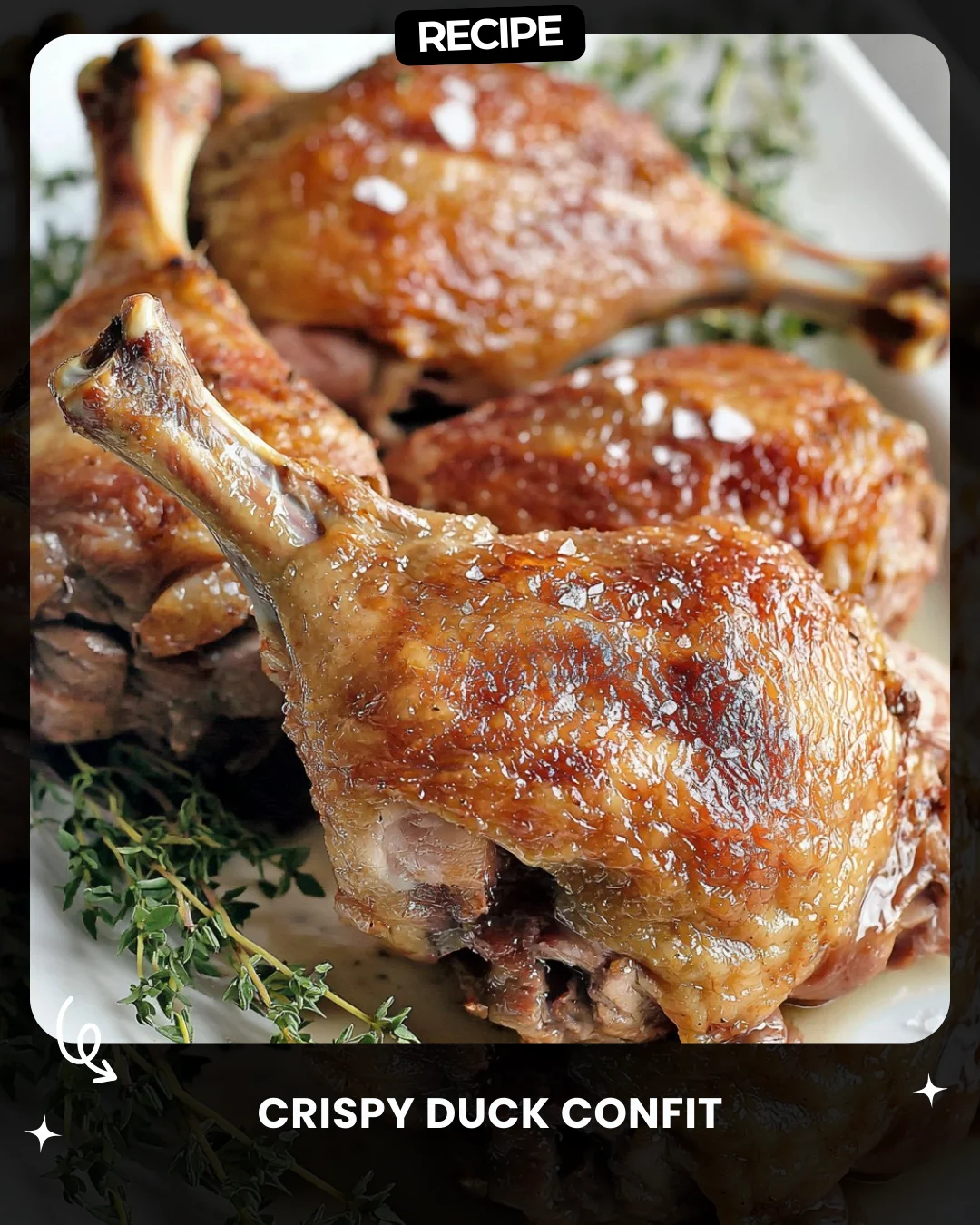
Crispy Duck Confit
Golden, tender, and irresistibly crispy—this classic French duck confit is slow-cooked to perfection with aromatic herbs and spices for a rich, elegant meal!
Ingredients
4 duck legs (thigh and drumstick attached)
1/4 cup kosher salt
4 garlic cloves, smashed
4 sprigs fresh thyme
2 sprigs fresh rosemary
1 bay leaf, torn into pieces
1 tsp black peppercorns, crushed
4 cups duck fat (or olive oil as a substitute)
For Garnish:
Fresh thyme sprigs
Flaky sea salt
Directions
Cure the duck:
Pat the duck legs dry and rub them with kosher salt, garlic, thyme, rosemary, bay leaf, and crushed peppercorns.
Place the duck legs in a dish, cover, and refrigerate for 12–24 hours to allow the flavors to infuse.
Rinse and dry:
Rinse the duck legs under cold water to remove excess salt and herbs. Pat completely dry with paper towels.
Slow-cook the duck:
Preheat the oven to 225°F (110°C). Place the duck legs in a baking dish or Dutch oven and pour melted duck fat over them, ensuring they are fully submerged.
Cook in the oven for 2 1/2 to 3 hours, until the meat is tender and easily pulls away from the bone.
Crisp the duck:
Remove the duck legs from the fat (reserve the fat for other uses). Heat a skillet over medium-high heat. Place the duck legs skin-side down and sear until the skin is golden brown and crispy (about 4–5 minutes).
Serve and garnish:
Plate the duck confit and sprinkle with flaky sea salt and fresh thyme. Serve with roasted potatoes, greens, or a light salad.
Prep Time: 15 minutes
Cook Time: 3 hours
Rest Time: 12–24 hours
Total Time: ~4 hours (plus curing time)
Servings: 4
Calories: 450 kcal per serving
This classic French dish is rich, flavorful, and perfect for special occasions or a gourmet dinner at home. Serve with a glass of red wine for the ultimate pairing!
#DuckConfit #FrenchCooking #GourmetFood #ComfortFood #SlowCooked #HomeChef #ElegantMeals
Step-by-Step Guide
Follow this detailed guide for perfect duck confit every time. After patting the duck legs dry, ensure the salt and herb cure is massaged thoroughly into every part of the skin and flesh. When curing in the refrigerator, place the dish on the bottom shelf to maintain a consistent, cold temperature. After rinsing, drying is critical—any surface moisture will cause the hot fat to splatter. For cooking, use an oven-safe pot just large enough to hold the legs snugly; this minimizes the amount of expensive duck fat needed. The low-and-slow cook time is non-negotiable for achieving fall-off-the-bone tenderness. Finally, for the crisping step, use a cold skillet and let it heat up with the duck legs already placed skin-side down to render the fat slowly for maximum crispiness without burning.
Serving Suggestions
While classic sides are wonderful, duck confit is versatile. For a traditional French bistro plate, serve with crispy roasted potatoes sautéed in the reserved duck fat, garlicky sautéed green beans, and a simple frisée salad. For a modern twist, shred the tender meat and use it as a luxurious topping for creamy polenta or a rich risotto. It also makes an incredible addition to a cassoulet. Balance the richness with something acidic, like a sharp cherry compote, a tangy orange salad, or a drizzle of reduced balsamic vinegar.
How-to Summary
To summarize, duck confit is a simple three-stage process: Cure, Confit, and Crisp. First, cure the duck legs with salt and aromatics for 12-24 hours. Second, rinse, dry, and slowly poach them submerged in duck fat in a low 225°F oven for 2.5-3 hours until tender. Finally, remove the legs from the fat and sear them skin-side down in a hot skillet to achieve the signature golden, crispy skin before serving.
Frequently Asked Questions
Can I reuse the duck fat? Absolutely. Strain the cooled fat through a fine-mesh sieve or cheesecloth to remove solids. Store it in the refrigerator for up to 6 months and reuse it for another confit, roasting potatoes, or sautéing vegetables for incredible flavor.
What if I can’t find duck fat? A good quality olive oil or a neutral oil like avocado oil is an acceptable substitute for the cooking stage, though it will impart a slightly different flavor profile. The results will still be delicious.
How long can I store cooked duck confit? If kept fully submerged in its cooking fat in an airtight container, duck confit can be stored in the refrigerator for up to several weeks. The fat acts as a preservative.
Why is my duck skin not getting crispy? The most common reason is insufficient drying after rinsing. Moist skin steams instead of sears. Ensure the legs are patted bone-dry. Also, make sure your skillet is hot enough before adding the duck.
Can I skip the curing step? It is not recommended. Curing seasons the meat deeply, helps draw out moisture for better texture, and is essential for the traditional flavor and preservation quality of the dish.
Common Mistakes to Avoid
- Not Drying Thoroughly: Any moisture left on the duck before confiting or crisping will hinder the process and cause splattering.
- Overheating the Fat: Cooking at too high a temperature will make the meat tough and stringy, not tender. Keep the oven at a low 225°F.
- Not Fully Submerging the Duck: Exposed parts will dry out and become tough. Ensure the legs are completely covered by fat or oil.
- Searing Too Early: Attempting to crisp the skin before the meat is fully tender from the slow-cook will result in tough meat. Always confit first, then crisp.
- Discarding the Fat: The flavorful cooking fat is liquid gold for future cooking projects. Always strain and save it.
Conclusion
Mastering duck confit is a rewarding culinary achievement that brings a touch of restaurant-quality elegance to your home kitchen. While it requires patience, primarily during the curing and slow-cooking phases, the technique itself is straightforward. The result—incredibly tender meat protected by a shatteringly crisp, flavorful skin—is well worth the time. By following this enhanced guide, utilizing the serving suggestions, and steering clear of common pitfalls, you can confidently create this French classic for a truly memorable dining experience.