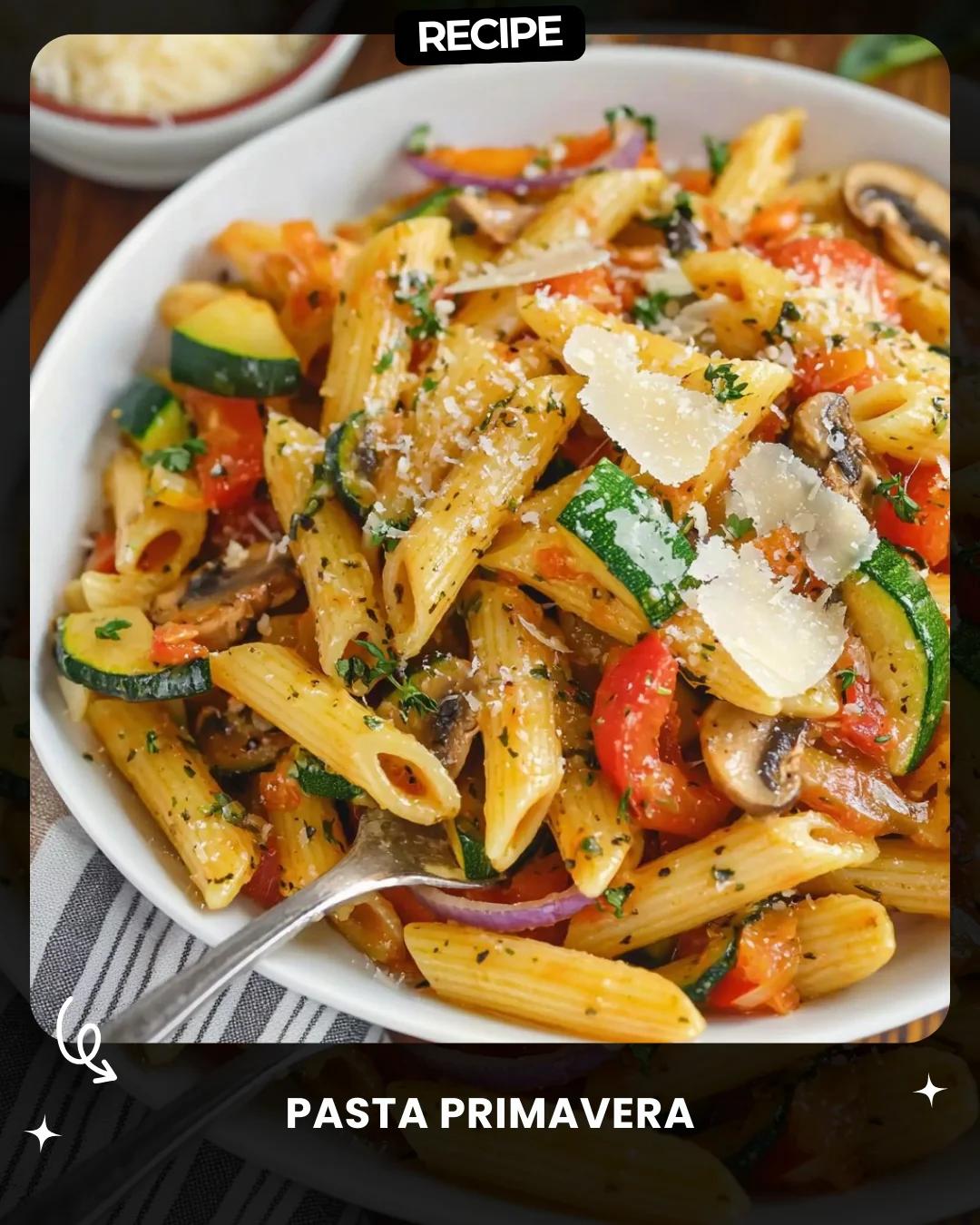
Description
Pasta Primavera
Ingredients
12 oz (340g) penne pasta
2 tbsp olive oil
3 garlic cloves, minced
1 red bell pepper, sliced
1 yellow bell pepper, sliced
1 zucchini, halved and sliced
1 cup cherry tomatoes, halved
1 cup mushrooms, sliced
1/2 red onion, thinly sliced
1/4 cup grated Parmesan cheese (plus extra for garnish)
1/4 tsp red pepper flakes (optional)
Salt and pepper to taste
Fresh basil or parsley, chopped, for garnish
Instructions
Cook the Pasta:
Bring a large pot of salted water to a boil. Cook penne pasta according to package instructions until al dente. Drain and set aside.
Sauté the Vegetables:
In a large skillet, heat olive oil over medium heat. Add garlic and sauté until fragrant (about 1 minute).
Add Vegetables:
Add bell peppers, zucchini, and red onion. Sauté for 5-7 minutes until slightly tender. Stir in mushrooms and cherry tomatoes, cooking for another 3-4 minutes.
Combine Pasta and Vegetables:
Add the cooked pasta to the skillet. Toss well to combine. Sprinkle with Parmesan cheese, salt, pepper, and red pepper flakes (if using).
Serve and Garnish:
Serve warm in bowls. Top with extra Parmesan cheese and fresh basil or parsley.
Prep Time: 10 minutes
Cook Time: 20 minutes
Servings: 4
This light, veggie-packed dish is perfect for a quick, healthy meal. Customize with your favorite seasonal vegetables for endless variations!
#PastaPrimavera #HealthyDinner #VeggieLovers
Step-by-Step Guide
Follow these detailed instructions for a foolproof Pasta Primavera. First, prep all your vegetables before heating any pans (this is called ‘mise en place’). When boiling water for the pasta, ensure it is heavily salted like the sea. As the pasta cooks, begin sautéing. The key is to add vegetables in stages based on their density: start with garlic and onions for a flavor base, then add harder veggies like bell peppers and zucchini. Softer vegetables like mushrooms and tomatoes go in last to prevent them from becoming mushy. Reserve about 1/2 cup of the starchy pasta water before draining. When combining everything in the skillet, add a splash of this water to help the Parmesan cheese create a light, cohesive sauce that clings to the pasta.
Serving Suggestions
This versatile dish pairs beautifully with several sides. For a complete Italian meal, serve with a simple arugula salad dressed with lemon vinaigrette and garlic bread. To add protein, top with grilled chicken breast, shrimp, or cannellini beans. For a richer finish, drizzle with a high-quality extra virgin olive oil or a spoonful of pesto just before serving. A crisp, chilled white wine like Pinot Grigio or Sauvignon Blanc complements the fresh vegetables perfectly.
How-to Summary
In summary, Pasta Primavera is a quick, one-skillet meal: boil penne pasta until al dente. Simultaneously, sauté garlic and then progressively add vegetables until tender-crisp. Combine the drained pasta with the veggies in the skillet, adding Parmesan and reserved pasta water to create a light sauce. Season and garnish with fresh herbs.
Frequently Asked Questions
Can I make this dish ahead of time? Yes, but for best texture, store the cooked vegetables and pasta separately. Reheat the veggies in a skillet and add the pasta just before serving to prevent it from becoming soggy.
What are the best vegetable substitutes? Broccoli florets, asparagus, peas, spinach, or yellow squash are excellent additions or replacements. Use what’s in season.
Is this recipe gluten-free or vegan? Easily! Use your favorite gluten-free pasta. For a vegan version, omit the Parmesan or use a plant-based alternative.
Why is my pasta dish dry? You likely forgot to reserve the starchy pasta water. This liquid is crucial for creating a silky sauce that brings the dish together.
Can I use a different pasta shape? Absolutely. Fusilli, farfalle, or rigatoni are great choices as their shapes hold onto the vegetables and sauce well.
Common Mistakes to Avoid
- Overcooking the Vegetables: They should be tender-crisp, not soft and mushy. Maintain a medium-high heat and keep them moving.
- Underseasoning the Pasta Water: The water should taste salty, as this is the primary chance to season the pasta itself.
- Adding All Vegetables at Once: Denser vegetables need more time to cook. Adding them in stages ensures even cooking.
- Skipping the Pasta Water: Not using the starchy reserved water will result in a dry, less cohesive dish.
Conclusion
Pasta Primavera is more than a recipe; it’s a customizable template for a vibrant, healthy, and quick dinner. By mastering the simple technique of staggered vegetable sautéing and utilizing pasta water, you can create a restaurant-quality meal any night of the week. Its flexibility with ingredients ensures you can enjoy a new variation with every season, making it a perennial favorite for veggie lovers and busy cooks alike.