

























Description
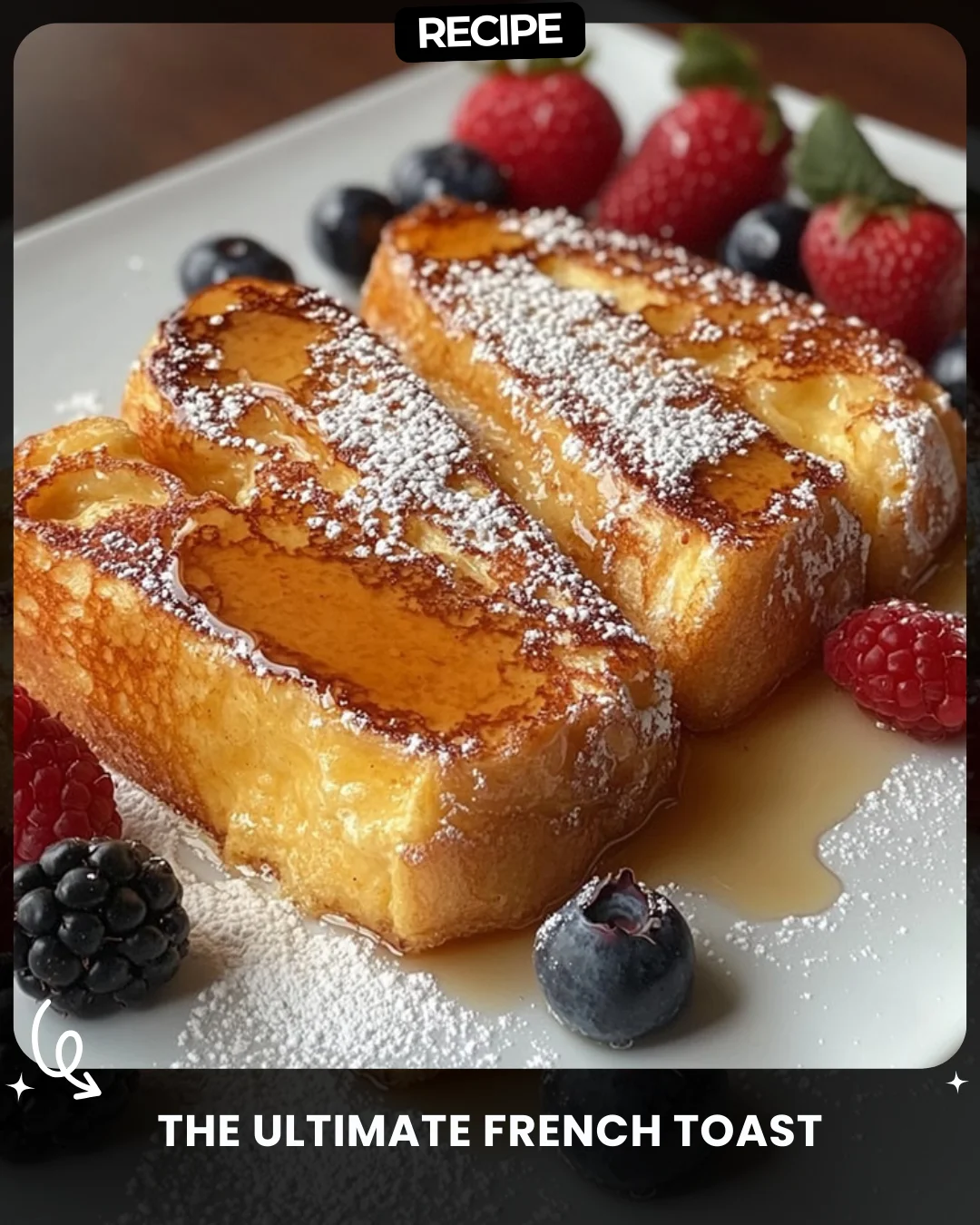
The Ultimate French Toast
Craving something delicious for breakfast? Try this rich and flavorful French Toast, made with thick-cut bread and topped with maple syrup, powdered sugar, and fresh berries.
Ingredients:
4 eggs, whole milk, cinnamon
Thick-cut bread
Butter for frying
Directions:
Whisk up your batter and soak each slice of bread.
Fry to perfection in a skillet until golden brown.
Top with syrup, powdered sugar, and berries!
Pro Tip: For extra richness, try using heavy cream!
#FrenchToastLovers #PerfectBrunch #BreakfastInBed
Step-by-Step Guide
1. In a wide, shallow bowl, whisk together 4 large eggs, 1 cup of whole milk (or heavy cream for extra richness), and 1 teaspoon of ground cinnamon until fully combined and slightly frothy.
2. Heat a large skillet or griddle over medium heat. Add 1 tablespoon of butter, letting it melt and coat the surface.
3. While the pan heats, take one slice of thick-cut bread (like brioche, challah, or Texas toast) and submerge it in the egg mixture. Let it soak for 20-30 seconds per side, allowing the custard to fully penetrate the bread without making it fall apart.
4. Carefully place the soaked bread in the preheated skillet. Cook for 3-4 minutes on the first side, until deeply golden brown and crispy.
5. Flip the French toast and cook for another 2-3 minutes on the second side. Repeat with remaining bread, adding more butter to the pan as needed.
6. Transfer cooked slices to a wire rack set over a baking sheet (this keeps them crispy) while you finish the batch.
Serving Suggestions
Serve your French toast immediately while hot and crispy. The classic topping is pure maple syrup and a dusting of powdered sugar. Elevate your plate with fresh berries like strawberries, blueberries, or raspberries. For a decadent twist, add a dollop of whipped cream, a drizzle of Nutella, or a sprinkle of toasted nuts like pecans or almonds. A side of crispy bacon or breakfast sausage perfectly balances the sweetness.
How-to Summary
Whisk eggs, milk, and cinnamon to create a custard batter. Soak thick bread slices thoroughly. Cook in a buttered skillet over medium heat until golden brown on both sides. Serve immediately with your favorite sweet toppings.
Frequently Asked Questions
Q: What is the best bread for French toast?
A: Thick, sturdy breads with a tight crumb are best. Day-old brioche, challah, or French bread are ideal as they soak up the custard without becoming mushy.
Q: Can I make the batter ahead of time?
A: Yes, you can whisk the egg, milk, and cinnamon mixture up to a day in advance. Store it covered in the refrigerator. Whisk again before using.
Q: Why is my French toast soggy in the middle?
A: This is usually due to bread that is too thin or over-soaked. Use thick slices (at least 1 inch) and aim for a 20-30 second soak per side—just until saturated but not falling apart.
Q: Can I make this recipe dairy-free?
A> Absolutely. Substitute the whole milk with an equal amount of almond milk, oat milk, or coconut milk. The flavor will vary slightly but will still be delicious.
Q: How do I keep cooked French toast warm for a crowd?
A: Place cooked slices in a single layer on a wire rack set over a baking sheet. Keep them in a preheated 200°F (95°C) oven. This prevents steaming and keeps them crispy.
Common Mistakes to Avoid
- Using the wrong bread: Avoid thin, pre-sliced sandwich bread as it will become soggy and tear easily.
- Underseasoning the batter: Don’t forget the pinch of salt! It enhances all the flavors. Consider adding a splash of vanilla extract.
- Cooking at the wrong temperature: Too high will burn the outside before the inside cooks; too low will yield greasy, pale toast. Medium heat is key.
- Overcrowding the pan: This lowers the pan temperature and leads to steaming instead of frying. Cook in batches.
- Serving immediately on a plate: Letting cooked toast sit on a flat plate creates condensation and sogginess. Use a wire rack.
Conclusion
Mastering the perfect French toast is about quality ingredients and simple technique. By choosing thick, sturdy bread, creating a well-seasoned custard, and cooking with patience over medium heat, you can transform a few basic ingredients into a spectacular breakfast or brunch centerpiece. This versatile dish welcomes endless customization with toppings and flavors, making it a timeless favorite. With this guide and the tips provided, you’re now equipped to avoid common pitfalls and create a consistently delicious, crispy-on-the-outside, tender-on-the-inside French toast every single time.