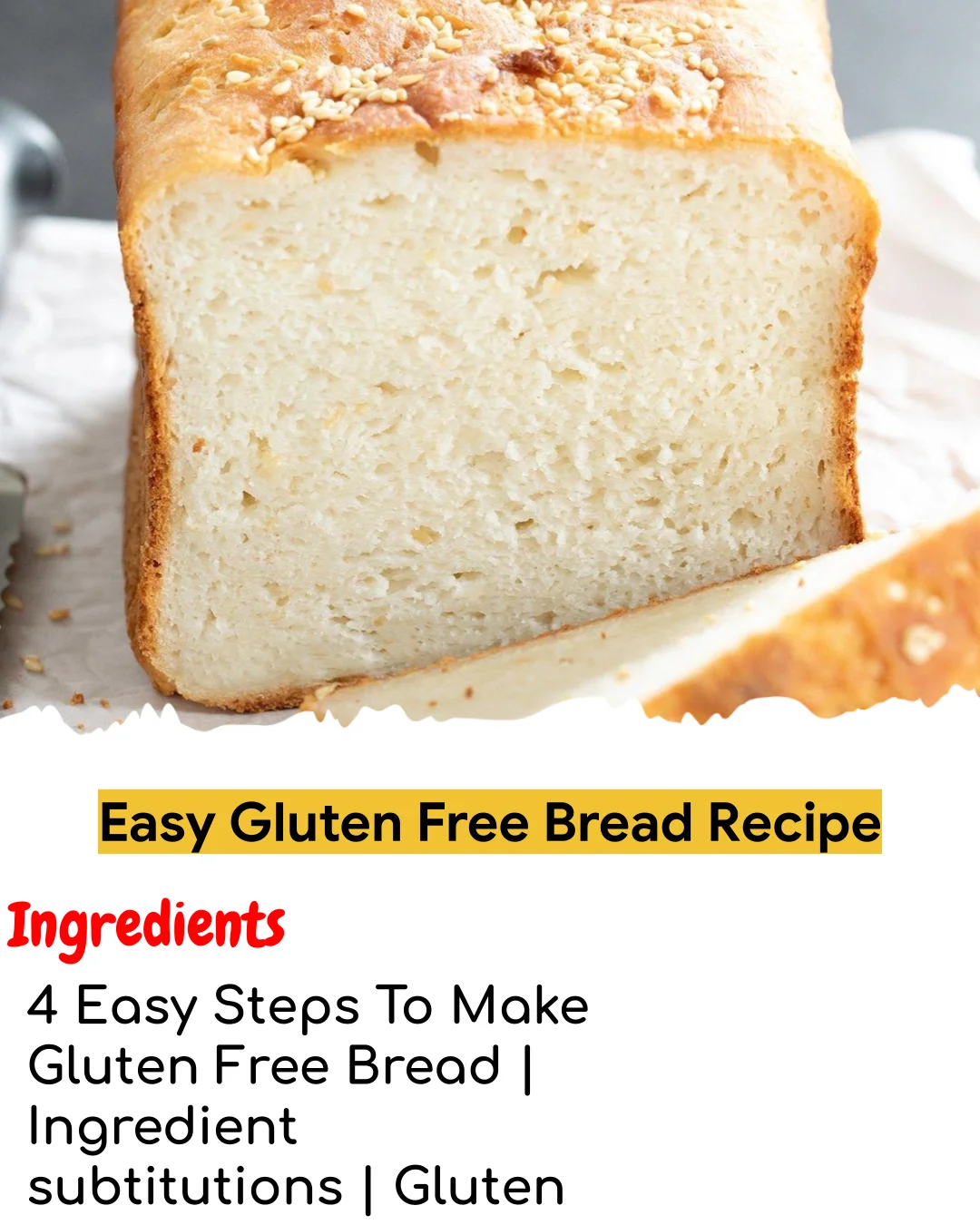
Cooking and Serving: 16 minutes | 10 slices bread
Ingredients
4 Easy Steps To Make Gluten Free Bread | Ingredient subtitutions | Gluten free flour – Many high-quality all purpose gluten free flour blends
Description
Prep Time: 15 minutes | Cook Time: 1 hour hr | Total Time: 16 minutes | Servings: 10 slices bread
Ingredients
4 Easy Steps To Make Gluten Free Bread
Expert tips
Ingredient subtitutions
Bake with me
Storage tips
Gluten free flour – Many high-quality all purpose gluten free flour blends
Instant yeast – Helps give the bread a proper rise without proofing or
Sugar – Just enough to feed the yeast and help tenderize the loaf without
Milk – Adds richness and helps tenderize the bread and create an open crumb.
Butter – Gives the bread flavor and just enough moisture for tenderness
Egg whites – Help bind the dough, add lift without adding flavor or color.
Salt – Essential for flavor.
Vinegar – Reacts with the cream of tartar to help with rise; apple cider
Cream of tartar – One of 3 elements of baking powder, it reacts with the
Use block-style vegan butter; Melt and Miyoko’s Kitchen are my favorites.
If using Earth Balance Buttery Sticks, reduce the salt to 1 teaspoon—they
Choose any unsweetened, unflavored nondairy milk with a consistency similar
Replace the 2 egg whites with 1 “chia egg” (1 tbsp ground chia + 1 tbsp
Some readers have also had success with 1 egg’s worth of Bob’s Red Mill Egg
Aquafaba is another option.
Replace xanthan gum with 20 grams of psyllium husk powder.
First, hydrate it in the milk and let the mixture gel. Then add it when you’d
Note: The texture will be a bit more rustic and chewy, and it may rise less.
This recipe calls for instant yeast (aka rapid rise or breadmaker yeast).
To substitute active dry yeast, use 10 grams (3 tsp), soaked in some of the
Want a version without commercial yeast? Try my gluten free sourdough bread
Sprinkle the risen dough with sesame, chia, sunflower, pumpkin seeds—or even
Digital kitchen scale for
Instant read thermometer for gauging doneness of the loaf
3 cups (420 g) all purpose gluten free flour blend
3 teaspoons xanthan gum, omit if your blend already contains it
2 ½ teaspoons (8 g) instant yeast, (See Recipe Notes)
¼ teaspoon cream of tartar
2 tablespoons (25 g) granulated sugar
2 teaspoons (12 g) kosher salt
1 ½ cups (12 fluid ounces) warm milk, (about 95°F) (See Recipe Notes)
4 tablespoons (56 g) unsalted butter, melted and cooled (plus more for
1 teaspoon apple cider vinegar
2 (50 g) egg whites, at room temperature (See Recipe Notes)
Toasted sesame seeds for sprinkling, optional
Instructions
Grease or line a 9-inch x 5-inch loaf pan (ideally one with 4-inch sides), or.
line the bottom and sides of the pan with a piece of parchment paper.
In the bowl of a stand mixer fitted with the paddle attachment, place the.
Add the milk, butter, vinegar and egg whites, and mix with the paddle.
during mixing to ensure no dry patches.
Turn the mixer to medium-high speed and mix for about 3 minutes. The dough.
Scrape the dough into the prepared loaf pan. Using a wet spatula, smooth the.
Cover the dough with lightly oiled plastic wrap (and the lid of a pullman pan.
it’s about 50% bigger than when it started (it won’t double).
The dough may take longer to rise properly in colder, drier weather and less.
time in warmer, more humid weather. Be patient!
When the dough has nearly reached the end of its rise, preheat the oven to.
break and craters start to appear.
Remove the lid if using, and the plastic wrap. Using a sharp knife or lame.
If using a Pullman pan, grease the inside of the lid of the pan, and slide it.
Place the pan on the middle rack or top oven rack (whatever is appropriate.
for your oven) of the preheated oven.
Bake for 45 minutes to 1 hour. If using a Pullman pan, remove the lid after.
about 40 minutes of baking and return the pan to the oven to finish baking.
The loaf is done when the internal temperature of the bread reaches about.
comes out mostly clean (not wet).
The outside will form a thick, brown crust (thinner and less brown if you’ve.
inside when you tap it firmly but gently with your forefinger.
To ensure that it has baked fully, remove the loaf from the oven, and then.
Remove the loaf from the oven, and allow the bread to cool for about 10.
Wrap the cooled loaf and any slices tightly in plastic wrap and store at room.
To freeze this bread, cool completely and then wrap tightly, and freeze.
Defrost the whole loaf at room temperature, still wrapped.
You can also slice a cooled loaf and wrap each slice separately, and freeze.
Defrost as many slices at a time as you need in the toaster.
Notes
* Digital kitchen scale for
weighing ingredients precisely
* Instant read thermometer for gauging doneness of the loaf
* 3 cups (420 g) all purpose gluten free flour blend
* 3 teaspoons xanthan gum, omit if your blend already contains it
* ¼ teaspoon cream of tartar
* 2 tablespoons (25 g) granulated sugar
* 2 teaspoons (12 g) kosher salt
* 4 tablespoons (56 g) unsalted butter, melted and cooled (plus more for
* 1 teaspoon apple cider vinegar
* Toasted sesame seeds for sprinkling, optional
* Grease or line a 9-inch x 5-inch loaf pan (ideally one with 4-inch sides), or
a 1-pound Pullman-style loaf pan (with a lid) and set it aside. You can also
line the bottom and sides of the pan with a piece of parchment paper.
* In the bowl of a stand mixer fitted with the paddle attachment, place the
flour blend, xanthan gum, instant yeast, cream of tartar and sugar. Whisk
together with a separate, handheld whisk. Add the salt, and whisk again to
* Add the milk, butter, vinegar and egg whites, and mix with the paddle
attachment on low speed. Scrape down the sides of the mixer bowl as necessary
during mixing to ensure no dry patches.
* Turn the mixer to medium-high speed and mix for about 3 minutes. The dough
will be thick, smooth and quite wet, and should become slightly whipped in
* Scrape the dough into the prepared loaf pan. Using a wet spatula, smooth the
* Cover the dough with lightly oiled plastic wrap (and the lid of a pullman pan
on top if using), and allow it to rise in a warm, draft-free place for 30 to
45 minutes or until it’s about 150% of its original size. That means that
it’s about 50% bigger than when it started (it won’t double).
* The dough may take longer to rise properly in colder, drier weather and less
time in warmer, more humid weather. Be patient!
* When the dough has nearly reached the end of its rise, preheat the oven to
375°F. The dough is starting to overproof if the top of the loaf starts to
break and craters start to appear.
* Remove the lid if using, and the plastic wrap. Using a sharp knife or lame
slash the top of the loaf about 1/4-inch deep (optional). If using the
optional seeds, brush the top of the risen bread gently with melted butter,
and sprinkle with the seeds.
* If using a Pullman pan, grease the inside of the lid of the pan, and slide it
into place on top of the pan.
* Place the pan on the middle rack or top oven rack (whatever is appropriate
for your oven) of the preheated oven.
* Bake for 45 minutes to 1 hour. If using a Pullman pan, remove the lid after
about 40 minutes of baking and return the pan to the oven to finish baking.
* The loaf is done when the internal temperature of the bread reaches about
205°F on an instant-read thermometer and a toothpick inserted in the center
comes out mostly clean (not wet).
* The outside will form a thick, brown crust (thinner and less brown if you’ve
used a pullman pan with a lid), and the loaf will sound somewhat hollow
inside when you tap it firmly but gently with your forefinger.
* To ensure that it has baked fully, remove the loaf from the oven, and then
from the pan. If it has reached the proper internal temperature but seems
soft on the outside at all, place the loaf back in the pan or on a lined
baking sheet, and return it to the oven. Reduce the oven temperature to 300°F
and continue to bake until the crust is stiff all around, up to another 20
* Remove the loaf from the oven, and allow the bread to cool for about 10
minutes in the pan (if it hasn’t been removed). Transfer the bread to a wire
rack, remove any parchment paper, and allow the loaf to cool completely
(ideally at least 1 hour and up to 2). Slice the cool loaf into 10 equal
slices with a serrated knife.
* Wrap the cooled loaf and any slices tightly in plastic wrap and store at room
temperature for up to 2 days.
* To freeze this bread, cool completely and then wrap tightly, and freeze.
Defrost the whole loaf at room temperature, still wrapped.
* You can also slice a cooled loaf and wrap each slice separately, and freeze.
Defrost as many slices at a time as you need in the toaster.
For best results, use a high-quality all purpose gluten free flour intended for
gluten free yeast bread, like Better Batter’s original gluten free blend,
Nicole’s Best multipurpose gluten free flour blend (with 3 tsp xanthan gum),
King Arthur gluten free bread flour (try adding 2 tbsp more milk), or Caputo
Avoid King Arthur Measure for Measure gluten free flour, Cup4Cup, and Bob’s Red
For DIY blends, see the All Purpose Gluten Free Flour Blends page
Using active dry yeast
Substitute 10g (about 3 tsp) for instant yeast. Proof in some of the milk until
Use a block-style vegan butter like Melt or Miyoko’s
Use any unsweetened, unflavored nondairy milk with similar consistency to cow’s
I like 50 grams aquafaba best (the brine from a can of unsalted chickpeas) or
Bob’s Red Mill egg replacer.
A stand mixer with paddle attachment is strongly recommended. You can try
pulsing the dough in a 7-cup food processor with plastic blade until smooth.
Adapted from the book Gluten-Free on a Shoestring: 125 Easy Recipes for Eating
Well on the Cheap Second Edition, Da Capo Lifelong, a member of the Perseus Books, LLC, a subsidiary of Hachette
Book Group, Inc. Copyright © 2017.
Trans Fat: 0.2g | Cholesterol: 16mg | Sodium: 533mg | Potassium: 110mg | Fiber:
3g | Sugar: 4g | Vitamin A: 199IU | Vitamin C: 0.01mg | Calcium: 48mg | Iron:
Nutrition information is automatically calculated, so should only be used as an
USING A BREAD MACHINE?
This recipe is designed for a conventional oven. For a bread machine version,
head over to my gluten free bread machine recipe
Room Temperature Storage
Let the bread cool completely, then wrap the unsliced loaf tightly in plastic
wrap or another airtight wrap. Store at room temperature for up to 2 days.
How to refresh stale bread
If the bread feels dry or stale, sprinkle or brush slices lightly with lukewarm
water, then toast on low heat. This helps the bread reabsorb moisture and
Freezing Instructions
To serve: Toast slices straight from the freezer—no need to defrost first.
Whole loaf: Cool completely, then freeze the entire loaf unsliced for best
Pre-sliced: Slice the loaf first, then wrap each slice individually in
freezer-safe wrap. Or, separate slices with small pieces of parchment paper and
Gluten free bread recipe with seeds pictured baked in pan, sliced, and being
free bread recipe with seeds pictured baked in pan, sliced, and being squeezed.
Raw soft bread dough in a 2 pound metal pullman pan.
soft bread dough in a 2 pound metal pullman pan.
Why isn’t my bread rising?
Here are the most common reasons:
• You’re using the wrong flour blend or didn’t measure • You substituted active dry yeast but didn’t use enough or didn’t proof it
• Proofing conditions were off—too cold, too hot, or too short.
• Incorrect hydration from mismeasured liquid or dry ingredients.
How do I know when the bread is done baking?
• The internal temperature reaches 205°F or slightly higher;
• The crust is deep golden brown and feels firm; and
• It sounds hollow when thumped on the bottom.
Why did my bread sink after baking?
Most often, sinking is due to:
• Overproofing — the dough rose too high and collapsed.
• Too much yeast — causing a fast rise with poor structure.
• Too much liquid — leading to instability during baking.
• An oven that’s too hot — baking the outside before the inside is set.
How do I adjust this recipe for high altitude?
Many readers say their usual altitude adjustments work well here. For guidance,
try the King Arthur Flour guide for high altitude baking
Can I make this without a stand mixer?
Yes, with some modifications:
• Use a 7-cup food processor with a plastic blade, pulsing just until the dough
is smooth (don’t overprocess or heat the dough).
• Some readers have made the bread and may not rise well.
Picture the gluten free bread recipe you’ve been missing in your life, and know
that the wait is over. It’s that simple.
the gluten free bread recipe you’ve been missing in your life, and know that the
wait is over. It’s that simple.