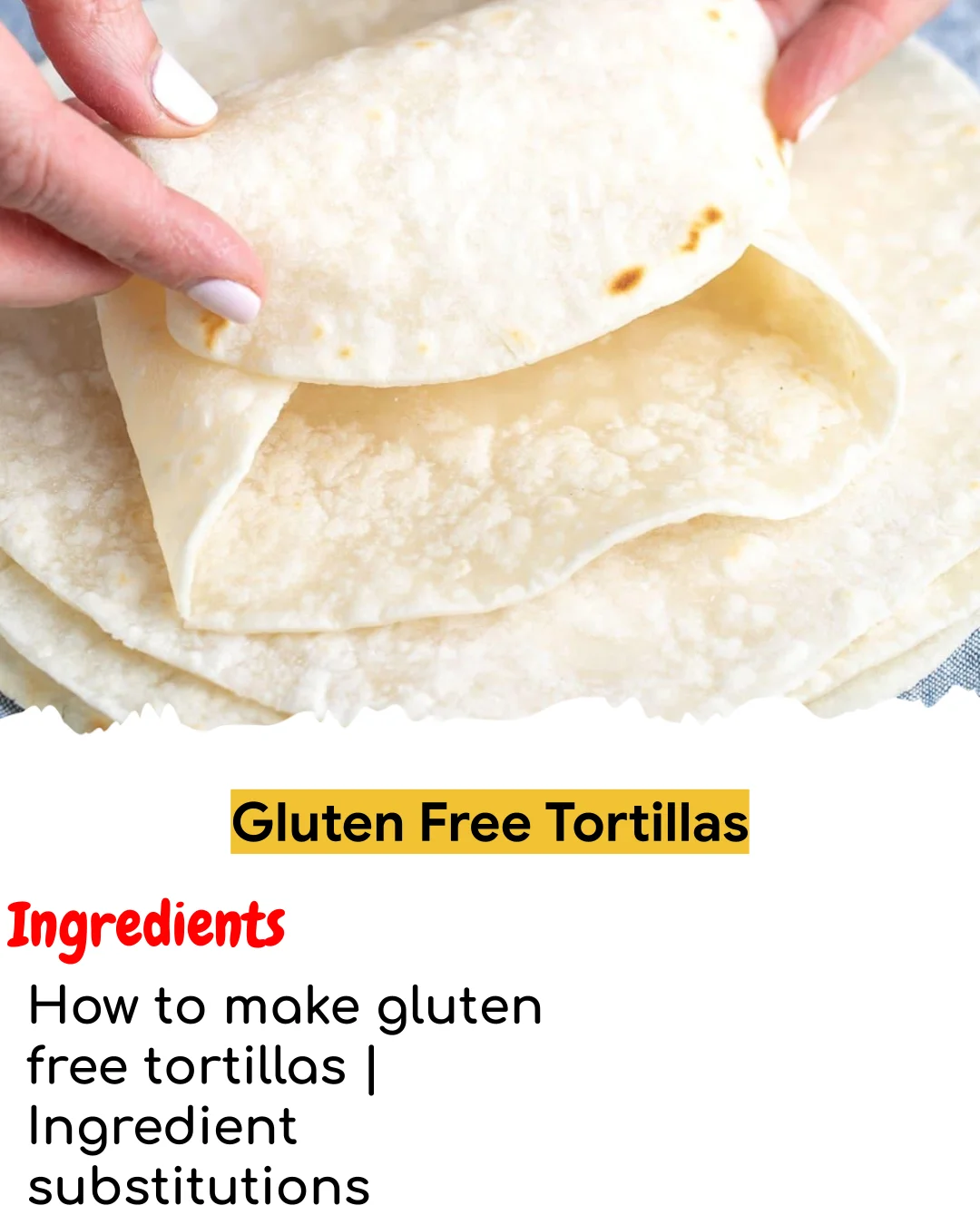
Cooking and Serving: 40 minutes | 6 8-inch tortillas
Ingredients
How to make gluten free tortillas | Ingredient substitutions
Description
Prep Time: 30 minutes | Cook Time: 10 minutes | Total Time: 40 minutes | Servings: 6 8-inch tortillas
Ingredients
How to make gluten free tortillas
Expert tips
Ingredient substitutions
Instructions
Packaged gluten free tortillas.
delectable – delicious, a bit chewy, and they don’t break when you fold them!
Notes
* How to make gluten free tortillas
* Ingredient substitutions
* Gluten-Free Tortillas Recipe
* Storage instructions
* Packaged gluten free tortillas
“Been trying to make a tasty tortilla, GF or not, for years – these are
delectable – delicious, a bit chewy, and they don’t break when you fold them!
* Authentic taste and texture: No packaged tortillas come close to the taste
and texture of a soft, flexible homemade flour tortilla with that buttery
* Burrito-size: Make these tortillas as small as you like, and up to 10-inches
in diameter—or as big as your skillet can hold. No more pretending like a
6-inch tortilla is big enough for a burrito.
* Super simple recipe: You only need the most basic gluten free baking
ingredients: gluten free flour, extra tapioca starch, salt, baking powder,
coconut oil or shortening, and water—mixed in one bowl.
* No special equipment: You need a rolling pin to roll the dough, but a wine
bottle would probably work, too! You don’t need any special equipment like a
tortilla press (but you can use one if you like).
ingredients needed to make gluten free tortillas in small bowls with black block
lettering spelling out name of each individual ingredient
needed to make gluten free tortillas in small bowls with black block lettering
spelling out name of each individual ingredient
* Gluten free flour blend: Use your favorite all purpose gluten free flour
blend, as long as it’s well-balanced and has a finely ground rice flour. My
favorites are Nicole’s Best Multipurpose GF Flour Blend and Better Batter’s
* Tapioca starch: Your gf flour blend will already contain some tapioca starch,
which all good blends do. Adding more tapioca starch as a separate ingredient
helps make the dough easier to handle and the tortillas a lot more flexible.
* Baking powder: Adds rise to your tortillas so they aren’t flat.
* Salt: Brightens the flavor of the tortillas.
* Virgin coconut oil: Adds richness, flavor and tenderness to the tortillas.
It’s the kind that comes in a jar and is solid at cool room temperature.
* Warm water: Adds moisture and brings the dry ingredients together.
Hands folding top gluten free tortilla on a stack into a burrito shape, on blue
folding top gluten free tortilla on a stack into a burrito shape, on blue cloth
HOW TO MAKE GLUTEN FREE TORTILLAS
Whisk the dry ingredients (all purpose gluten free flour blend, tapioca starch,
baking powder, and salt). Add virgin coconut oil and use a fork to work it into
the dry ingredients until it looks sandy. Add warm water, and mix to combine.
Let the dough rest for about 20 minutes to make it easier to handle.
large round silver colored mixing bowl with white flour mixture and large metal
round silver colored mixing bowl with white flour mixture and large metal wire
fingers holding metal fork with sandy white mixture of coconut oil mixed into
flour, held over same mixing bowl
holding metal fork with sandy white mixture of coconut oil mixed into flour,
held over same mixing bowl
hand holding glass measuring cup pouring water into mixing bowl with large metal
holding glass measuring cup pouring water into mixing bowl with large metal
ball of very light tan colored raw tortilla dough resting in mixing bowl
of very light tan colored raw tortilla dough resting in mixing bowl
Sprinkle the dough generously with tapioca starch, and divide into 4 equal
pieces. Roll one at a time out into about a 9-inch round that’s a bit more than
1/8-inch thick. Cut out an 8-inch round using a cake cutter, the lid of a pot,
or a pastry or pizza wheel.
Shape the other 3 pieces, and gather and reroll scraps. Sprinkle the raw
tortillas with more flour and stack them.
raw tortilla dough in disk on marble surface on top of scattered tapioca flour
tortilla dough in disk on marble surface on top of scattered tapioca flour
raw dough cut into 4 equal wedges with Ateco metal bench scraper with brown wood
dough cut into 4 equal wedges with Ateco metal bench scraper with brown wood
8-inch round metal cake cutter on top of rolled out piece of raw tortilla dough
with bench scraper and blond wood tapered rolling pin
round metal cake cutter on top of rolled out piece of raw tortilla dough with
bench scraper and blond wood tapered rolling pin
8-inch clean round of dough cut into rolled out raw tortilla dough with dough
clean round of dough cut into rolled out raw tortilla dough with dough scraps
Place the raw tortillas one at a time in a hot skillet and cook for about 45
seconds or until bubbles begin to form on the underside. Flip and cook on the
other side for another 30 seconds or until dry on both sides. Remove it from the
hot skillet and keep it warm in a tea towel or in a tortilla warmer.
stack of 6 raw 8-inch round tortillas with white tapioca flour on top and metal
bench scraper and rolling pin
of 6 raw 8-inch round tortillas with white tapioca flour on top and metal bench
scraper and rolling pin
round black skillet on electric burner cooking underside of otherwise raw round
tortilla with bubbles beginnin to form through to the top
black skillet on electric burner cooking underside of otherwise raw round
tortilla with bubbles beginnin to form through to the top
same tortilla flipped in skillet with some golden brown spots now on top
tortilla flipped in skillet with some golden brown spots now on top
stack of cooked tortillas with some golden brown spots, all in brown round
plastic tortilla warmer with wet white paper towels underneath, in the warmer
of cooked tortillas with some golden brown spots, all in brown round plastic
tortilla warmer with wet white paper towels underneath, in the warmer
ADD EXTRA TAPIOCA STARCH
Even though your all purpose gluten free flour blend already has tapioca starch
in it as an ingredient, adding more tapioca starch makes the tortillas much more
SHAPE WITH PLENTY OF EXTRA FLOUR
Begin with a wet dough and flour it liberally with extra tapioca starch for
shaping. In warmer weather, you’ll need more flour, in cool, dry weather you may
need less. If the dough splinters and cracks as you’re rolling, knead and roll
in more tapioca, gather the dough, and roll it again—until it rolls more
smoothly. Pinch together any tears, and keep rolling.
TRY A CAKE CUTTER FOR CLEAN LINES
Give your tortillas a clean, round edge with a cake cutter, which looks like a
large round cookie cutter. You can also use the lid of a large pot if it has
sharp edges to cut out the round cleanly, and remove the scraps to re-roll with
any remaining dough. For a thicker version of a wrap that doesn’t need to be cut
at all, our recipe for gluten free flatbread
LET THE RAW DOUGH REST
The raw tortilla dough is relatively wet. As it rests, the flour absorbs some of
the moisture, making the dough easier to handle. Try wrapping it in plastic wrap
and letting it rest in the refrigerator, too.
LINE YOUR TORTILLA PRESS
If you prefer shaping your tortillas with a tortilla press, line the press to
prevent the dough from sticking to it. Try slicing a quart-size zip-top bag in
half and lining the top and bottom of your tortilla press with each half.
I prefer to roll out the dough using a rolling pin, since a tortilla press won’t
press the dough thin enough, or make a larger round than about about 5-inches.
It’s also very hard to get the dough thin enough for a flexible tortilla without
using a rolling pin. A tortilla press is great to use for gluten free corn
which are naturally thicker.
White dough cut into a round on marble with some scraps around
dough cut into a round on marble with some scraps around
Hands picking up a large round of raw flour tortilla dough, on marble
picking up a large round of raw flour tortilla dough, on marble
INGREDIENT SUBSTITUTIONS
Tapioca starch is a unique flour that adds flexibility to gluten free baking
recipes. There’s no perfect substitute for tapioca starch, but I sweet white
rice flour, also known as glutinous rice flour, sometimes works similarly.
If you have Expandex modified tapioca starch, which is chemically modified
tapioca starch, you can use that instead of regular tapioca starch. Instead of 1
1/2 cups (210 grams) all purpose gluten free flour, use 1 3/4 cups (245 grams),
plus 35 grams Expandex. For shaping the tortillas, use more of the flour blend
In place of virgin coconut oil, you can use vegetable shortening. I like
Spectrum brand nonhydrogenated vegetable shortening, and Crisco should work,
too. Unsalted butter at cool room temperature should also work, but the dough
will be wetter. I would not use an oil that’s liquid at room temperature, which
will make the tortillas feel and taste greasy.
3 gluten free tortillas folded in half on marble
gluten free tortillas folded in half on marble
Go Ad-Free
GLUTEN-FREE TORTILLAS RECIPE
Prep Time: 30 minutes mins
Cook Time: 10 minutes mins
Resting time: 30 minutes mins
Yield: 6 8-inch tortillas
hands folding gluten free tortilla on top of stack
folding gluten free tortilla on top of stack
Soft, flexible gluten free tortillas made with a 5 ingredients are perfect for
burritos, tacos, and wraps.
* Cake cutter 8-inch or 6-inch, or lid of pot (optional)
* 1 ½ cups (210 g) all purpose gluten free flour blend
* 1 teaspoon xanthan gum, omit if your blend already contains it
* ⅔ cup (80 g) tapioca starch/flour
* 1 ½ teaspoons baking powder
* 1 teaspoon kosher salt
* 4 tablespoons (48 g) virgin coconut oil
* ¾ cup (6 ounces) warm water, plus more
MAKE THE TORTILLA DOUGH
* In a large bowl, place the all purpose gluten free flour blend, xanthan gum,
tapioca starch/flour, baking powder, and salt, and whisk to combine.
* Add the coconut oil, and toss it in the dry ingredients. With the tines of a
large fork, break up the fat into small pieces so the mixture looks sandy.
* Create a well in the center of the mixture, add the water, and mix to
combine. The dough should be thick. If there are any crumbly bits at all, mix
in more water slowly * Knead the dough together and press it into a ball, cover with a moist tea
towel or plastic wrap, and allow to sit for 20 to 30 minutes. The dough will
stiffen a bit as it absorbs more of the water. You can also let it rest,
covered in plastic, in the refrigerator for up to 3 days for easier handling.
* Sprinkle a flat workspace liberally with tapioca starch. Place the first
piece of dough on top, and sprinkle again with more tapioca. Spread the
tapioca all around the dough.
* Use a knife or bench scraper to divide the dough into four equal pieces. Work
with one piece of dough at a time, and cover the rest with a moist tea towel
or plastic wrap to prevent them from drying out.
* Work with piece of dough at a time, use a rolling pin to roll out the dough
about ¼-inch inch thick.
* If the dough seems smooth, proceed with the next step. If it doesn’t seem
smooth, but instead has what appears to be cracks, gather the dough together
again, sprinkle with more tapioca starch, and roll it out again until it
* Roll the dough, sprinkling with more tapioca and moving the dough frequently
to prevent it from sticking or tearing, a bit more than 1/8-inch thick and at
least 9-inches in diameter (to make 8-inch rounds).
* Using a cake cutter or freehand with a pizza wheel or sharp knife, cut out a
round approximately 8-inches in diameter. You’ll cut one 8-inch round from
each of the original 4 pieces of dough.
* Gather the scraps and set them aside with the other pieces of remaining
dough. You will reroll scraps together after you’ve worked with at least 2
* Sprinkle each raw shaped tortilla with extra tapioca and stack them on to of
one another as you work.
* Heat a 10- or 12-inch cast-iron skillet (or a nonstick skillet over medium
heat) over medium-high heat. The skillet should be hot enough to sizzle when
you drip water on it.
* Place one round one at a time in the center of the hot skillet. Cook on one
side until bubbles begin to appear on underside (about 45 seconds).
* Using a wide spatula, flip the tortilla over, and cook on the other side
until more bubbles form and the tortilla is dry (about another 30 seconds).
* As it cooks, press down on the top of the tortilla to help it sear a bit, and
cook it on the first side again if necessary. Remove the tortilla from the
pan, place on large tea towel or in a tortilla warmer, and cover.
* Repeat the process with the remaining pieces of dough, including gathering
and rerolling all the scraps together.
* You will make up to 2 more 8-inch tortillas from the scraps for a total of 6,
MAKE-AHEAD INSTRUCTIONS
* If you don’t plan to use the tortillas right away, place them, still wrapped
in the towel, in a plastic bag to seal in moisture. Serve the tortillas
* To freeze the tortillas, allow them to cool completely to room temperature.
* Stack them, wrap tightly with freezer-safe wrap, and freeze until you’re
ready to use. Allow to defrost at room temperature and refresh in a hot, dry
skillet before serving.
My favorite gluten free flour blends are Better Batter’s original blend gluten
free flour and Nicole’s Best
multipurpose blend (with added
xanthan gum). Bob’s Red Mill 1-to-1 Gluten Free Baking Flour
should also work, but add an additional 1/2 teaspoon
xanthan gum to the dry ingredients or the dough won’t hold together very well.
Cup4Cup changed its formula and doesn’t seem to work as well as it has in the
past, so I don’t recommend it. To make your own blend using one of my “mock”
recipes, please see the all purpose gluten free flour blends
This is one of the flours in all good gf flour blends, but you still need to add
more here. You may be able to use glutinous rice flour (also called sweet white
rice flour) in its place.
If you have Expandex modified tapioca starch and would like to use that instead,
you’ll need 1 3/4 cups (245 grams) all purpose gluten free flour (1/4 cup more)
plus 35 grams Expandex. For shaping the tortillas, use more of the flour blend
Nutrition information.
Nutrition information is an estimate, per tortilla assuming the recipe makes a
total of 6 8-inch round tortillas total.
Sodium: 525mg | Potassium: 4mg | Fiber: 2g | Calcium: 60mg | Iron: 0.3mg
Nutrition information is automatically calculated, so should only be used as an
Place any leftover tortillas, still wrapped in a tea towel in a plastic bag to
seal in moisture. If you have a tortilla warmer, which is just a round container
with a lid, place a couple of moist paper towels on the bottom and stack the
still-warm tortillas in there. Serve the tortillas within a few hours.
For longer storage, place the cooled tortillas in a stack, wrap tightly with
freezer-safe wrap, and freeze until you’re ready to use. Defrost at room
temperature, and refresh in a hot, dry skillet or wrap them in a wet paper towel
and microwave for 20 to 30 seconds.
You can also store the raw tortilla dough wrapped tightly in plastic wrap in the
refrigerator for up to 3 days. Shape the dough while it’s still cold.
Why is my dough crumbly?
Make sure your raw dough is wet enough that you can use plenty of additional
tapioca starch to roll out and shape the rounds. If it’s crumbly, add more warm
Can I roll them out with plastic wrap or parchment?
You can roll the dough between sheets of plastic wrap or parchment paper, but
it’s almost impossible to avoid having seams on the tortillas where the paper
wrinkles. Those seams tend to make the tortillas more fragile. If you do roll
the dough this way, knead in about 2 tablespoons of extra tapioca starch first,
or the dough will be too fragile to get off the paper.
Should I grease the skillet I cook the tortillas in?
These flour tortillas are cooked in a hot, dry skillet, but you can grease it
lightly with more coconut oil or even a bit of butter. The best skillet to use
is cast iron, but you can also use a nonstick skillet at a slightly lower
temperature. You can also use a griddle like we do for our almond flour
Can I make these tortillas with Caputo Fioreglut flour?
This recipe would probably work with that flour, but you will probably need to
add more water, and the tortillas most likely won’t brown very well. The dough
should be quite easy to handle.
Can these be shaped and frozen raw?
Sure, you can shape the raw tortillas into rounds, stack them with parchment
paper between each round, and freeze them raw. Cook right from frozen, and make
sure the skillet is very hot or the dough may stick.
Gluten Free Flour Tortillas raw held over a skillet and being flipped in a
Free Flour Tortillas raw held over a skillet and being flipped in a skillet
Flour tortillas on gray towel and flour tortillas on white towel
tortillas on gray towel and flour tortillas on white towel
PACKAGED GLUTEN FREE TORTILLAS
If you’d rather buy than make your gluten free tortillas, there are quite a few
on the market these days. Here are the brands I recommend from personal
* Mission Gluten Free Tortillas: They’re sold fresh, not frozen, and are sold
in original and spinach herb flavors. They usually cost about $1 per
tortilla, and come in a 6-pack. They also contain soy, but are gluten, dairy,
and egg-free. They do kind of taste like potato and taste better browned in a
skillet than when simply heated in the microwave.
* Rudi’s Gluten Free Bakery Plain Tortillas: Usually sold frozen, not always
easy to find, and appear smaller in size than Mission. They have a really
classic flour tortilla taste, though, and perform well when heated.
* BFree Quinoa & Chia Seed Wraps: Very flexible, and even though they look
strange because of the obvious chia seeds, they don’t taste “healthy.”
They’re expensive at nearly $9 for 6 tortillas. Theysell Sweet Potato Wraps
and High Protein Wraps, too.
* Siete Almond Flour Tortillas: Taste like almonds, but not in an overpowering
way, and they’re super thin and flexible. They usually cost about $1 a
tortilla in a package of 8, and they are pretty widely available.
* Mi Rancho Burrito Size Gluten Free Tortillas: free flour tortillas, but I don’t think they’re sold in stores. They’re super
flexible, taste great, and they’re large enough to make a full-size burrito.
I’ve bought them on the mirancho.com website, they’re super expensive and are
only sold in larger packages.
* Maria & Ricardo’s Gluten Free Quinoa Flour Tortillas: Don’t taste like quinoa
flour to me, and heat really well. Available at Whole Foods and on
Amazon.com. They are made in a facility that processes wheat, but on a
dedicated gluten free line, but they’re “certified gluten free” by gfco.org.